Why Innerspring Mattresses Are Less Prone to Trapped Heat Than Foam
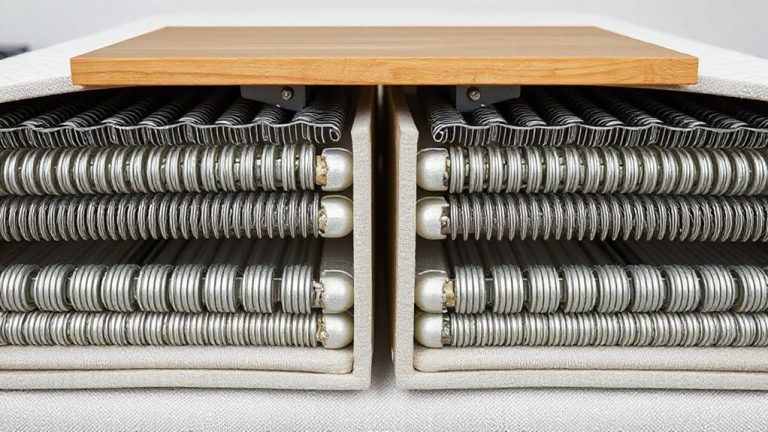
You sleep warmer on foam because it traps heat in its dense layers, but innerspring mattresses use open coil systems that let air circulate naturally. The steel coils resist heat buildup, while gaps between them allow passive ventilation. Pair that with breathable covers like TENCEL or cotton, and heat escapes more easily. Even gel-infused foam doesn’t match the consistent airflow of coils. For hot sleepers, this design offers better temperature control night after night - and there’s more to contemplate when choosing the right one for your comfort.
Notable Insights
- Innerspring mattresses have an open coil structure that promotes continuous air circulation, reducing heat retention.
- Steel coils naturally resist absorbing and holding body heat compared to dense foam materials.
- Gaps between coils allow passive ventilation, enhancing breathability and dissipating trapped warmth.
- Breathable cover fabrics like TENCEL or cotton complement coil systems by improving surface airflow and moisture wicking.
- Unlike memory foam, innerspring designs avoid conforming closely to the body, minimizing heat buildup.
Why Foam Mattresses Make You Overheat
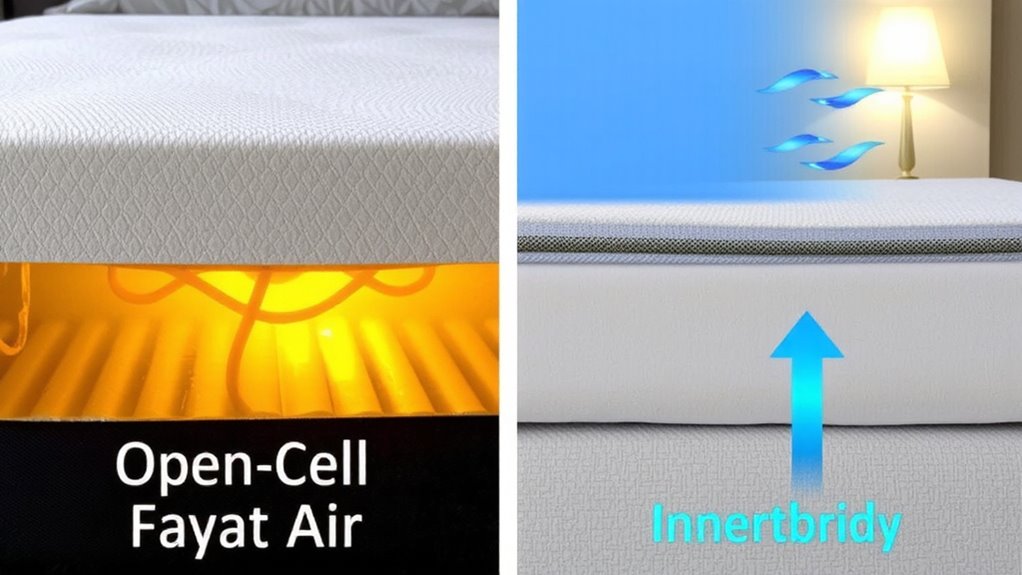
Why do so many people wake up sweating on foam mattresses? It’s because of how memory foam density affects body heat retention. Higher-density foams cradle your body closely, which feels supportive but traps heat. Your warmth gets absorbed and held, especially if the foam isn’t designed with cooling in mind. Unlike breathable materials, traditional memory foam limits airflow, making it harder for your body to regulate temperature. This can disrupt sleep, particularly if you tend to run hot or have night sweats. You might not realize how much your mattress contributes to poor sleep quality until you compare. Some brands add gel or open-cell structures to help, but they don’t always offset the base issue. A good way to manage heat while keeping protection is with the best waterproof mattress protectors for hot sleepers, which are designed to be breathable and moisture-wicking. If temperature matters to you, consider how memory foam density balances comfort with body heat retention. Many offer sleep trials, so test carefully-your comfort depends on both feel and thermal performance.
How Innerspring Coils Improve Airflow and Cooling
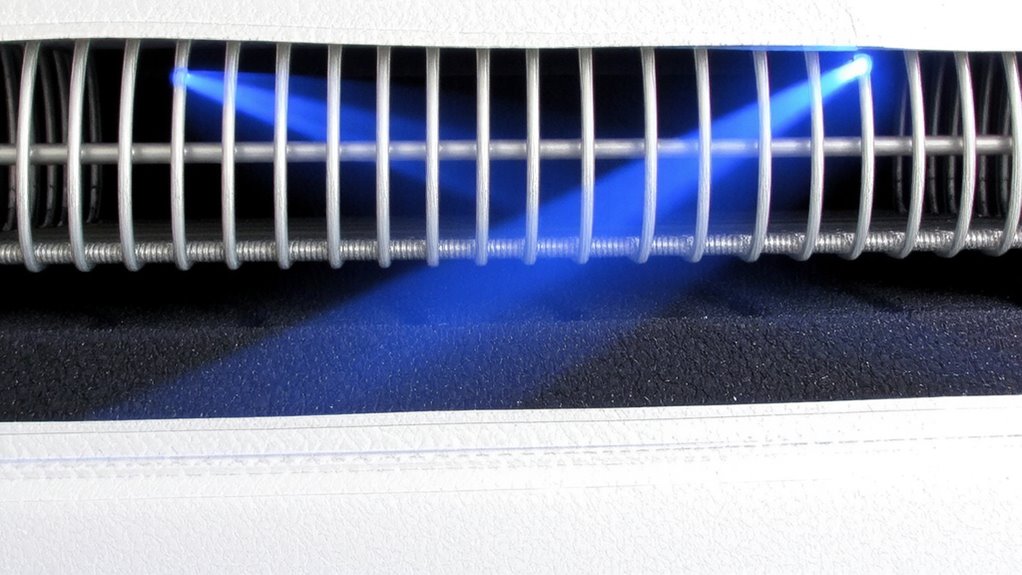
With their open structure and interconnected design, innerspring coils naturally allow air to move through the mattress, helping you stay cooler through the night. This promotes better coil breathability and continuous air circulation, reducing the chance of overheating. Whether you sleep hot or manage night sweats, improved airflow can support more restful sleep.
| Feature | Benefit |
|---|---|
| Open coil design | Enhances air circulation |
| Interconnected coils | Supports consistent coil breathability |
| Steel construction | Resists heat retention |
| Gaps between coils | Allow passive ventilation |
| Layer compatibility | Works with breathable covers |
You’ll find that many innerspring models come with breathable fabrics and extended trial periods, letting you test cooling performance. This construction doesn’t trap body heat like denser foams, offering a practical option if temperature regulation matters to your sleep quality. Many top-rated cooling mattresses feature innerspring designs for superior temperature control.
Foam vs Coil: Which Material Sleeps Cooler?
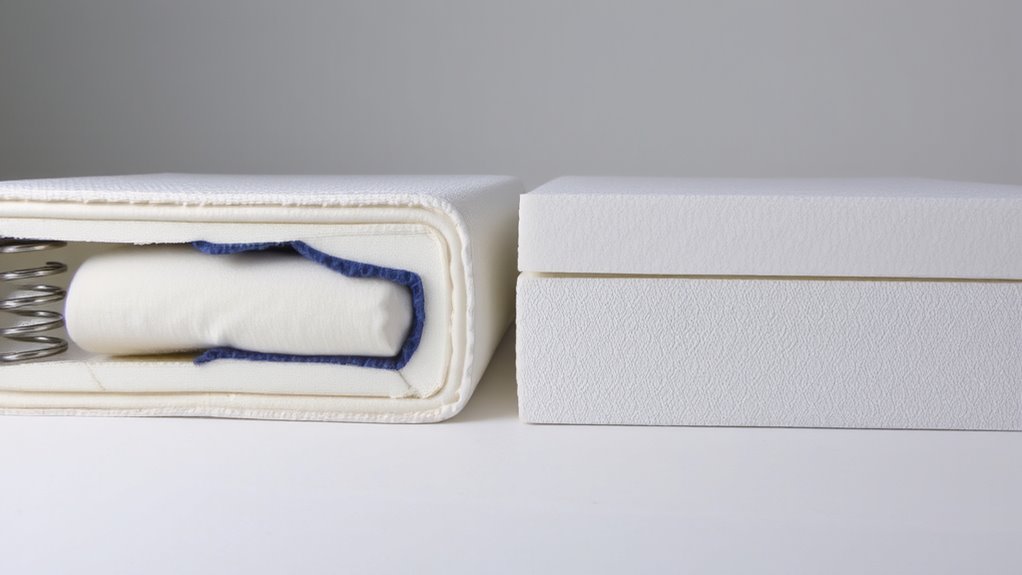
When comparing foam and coil mattresses, you’ll notice a clear difference in how they handle heat. Foam tends to have higher material density, which can increase heat retention, especially in memory foam layers that conform closely to your body. This trapped warmth may affect sleepers who are sensitive to temperature changes or prone to night sweats. In contrast, innerspring coils create open spaces within the mattress structure, promoting better airflow and reducing overall heat buildup. The lower material density of coil systems allows heat to dissipate more easily, helping maintain a cooler sleep surface. While some modern foams include cooling gels or graphite, they still generally retain more heat than coils. If temperature regulation is a priority-particularly for those managing sleep disruptions related to overheating-a coil-based mattress might offer more consistent thermal comfort. Most brands offer sleep trials, so testing is a practical way to assess personal cooling needs. Some foam mattresses now incorporate best gel mattresses technology to improve temperature regulation.
How Cover and Layer Choices Affect Heat
Though the internal materials of a mattress play a major role in temperature control, the cover and comfort layers you feel every night also have a direct impact on how hot or cool you sleep. You’ll sleep better if the cover uses breathable fabrics like TENCEL, cotton, or phase-change materials that wick moisture and allow air to move. These fabrics work with the mattress’s structure to enhance airflow instead of trapping warmth. Some models include ventilation channels along the edges or within comfort layers, which help release heat and maintain consistent temperature regulation. While innerspring units naturally breathe better than solid foam, your choice of cover and top layers can improve that advantage. Look for designs that balance softness with airflow, so comfort doesn’t come at the cost of heat retention. Always check trial periods to test temperature performance in your own bedroom.
Cooling Features to Look for in an Innerspring Mattress
What makes some innerspring mattresses sleep cooler than others? It often comes down to smart design choices that boost airflow and reduce heat retention. Look for models with breathable fabrics like cotton or TENCEL™ in the cover-they let air circulate and wick away moisture. Edge ventilation is another key feature; reinforced vents along the sides help release trapped heat. Coils naturally allow airflow, but pairing them with cooling layers makes a difference.
| Feature | Why It Matters | What to Check |
|---|---|---|
| Breathable fabrics | Enhance moisture control and airflow | Natural or moisture-wicking materials in the cover |
| Edge ventilation | Releases heat from the mattress edges | Visible side vents or perforated foam borders |
| Coil design | Promotes internal airflow | Pocketed or continuous coils with open structure |
Choose a model with a solid trial period to test comfort and cooling.
On a final note
You’ll sleep cooler on an innerspring because the coils let air move freely, reducing trapped heat. Foam hugs closely and holds warmth, while springs breathe better, especially with breathable covers or cooling layers. If temperature matters, look for innerspring models with gel infusions, moisture-wicking fabric, or ventilated designs. Most offer trial periods and warranties, so test one risk-free. Compare construction and materials to match your sleep needs.