How to Choose Sleepwear That Supports Thermoregulation and Reduces Night Sweats
Choose sleepwear made from breathable, natural fibers like cotton, linen, or moisture-wicking bamboo and TENCEL™ to support thermoregulation. These fabrics absorb sweat and release it into the air, keeping you drier. Avoid polyester or nylon, which trap heat and reduce airflow. Opt for loose-fitting styles that boost circulation and comfort, especially in warm rooms. Pajamas with thoughtful construction and natural fibers help maintain a stable sleep climate-there’s more to learn about smarter sleep choices.
Notable Insights
- Choose breathable natural fabrics like cotton, linen, or wool to enhance airflow and support effective thermoregulation during sleep.
- Opt for moisture-wicking materials such as bamboo or TENCEL™ that quickly absorb and evaporate sweat to keep skin dry.
- Avoid synthetic fibers like polyester and nylon that trap heat and reduce breathability, worsening night sweat discomfort.
- Select loose-fitting sleepwear to promote air circulation, reduce overheating, and allow better skin ventilation throughout the night.
- Match pajama weight and fabric type to your bedroom temperature and body type for optimal thermal comfort and sleep quality.
Understand How Night Sweats Affect Your Sleep
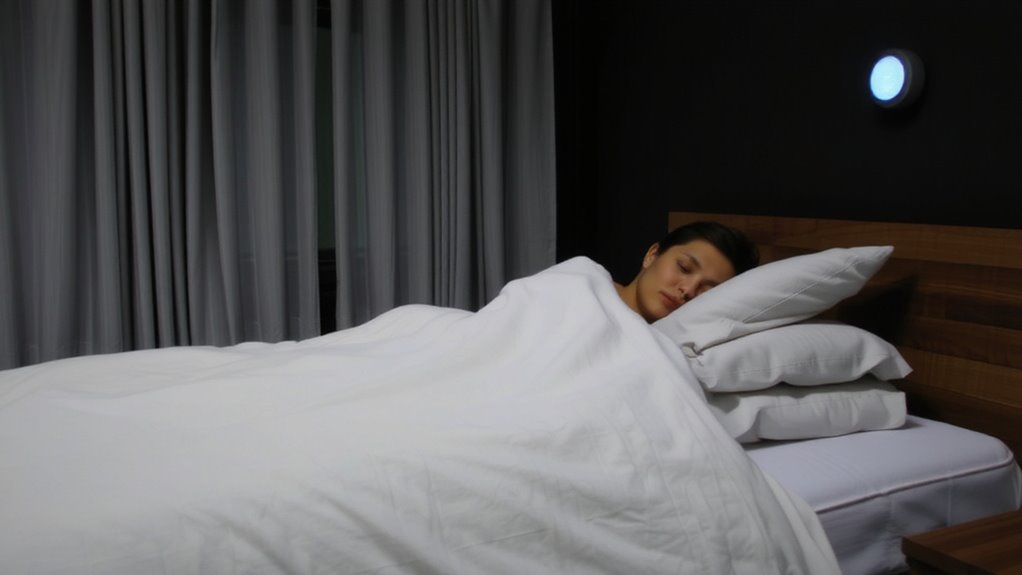
Why do you wake up drenched, even when the room feels cool? Night sweats could be disrupting your rest, and they’re more than just an annoyance. Common causes of night sweats include hormonal changes, medications, or underlying health conditions like sleep apnea. When you sweat excessively at night, it doesn’t just soak your clothes-it affects your core temperature and sleep cycles. This directly impacts sleep quality, often leading to frequent awakenings and lighter, less restorative stages of sleep. Over time, poor sleep quality can reduce daytime focus and energy. Recognizing patterns helps determine if lifestyle adjustments or medical advice are needed. While sleepwear won’t fix all causes of night sweats, the right fabric and fit can help manage symptoms. Look for designs focused on breathability and moisture control to support better thermoregulation throughout the night. Consider pairing your sleepwear with best blankets for menopause relief to create a more balanced sleep environment that actively regulates temperature.
Pick Natural Fabrics That Keep You Cool and Dry
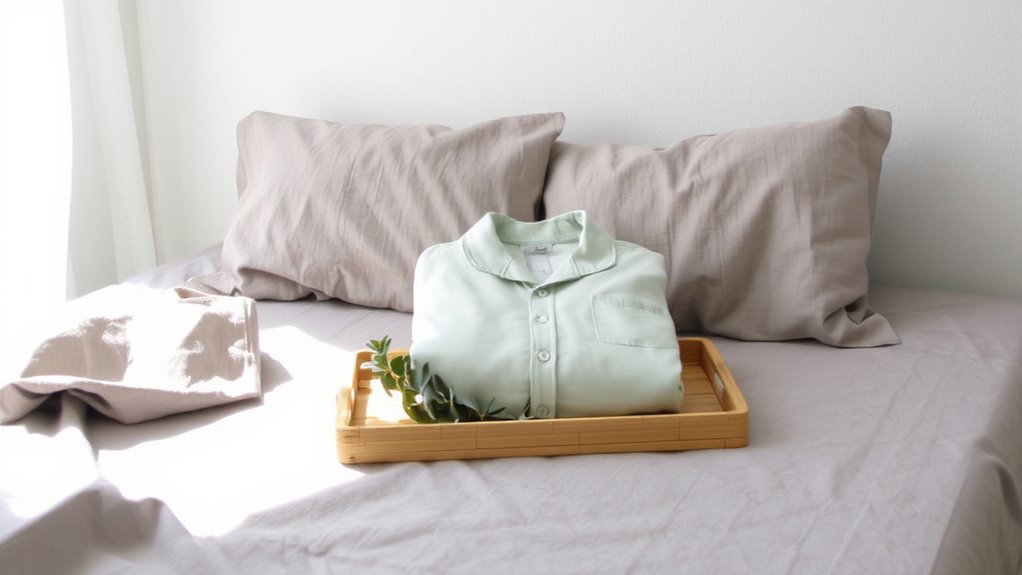
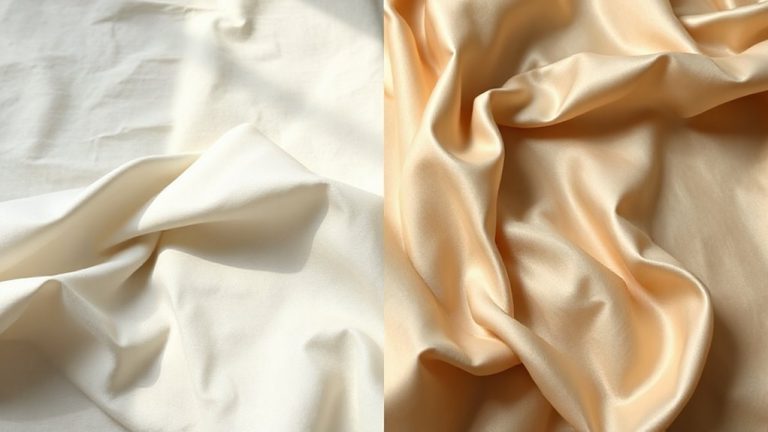
Your sleepware’s fabric plays a key role in how well you stay cool and dry through the night. Natural fibers like cotton, linen, and wool regulate temperature because of their breathable structure. The fabric weight and weave density affect how air circulates and moisture moves away from your skin. Lightweight fabrics with loose weaves boost airflow, helping reduce night sweats. Tight weaves or heavy fabrics might trap heat, making you feel warmer than needed.
| Fabric | Fabric Weight | Weave Density |
|---|---|---|
| Linen | Light to medium | Loose |
| Cotton | Medium | Moderate |
| Wool | Medium to heavy | Variable |
Choose based on your climate and sweat patterns. A looser weave often means better breathability, but may feel less soft. Test different weights to see what keeps you comfortable all night. Many brands offer trial periods, so you can return styles that don’t work. Tencel pajamas are another excellent option, offering moisture-wicking properties and a silky feel, making best Tencel pajamas a smart choice for temperature-sensitive sleepers.
Try Bamboo and TENCEL™ for All-Night Comfort
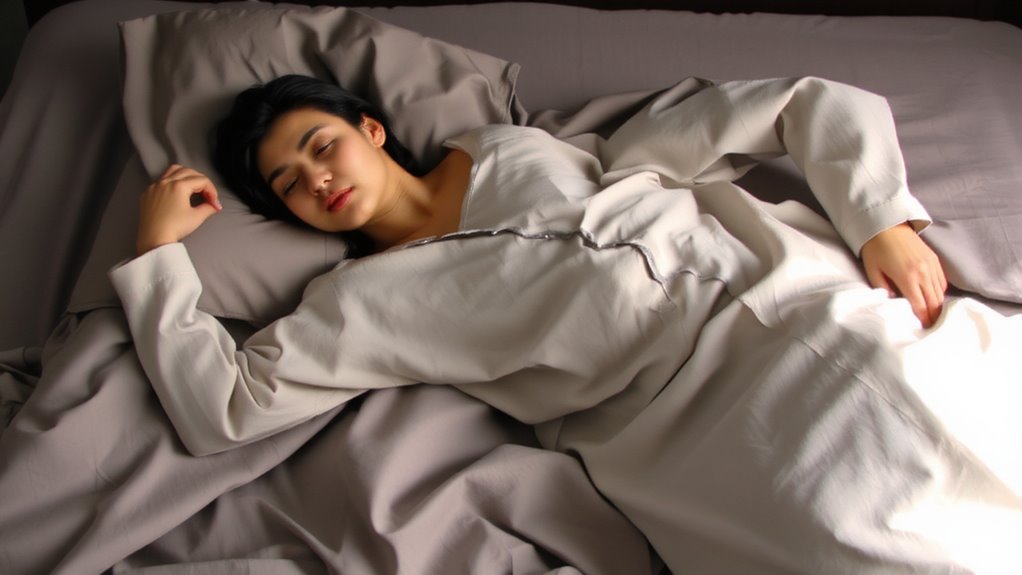
Bamboo and TENCEL™ fabrics offer a smooth, breathable option for staying comfortable all night, especially if you tend to overheat or wake up damp. The bamboo benefits include natural moisture-wicking, antimicrobial properties, and softness that resists odors over time. You’ll likely notice less irritation and more airflow against your skin. TENCEL™ delivers tencel comfort through its lightweight, silky texture that regulates temperature well. It’s made from sustainable wood pulp and holds up after repeated washings without pilling. Both materials absorb sweat quickly and release it into the air, helping maintain a stable sleeping climate. Look for blended versions with a bit of stretch for easier movement, but make certain the majority is natural fiber. Many brands offer trial periods, so test a set to see how it feels after a few nights. This small change may improve sleep quality, especially if night sweats disrupt your rest. Optimizing your sleep environment with the right best mattresses for clarity can further enhance restfulness and mental sharpness.
Avoid Synthetics That Trap Heat During Night Sweats
Heat retention during sleep can turn a restful night into a sticky, uncomfortable struggle, especially when night sweats strike. Synthetic fabrics like polyester or nylon trap heat and resist moisture, worsening discomfort. These materials contribute to heat retention by limiting breathability and holding warmth close to your skin. They also increase static cling, causing pajamas to stick and shift, disrupting sleep. Instead, choosing natural or engineered fibers helps manage temperature and moisture. Fabrics such as cotton, bamboo, or TENCEL™ offer better airflow and wick sweat away more effectively. If you currently wear synthetics, try switching one night and note any differences in comfort. Many brands offer trial periods, so test options risk-free. Reducing heat retention isn’t about drastic changes-it’s small, informed choices that support your body’s natural cooling.
Wear Loose Pajamas to Boost Airflow and Cooling
While tighter sleepwear might seem sleek, looser-fitting pajamas actually allow more air to circulate around your skin, helping your body stay cool through the night. A loose fit isn’t just comfortable-it supports better air circulation, which plays a key role in balancing your temperature during sleep. If you’re dealing with night sweats or overheating, choosing roomier sleepwear can make a noticeable difference.
| Feature | Tight Sleepwear | Loose-Fit Sleepwear |
|---|---|---|
| Air Circulation | Restricted | Enhanced |
| Heat Retention | Higher | Reduced |
| Comfort Level | May cause irritation | Allows natural movement |
| Thermoregulation | Less effective | More supportive |
| Skin Breathing | Limited | Improved |
Opting for a loose fit gives your body space to release heat, making it easier to maintain a stable sleep temperature.
Choose Sleepwear With Smart Moisture-Wicking Tech
Many sleepers overlook the role moisture-wicking fabric technology plays in maintaining comfort through the night, but choosing sleepwear designed to pull sweat away from your skin can make a meaningful difference-especially if you run hot or experience night sweats. These fabrics use advanced fibers that enhance moisture management by moving sweat to the outer layer, where it evaporates quickly. This process supports better thermal efficiency, helping your body stay within its ideal temperature range. Look for materials like merino wool, bamboo, or performance synthetics labeled for moisture-wicking properties. Check product details for breathability ratings, durability, and care instructions. Some brands offer trial periods or warranties, so you can test comfort over time. Prioritizing moisture-wicking tech doesn’t guarantee perfect sleep, but it can reduce dampness and irritation, supporting steadier rest. Consider it a practical upgrade if night sweats disrupt your sleep cycle.
Match Pajamas to Your Body Type and Bedroom Temperature
If your body runs warm or you tend to feel chilly at night, picking pajamas that align with your body type and bedroom temperature can make a real difference in sleep quality. Your body shape affects airflow and heat retention, so looser fits often support better thermal balance, especially if you sleep hot. Slimmer cuts can help trap warmth if you’re often cold. For warm bedrooms, choose lightweight, breathable fabrics like bamboo or moisture-wicking blends that adjust to your body’s needs. In cooler rooms, consider long sleeves or adjustable layers that let you manage insulation without overheating. Some brands offer sleepwear with temperature-responsive fibers and trial periods, so you can test comfort and performance. Matching your pajamas to both body shape and room climate improves your chances of staying in thermal balance all night. This small adjustment may reduce night sweats and support deeper, more restful sleep over time.
On a final note
Choose sleepwear that helps your body stay cool and dry by picking natural, breathable fabrics like bamboo or TENCEL™, which wick moisture and allow airflow. Avoid tight fits and synthetics, as they trap heat. Loose, well-constructed pajamas with moisture-wicking technology can improve comfort if you experience night sweats. Match your choice to your body type and room temperature, and consider trying options with trial periods to find what works best for your sleep needs.