Blackout Curtains + Sleep Mask: How to Combine Them Right
You need total darkness to support natural melatonin release and improve sleep quality, so use blackout curtains with tightly woven, multi-layered fabric to block outside light from streetlights or sunrise. Pair them with a contoured sleep mask labeled “truly blackout” to prevent light gaps and avoid eye pressure. Look for adjustable straps and soft materials to keep the mask in place all night. Together, they create a consistently dark environment ideal for deeper rest and better recovery. Choose models with warranties or trial periods to test effectiveness. This dual approach works especially well if you’re sensitive to light or have an irregular sleep schedule, and you’ll soon discover how small upgrades can make a measurable difference.
Notable Insights
- Install blackout curtains with tight seals around windows to block external light and support natural melatonin release.
- Choose a truly blackout sleep mask with a contoured design to prevent light exposure and eye pressure during sleep.
- Combine blackout curtains and a light-blocking mask for dual protection against light leaks and circadian disruption.
- Ensure curtains fully cover the window with no gaps to eliminate light pollution from streetlights or early dawn.
- Test your setup at night with outside lights on to identify and fix any sources of light intrusion.
Why Light Ruins Sleep (And How Darkness Speeds Recovery)
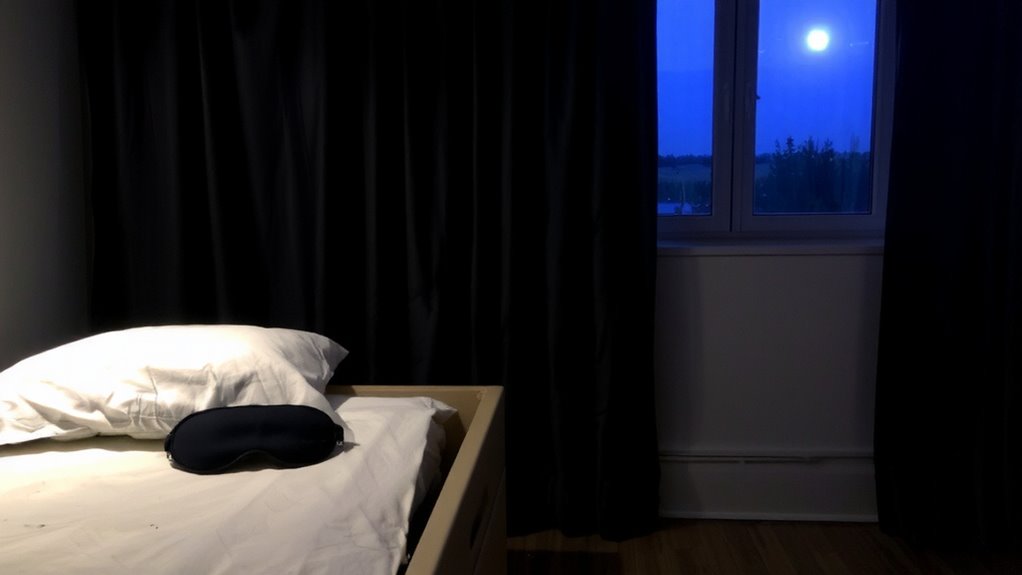
Why does light seem to sabotage your sleep no matter how tired you feel? Your body runs on a circadian rhythm, a 24-hour internal clock shaped by light and darkness. When light-even dim-hits your eyes at night, it triggers melatonin suppression, delaying sleep onset and reducing sleep quality. This disruption confuses your system, mistaking night for day. Over time, poor timing weakens recovery, harms mood, and affects focus. Darkness, on the other hand, supports natural melatonin release, helping you fall asleep faster and stay in deep, restorative stages longer. You don’t need total blackout to benefit, but consistent nightly darkness improves rhythm stability. If you’re exploring sleep aids, consider how light exposure fits into your routine. Small changes, like blocking outdoor streetlights or turning off devices, deliver measurable results. Darkness isn’t a cure, but it’s a foundational support for better sleep health. Upgrading your window treatments with best blackout curtains for apartments can significantly enhance light blockage and sleep consistency.
How Blackout Curtains Fix Light-Disrupted Sleep
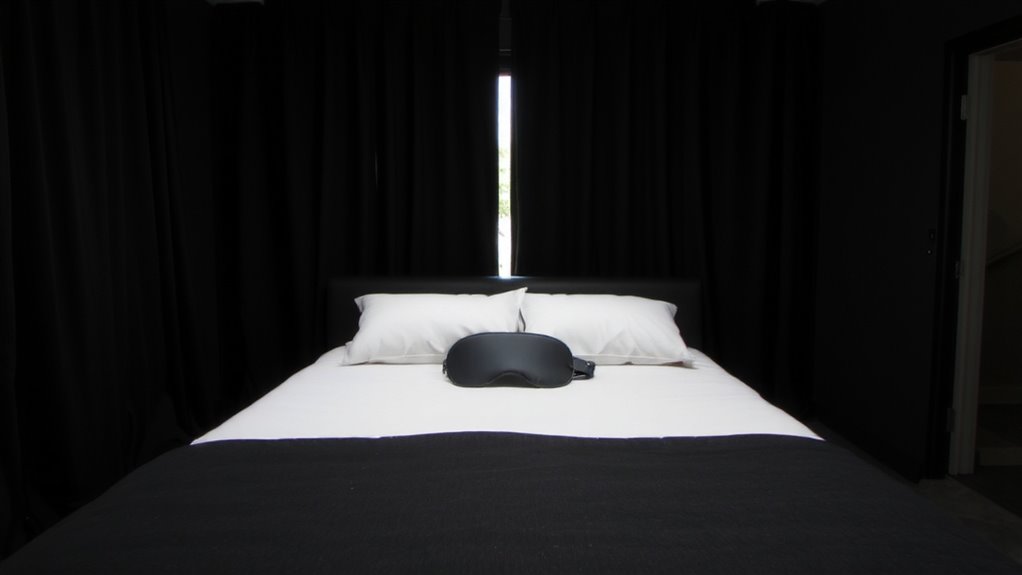
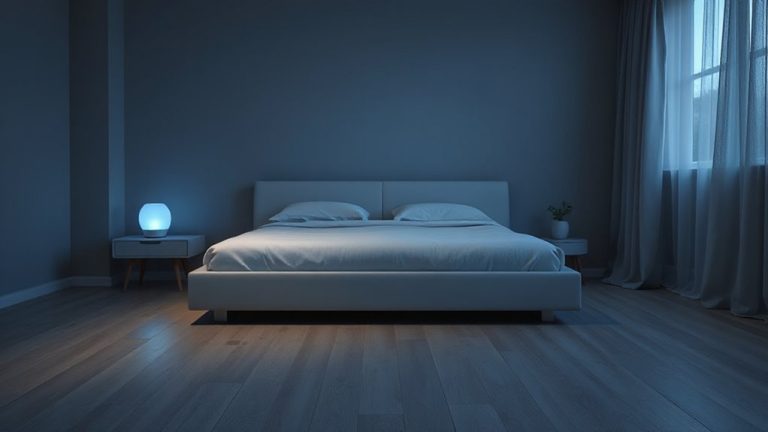
How much light slips through your windows at night-streetlamps, early sunrise, or even a neighbor’s porch light-could be quietly undermining your sleep. That exposure contributes to light pollution, tricking your brain into thinking it’s still daytime. This disruption interferes with your circadian rhythm, the internal clock that regulates sleep and wakefulness. Blackout curtains are designed to block nearly all incoming light, typically using tightly woven, multi-layered fabric with a special backing. By installing them, you create a dark environment that supports melatonin release, helping you fall asleep faster and stay asleep longer. Most models fit standard windows and install easily with a rod. Look for options with thermal insulation and noise reduction benefits, too. Many brands offer warranties or trial periods, so you can test performance. They’re a practical, non-invasive tool to improve sleep quality-especially if streetlights or early dawn light affect your rest. For maximum effectiveness, consider choosing the best thermal blackout curtains that combine light-blocking performance with temperature regulation.
How to Choose a Truly Blackout Sleep Mask
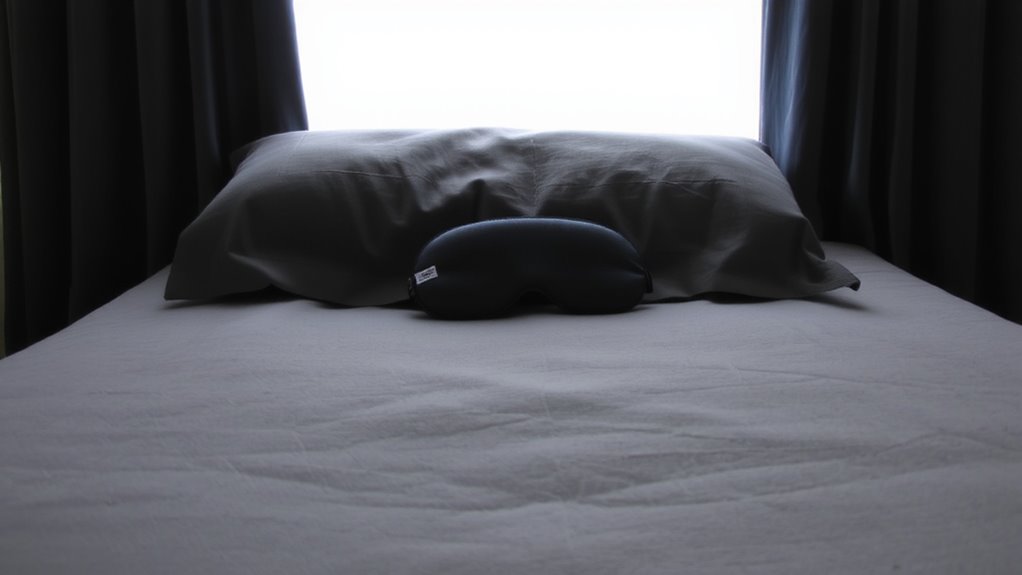
While light from windows can disrupt sleep, a well-chosen sleep mask offers targeted darkness when blackout curtains aren’t enough or aren’t practical. Look for masks labeled “truly blackout” - these use layered, opaque fabrics that block light completely, not just dim it. Check for contoured or 3D designs that provide eye comfort by giving your lashes room and reducing pressure on your eyelids. A mask that presses too hard can cause discomfort or even disrupt REM cycles over time. Strap adjustability matters, too; an elastic band with a sliding buckle lets you get a snug, secure fit without pinching. Make sure the material feels soft against your skin and won’t slip off during the night. Many brands offer trial periods, so you can test for comfort and effectiveness. Try one for a few nights to see how well it supports uninterrupted rest. For optimal results, consider trying one of the best eye masks known for combining ultimate comfort with complete light blockage.
Why You Should Use Curtains and Mask Together
Even if your blackout curtains block most light, pairing them with a well-fitting sleep mask adds an extra layer of protection against early morning glow or streetlights that seep through small gaps. This combination offers dual protection, ensuring your room stays truly dark all night. The synergy benefits mean your body’s melatonin production isn’t disrupted, supporting deeper, more restorative sleep. Curtains block large light sources and improve room insulation, while masks handle residual leakage around edges or windows. Together, they create a more reliable sleep environment, especially useful if you’re sensitive to light or work night shifts. Look for masks with adjustable straps and soft, contoured designs to avoid pressure on the eyes. Some brands offer trial periods, so you can test comfort and light-blocking performance. Using both solutions doesn’t guarantee perfect sleep, but it increases your chances by reducing one major disruption-light exposure-so your body can follow its natural recovery cycle.
5 Mistakes That Break Your Dark Sleep Zone
If you’re not careful, small oversights can undo the darkness you worked hard to create, letting light sneak in where you least expect it. Light leaks often come from gaps around window edges, even with blackout curtains. Poor sealing lets streetlights or dawn glow seep through, disrupting melatonin production. Check for spaces above, beside, or under the curtains-these are common entry points. Some blackout liners don’t cover the full frame, leaving corners exposed. Pairing curtains with a well-fitted sleep mask helps maintain consistent darkness. Choose masks with contoured designs to avoid eyelid pressure. Look for curtain materials with tight weaves and opaque backings, and verify warranty terms for fade resistance. Test your setup at night with lights on outside. Adjust until no light leaks remain. A fully sealed sleep zone supports deeper rest and more stable circadian rhythms.
On a final note
You’ll sleep better when you control light fully. Blackout curtains and masks work best together, blocking streetlights and early sun. Choose curtains with tight weaves and masks with contoured designs that seal light without pressure. Look for breathable fabrics and adjustable straps for comfort. Test products with a sleep trial if available, since fit varies. Even small gaps can disrupt melatonin, so check performance in total darkness. Consistency matters most.