Eco-Friendly Innerspring Mattresses: What Materials Are Sustainable?
You can find sustainable innerspring mattresses made with organic cotton, natural latex, and recycled steel coils. These materials offer breathability, reduce chemical off-gassing, and lower environmental impact. Organic cotton helps regulate temperature and suits sensitive skin, while natural latex provides durable comfort. Recycled coils support motion isolation and last longer. Look for GOTS, GOLS, or Greenguard Gold certifications to verify claims. Most come with 10-year warranties and 100-night trials, so you can confidently weigh long-term benefits.
Notable Insights
- Recycled steel coils provide durable support while reducing environmental impact through repurposed materials.
- Natural latex from rubber trees offers biodegradable cushioning without synthetic chemicals or off-gassing.
- Organic cotton covers regulate temperature and reduce skin irritants, grown without synthetic pesticides.
- Biodegradable covers made from natural fibers like wool enhance breathability and minimize landfill waste.
- Certifications like GOTS, GOLS, and Greenguard Gold verify sustainable sourcing and non-toxic materials.
What Makes an Innerspring Mattress Eco-Friendly?
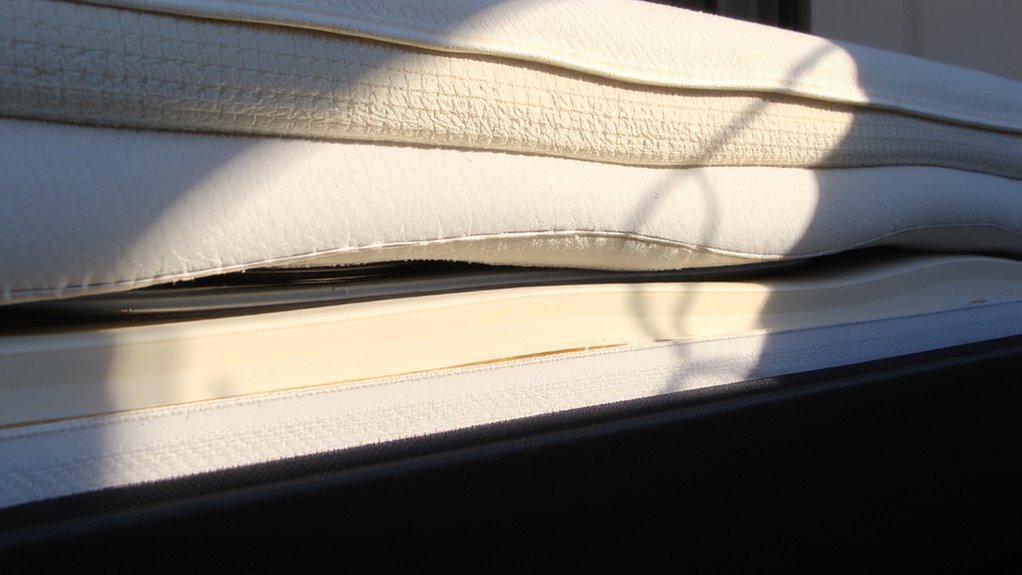
While not all innerspring mattresses are created equal, you can find eco-friendly options by looking at how they’re built and what materials they use. You’ll want to check for biodegradable covers, which break down more easily at the end of the mattress’s life, reducing landfill impact. These covers often come from natural fibers like wool or plant-based fabrics, offering breathability and comfort. Also, pay attention to non toxic adhesives used in construction-these bind layers safely without releasing harmful chemicals into your bedroom air. Traditional glues can emit volatile organic compounds, which might affect sleep quality, especially if you’re sensitive. Eco-friendly models typically pair recyclable steel coils with these safer materials, balancing support and sustainability. Most come with trial periods and warranties, so you can test comfort without risk. Look for certifications that verify material claims, helping you make informed choices based on health, durability, and environmental care.
How Organic Cotton Improves Sleep and Sustainability
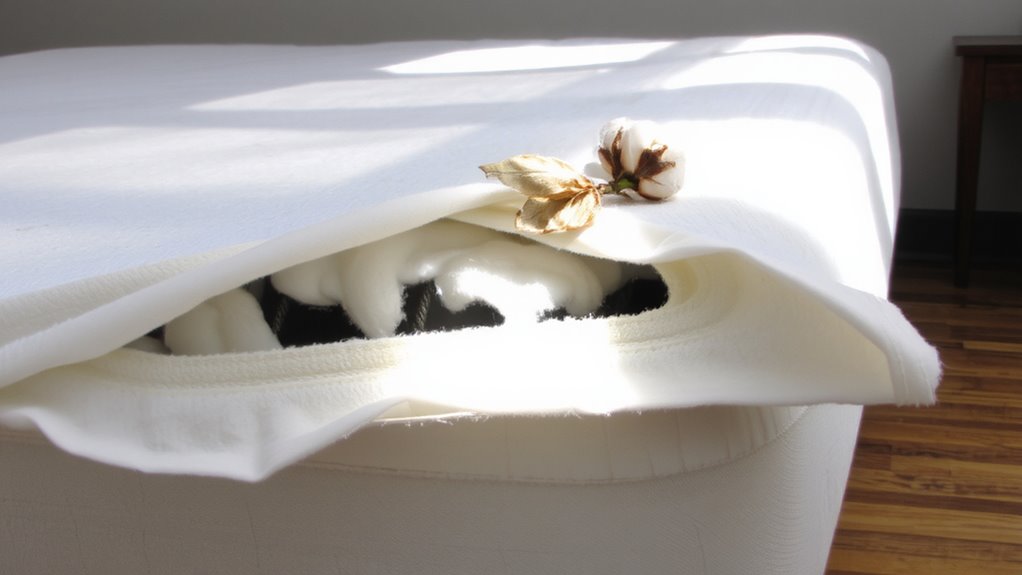
What if your mattress could support both restful sleep and a healthier planet? Organic cotton does exactly that. As a breathable fabric, it helps regulate your body temperature through the night, reducing overheating and improving sleep comfort. Unlike conventional cotton, it’s grown without synthetic pesticides and uses chemical free dyes, which means fewer irritants touching your skin. This is especially helpful if you’re sensitive or prone to allergies. In an eco-friendly innerspring mattress, the cotton adds softness without sacrificing durability. It’s typically quilted into the cover, maintaining breathability while supporting airflow around the coils. Most brands offer a 10–20 year warranty and trial periods of 90–120 nights, so you can test comfort risk-free. Choosing organic cotton supports sustainable farming and reduces environmental impact over time.
Why Natural Latex Beats Synthetic Foam in Green Mattresses
Natural latex brings a smarter balance of comfort and eco-conscious design to green mattresses. You’ll find it supports your body well while relying on biodegradable materials, unlike synthetic foam. Since it’s derived from rubber tree sap, it breaks down more easily at end-of-life, reducing landfill impact. It also resists chemical off gassing, so you won’t breathe in harmful fumes when you unbox it. Many natural latex mattresses meet certifications like GOLS or GOTS, ensuring purity and sustainable sourcing. In contrast, synthetic foams often trap heat and degrade faster, which could affect your sleep over time. Natural latex offers resilient cushioning, ideal if you need pressure relief for joints or chronic discomfort. Most models come with trial periods and long warranties, letting you test comfort risk-free. While pricier upfront, its durability and use of biodegradable materials can make it a wiser long-term choice.
Recycled Steel Coils: Stronger Support, Smaller Footprint
Because recycled steel coils offer durable support while reducing environmental impact, they’re becoming a smart choice for eco-friendly innerspring mattresses. You get strong, responsive support that holds up over time, thanks to high coil longevity and improved rust resistance. These coils handle body weight evenly, which can help if you struggle with back pain or need motion isolation for undisturbed sleep. Since they’re made from repurposed steel, less energy is used in production, reducing your mattress’s overall carbon footprint. They’re often paired with natural materials like organic cotton or latex to boost comfort and sustainability. Most models with recycled coils come with at least a 10-year warranty, covering sagging or structural defects. Some brands even offer sleep trials, so you can test support and feel risk-free. Choosing recycled steel means you’re not sacrificing performance for sustainability-it’s reliable support with a lighter environmental toll.
Proof It’s Green: Must-Have Certifications for Eco Mattresses
While browsing eco-friendly innerspring mattresses, you’ll want to look beyond marketing terms and check for trusted certifications that confirm a product’s green claims. Labels like GOTS and GOLS verify that the mattress uses certified organic fibers, meaning the cotton or wool hasn’t been treated with synthetic pesticides. CertiPUR-US and Greenguard Gold indicate the foam and adhesives are made with non toxic materials, releasing minimal volatile organic compounds (VOCs). These certifications help guarantee better indoor air quality, which may benefit those sensitive to allergens or irritants. You’ll also want to review warranty terms and trial periods-many eco brands offer 10-year warranties and sleep trials of 100 nights or more. Knowing a mattress meets verified standards gives you confidence in both its safety and long-term performance.
Eco vs. Comfort: How to Choose the Best Sustainable Innerspring
A good night’s sleep doesn’t have to come at the planet’s expense, and with today’s eco-friendly innerspring mattresses, you can balance sustainability with real comfort. Look for models that use natural latex, organic cotton, or recycled steel coils-they offer support while reducing environmental harm. When comparing options, check durability comparison data; sustainable materials often last longer, saving money over time. Ethical sourcing matters too-brands that disclose their supply chains guarantee fair labor practices and lower emissions. Don’t skip testing the mattress in person or through a generous trial period, since comfort varies by sleep position and body type. Many eco-innersprings pair responsive coil systems with breathable layers, helping regulate temperature-useful if you struggle with restlessness or night sweats. Warranties of 10 years or more reflect confidence in both comfort and longevity. Choose wisely, and you get rest that supports both your health and the planet. Top-rated models often come with removable, washable covers, making queen mattress pads a practical addition for added comfort and protection.
On a final note
You can find a balance between comfort and sustainability in eco-friendly innerspring mattresses by choosing models with organic cotton, natural latex, and recycled steel coils. These materials offer durability, breathability, and support while reducing environmental harm. Look for certifications like GOTS or Greenguard to verify claims. Many brands also provide sleep trials and long warranties, letting you test the mattress risk-free. Consider your firmness preference and sleep needs when comparing options.