Innerspring Mattress Breathability: Coil Types That Sleep Cooler
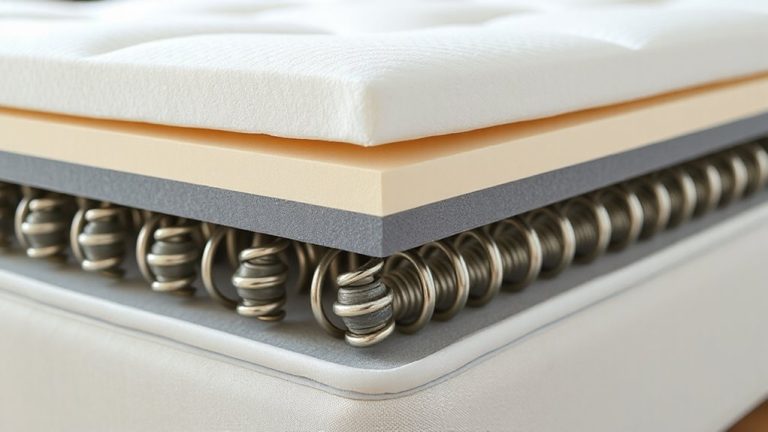
You sleep cooler on an innerspring mattress because the open coil system lets air flow freely, carrying away body heat and drawing in fresh air. Designs like pocketed or hourglass coils boost ventilation, while breathable fabrics like organic cotton or wool help regulate temperature. Compared to dense memory foam, innersprings disperse heat better, especially with slatted foundations and lightweight bedding. If you wake up hot or restless, your mattress may trap too much warmth-adjusting these elements can help balance your sleep climate. Exploring further reveals how small changes can make a meaningful difference.
Notable Insights
- Innerspring mattresses use open coil structures to promote airflow, helping regulate sleep temperature by allowing heat to escape.
- Hourglass and pocketed coils enhance ventilation better than tight Bonnell coils, improving breathability and thermal comfort.
- Compared to dense memory foam, innerspring designs sleep cooler due to lower material density and natural air circulation.
- Natural fabrics like organic cotton and wool increase breathability, wick moisture, and support the mattress’s cooling performance.
- Signs of poor breathability include night sweats and restlessness, which can be reduced with slatted foundations and breathable bedding.
Why Innerspring Mattresses Sleep Cooler
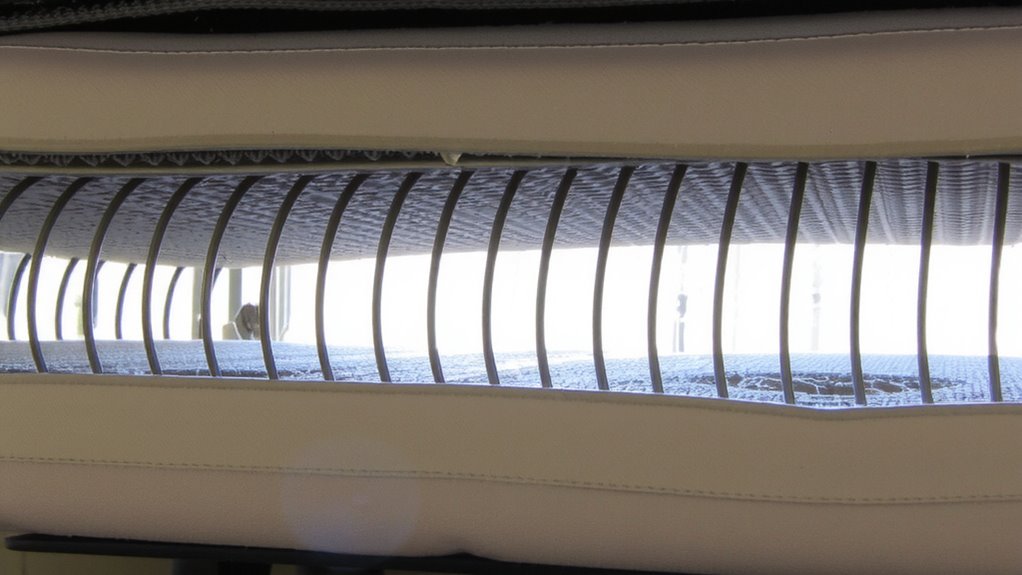
While other mattress types trap heat due to dense foam layers, innerspring models tend to sleep cooler because of their open coil structure, which allows air to circulate more freely. You’ll notice better heat dispersion, especially if you sleep hot or wake up sweating. The design promotes ventilation efficiency, letting warm air escape and cool air move in. Unlike memory foam that molds closely and retains warmth, innersprings offer a more breathable sleep surface. This airflow helps maintain a stable sleep temperature throughout the night, which can support deeper rest and reduce nighttime disruptions. If you struggle with overheating or mild sleep issues, this improved breathability might make a difference. Most innerspring mattresses also come with trial periods and warranties, so you can test comfort and airflow risk-free. Consider how temperature affects your sleep when comparing options-it could guide your choice toward more restful nights.
How Coil Design Improves Airflow
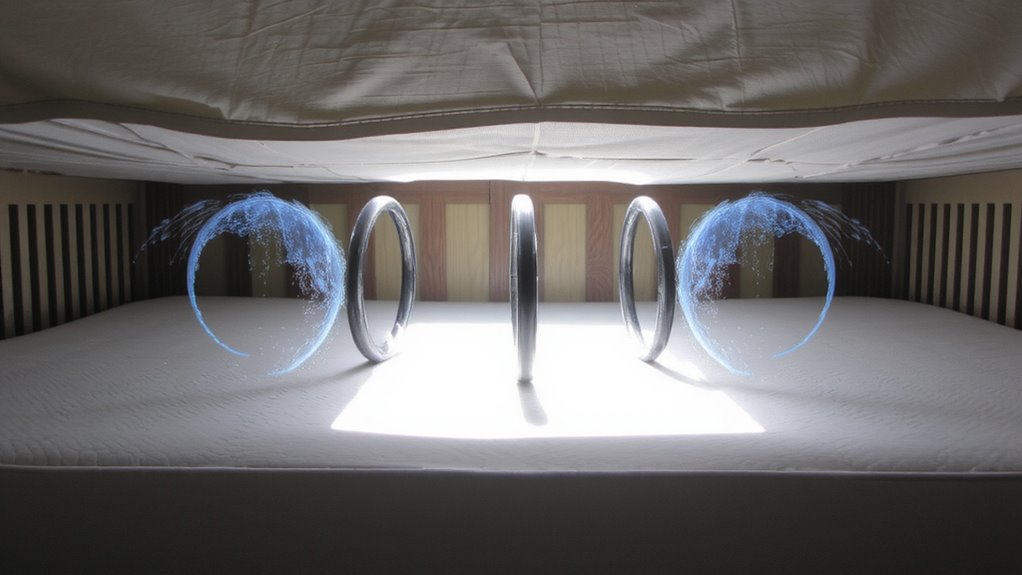
Because the way coils are built directly affects how well air moves through your mattress, you’ll want to pay attention to the design when choosing a model. The coil structure and spring spacing play key roles in promoting consistent airflow, which helps regulate sleep temperature. Open spacing allows air to circulate freely, reducing heat retention.
| Feature | Benefit |
|---|---|
| Hourglass coils | Enhance airflow and support |
| Bonnell coils | Standard design, moderate ventilation |
| Pocketed coils | Independent movement, better breathability |
| Tight spring spacing | Less airflow, firmer feel |
| Wide spring spacing | Improved air circulation |
Coil types with generous spring spacing typically offer better ventilation, supporting cooler sleep. When comparing options, consider how the coil structure aligns with your need for breathability and comfort. Many models include trial periods, so test airflow performance in your home setting.
Innerspring vs. Memory Foam: Which Sleeps Cooler?
If you tend to sleep hot, choosing between innerspring and memory foam could make a real difference in how comfortably you rest. Innerspring mattresses typically sleep cooler due to their coil support, which promotes airflow and reduces heat retention. The open structure allows heat to escape, while lower material density in the comfort layers adds to breathability. Memory foam, on the other hand, often has higher material density, conforming closely to your body and trapping heat. This increased heat retention can be uncomfortable if you’re sensitive to warmth. Some newer foams include cooling gels or graphite, but they still may not match the natural ventilation of coils. If temperature is a concern, innerspring models offer a more breathable choice. Most come with trial periods, so you can test how well you sleep without risk. Consider your sleep patterns and check warranty terms when comparing options. For even greater temperature regulation, some sleepers may want to explore advanced options like temperature-controlled mattresses.
Natural Fabrics That Boost Innerspring Cooling
A well-chosen cover fabric can make a noticeable difference in how cool you sleep on an innerspring mattress. Organic cotton is a top choice because it’s breathable, soft, and moves moisture away from your body, helping regulate temperature. It allows air to flow freely, which supports the natural ventilation of the coil system underneath. Wool layers add another level of cooling by absorbing moisture and releasing it into the air, preventing that sticky, overheated feeling. Unlike synthetic materials, wool naturally resists dust mites and mildew, which can support better sleep hygiene. These natural fabrics work with your body’s needs, not against them. When shopping, look for certifications like GOTS to verify organic claims. Many brands offer trial periods, so you can test how these materials affect your comfort.
How to Tell If Your Mattress Traps Too Much Heat
How do you know when your mattress is holding onto too much heat? You might wake up feeling overly warm or notice consistent sweating at night, especially if you’ve always had hot sleep patterns. If you’re tossing and turning during the warmer months or find yourself kicking off the covers regularly, your mattress could be trapping heat instead of releasing it. Innerspring mattresses usually breathe better than solid foam ones, but a thick comfort layer or non-breathable cover can still limit airflow. Pay attention to how often you feel too warm-occasional warmth is normal, but nightly discomfort suggests poor ventilation. Consider checking the materials; some fabrics retain heat more than others. If heat buildup persists, look into models with enhanced airflow design or breathable covers. Many brands offer trial periods, so test during warmer weeks to judge temperature performance accurately. Pairing your mattress with a best cooling pillow can further improve thermal regulation throughout the night.
Maximize Your Innerspring’s Cooling With These Airflow Tips
While your innerspring mattress already has an advantage in breathability thanks to its coil core, you can get even better cooling by improving airflow around and through the bed. Start with mattress elevation-using a slatted foundation or bed frame with adequate spacing helps air circulate beneath the mattress, reducing heat buildup. Avoid solid platforms that block airflow. Choose breathable bedding layers, like cotton or bamboo sheets and lightweight blankets, to prevent trapping warmth. Skip thick, non-porous mattress toppers unless they’re designed for cooling. Rotate your mattress regularly to maintain airflow consistency. Most innerspring models perform best when paired with open-structure foundations and moisture-wicking fabrics. Check warranty terms to see if foundation type affects coverage. These small adjustments improve ventilation, support temperature regulation, and may help reduce night awakenings linked to overheating. For those seeking spinal alignment along with cooling benefits, consider models highlighted as the best mattresses for better posture.
On a final note
You’ll likely sleep cooler on an innerspring mattress thanks to its open coil structure, which allows steady airflow. Unlike dense memory foam, these coils reduce heat retention, especially when paired with breathable, natural fabrics like cotton or wool. If you wake up overheated, check your mattress’s ventilation and consider adding a breathable topper or using a slatted base. Many innersprings come with trial periods and warranties, so test one risk-free to see if improved airflow supports your sleep comfort and temperature needs.