How to Evaluate Innerspring Mattress Thickness for Optimal Comfort
Choose an innerspring mattress between 10 and 14 inches thick, depending on your sleep position and body type. Side sleep新人玩家 and those over 130 lbs usually do better with 12 to 14 inches for pressure relief. Back sleepers often need 10 to 12. Thickness alone doesn’t guarantee comfort-look for tempered steel coils and quality comfort layers. Higher coil counts and lower gauges offer better support. A medium-firm feel works well for most. Check the warranty for sag protection. You’ll find details on matching your weight and sleep style to the right build that fits your needs.
Notable Insights
- Match mattress thickness to your sleep position: side sleepers benefit from 12–14 inches, back sleepers from 10–12 inches, and stomach sleepers need less depth.
- Prioritize material quality and layering over thickness alone, as cushioning and support depend on foam and coil composition.
- Choose thicker mattresses (10–12+ inches) with strong coils if you have a higher body weight to prevent sagging and maintain alignment.
- Evaluate coil quality by checking gauge, count, and tempered steel construction to ensure durability and proper support regardless of thickness.
- Consider edge support and breathability features in thicker models to enhance stability, airflow, and overall sleep comfort.
What Is Innerspring Mattress Thickness?
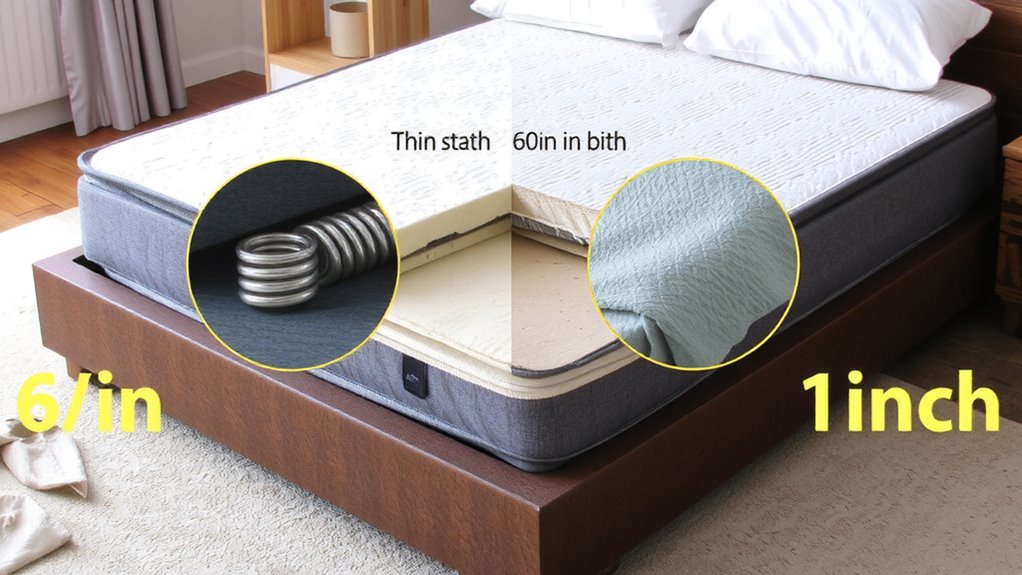
Thickness in an innerspring mattress refers to how tall the entire mattress is from top to bottom, usually measured in inches. You’ll find most range between 9 and 14 inches, with taller models often including more comfort layers and supportive mattress materials. These layers-like memory foam, polyfoam, or fibers-sit above the coil unit and influence both feel and durability. Thicker mattresses typically offer more cushioning and pressure relief, which can help if you deal with joint discomfort or sleep issues. However, thickness alone doesn’t guarantee comfort; it depends on how the materials are layered and tuned. Look for models with removable covers or breathable fabrics to improve airflow and ease of maintenance. Always consider trial periods and warranties-many brands offer 100-night trials and 10-year coverage-so you can test firmness and support without risk.
How Sleep Position Changes Your Ideal Thickness
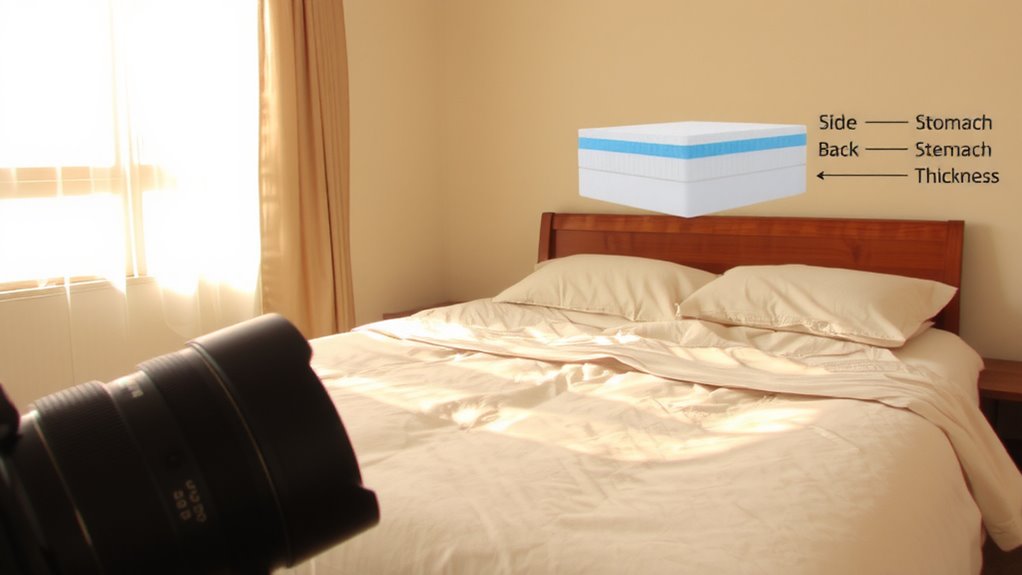
Why do side sleepers often need more cushioning than back or stomach sleepers? It’s because your sleep posture directly affects how pressure points form. When you sleep on your side, your hips and shoulders bear most of your weight, increasing pressure in those areas. A thicker innerspring mattress-usually 12 to 14 inches-can help by offering extra padding to cushion these spots. Back sleepers distribute weight more evenly, so they often do well with medium thickness, around 10 to 12 inches. Stomach sleepers need less cushioning; too much thickness might misalign the spine. Your ideal mattress thickness depends on how your sleep posture influences spinal alignment and pressure points. Look for models with responsive coil support and a comfort layer that contours slightly. Many brands offer trial periods and warranties, so test firmness and support risk-free. For those seeking balanced support and cushioning, consider the best semi-firm mattresses which are designed to accommodate various sleep positions effectively.
How Body Type Affects Innerspring Mattress Height
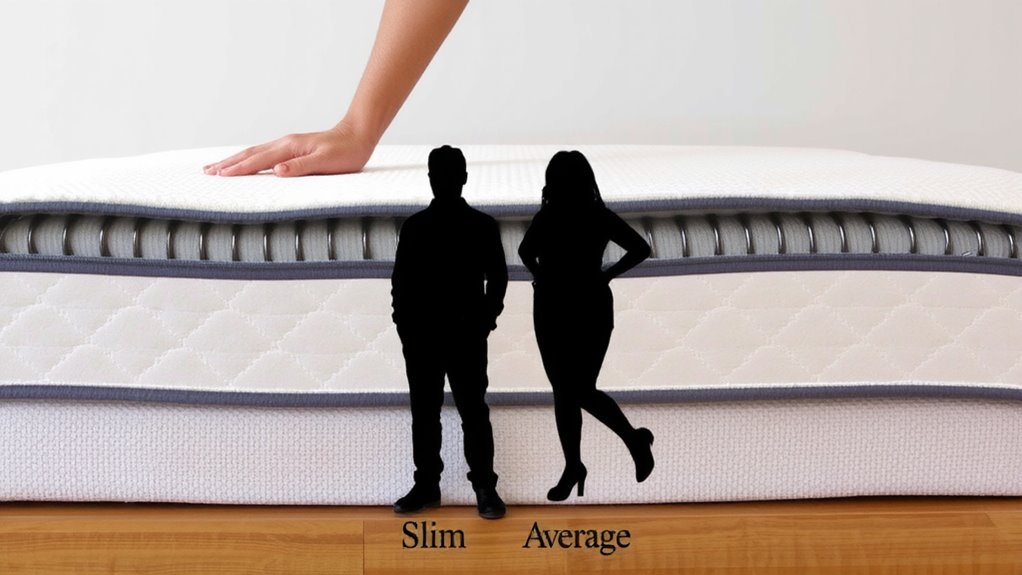
Your body weight and build play a key role in how an innerspring mattress supports you. If you have higher body weight, you’ll likely need a taller mattress with a thick comfort layer and strong coils to prevent sagging. This helps maintain proper spinal alignment, especially if you sleep on your side or back. Lightweight sleepers may find a lower-profile model sufficient, since they don’t compress the coils as much. Medium to heavy body weight often requires at least 10–12 inches of thickness for enough support. A mattress that matches your build reduces pressure on joints and can ease discomfort over time. Many brands offer trial periods, so test firmness and support over several nights. Check warranty details for sag depth coverage-most honor claims if indentations exceed 1.5 inches.
Do Thicker Innerspring Mattresses Have Better Support?
A thicker innerspring mattress isn’t always more supportive, but it often provides extra layers that can improve durability and comfort for certain sleepers. You’ll find that support depends more on coil density and design than thickness alone. Higher coil density usually means better weight distribution and longer-lasting resilience, especially if you’re heavier or need more stability. Thicker models often include reinforced edges, boosting edge support so you don’t feel like you’ll roll off when sleeping near the side. This can be helpful if you share the bed or use the full surface regularly. While added height might include cushioning layers for pressure relief, don’t assume it equals better support. Check the coil count and frame design to assess real performance. Many quality options offer trial periods and warranties, letting you test edge support and firmness risk-free.
How Coil Quality Impacts Thick Innerspring Mattresses
Even though a thick innerspring mattress might feel plush on top, the real foundation lies in the quality of the coils, not just the height. You’ll want to check the coil count and gauge-lower gauge means thicker wires and better coil durability, which helps maintain support over time. High-quality coils resist sagging and offer consistent spinal alignment, especially helpful if you have back pain or sleep restlessly. Better coils also improve motion isolation, meaning your partner’s movements won’t disturb your sleep as much. While a thick comfort layer feels soft, without solid coil support, you may sink too deeply and lose proper posture. Look for tempered steel coils and at least a 10-year warranty as signs of reliability. Test the mattress if possible, paying attention to bounce and edge support. Good coil design balances responsiveness with stability, aiding long-term comfort and rest without exaggerating softness.
When a Thinner Innerspring Mattress Is the Right Choice
Thinner innerspring mattresses, often ranging from 5 to 8 inches thick, can be the right choice when space, weight, or budget are key factors. They work well in smaller rooms, dorms, or guest areas where space saving designs matter. These models are also easier to move and set up, especially in tight spaces. If you’re looking for budget friendly options without sacrificing essential support, a thinner innerspring can deliver reliable performance. A quality 6-inch model can offer surprising comfort for adults seeking a best 6-inch mattress.
| Feature | Benefit | Consideration |
|---|---|---|
| Compact height | Fits low-profile frames | Less cushioning for some |
| Lighter weight | Easier transport | May feel firm |
| Simpler construction | Lower cost | Minimal edge support |
| Space efficient | Ideal for small areas | Not suited for all sleepers |
Many come with trial periods and warranties, letting you assess comfort safely.
How to Test an Innerspring Mattress Before You Buy
How do you know if an innerspring mattress truly fits your sleep needs? You need to test it in person. Lie down for at least 10 to 15 minutes in your usual sleep position to assess the mattress firmness. Is your spine aligned? Do you feel pressure on your shoulders or hips? A good innerspring should support your body’s natural curve without sagging. Don’t skip checking edge support-sit on the sides to see if they hold firm. Weak edges can make getting in and out of bed difficult, especially if mobility is a concern. Consider how coil count and gauge affect responsiveness and durability. Take note of the return policy or sleep trial length, too-many brands offer 90 to 120 nights. Pair your findings with warranty details to make a confident, informed decision.
On a final note
You should choose an innerspring mattress thickness based on your sleep position and body type, as these affect support and comfort. Thicker models often offer more cushioning, but coil quality matters more than height alone. Side sleepers may need extra padding, while lighter individuals might prefer thinner designs. Always test the mattress in-store or through a trial period, and check the warranty for long-term protection. A good fit helps improve sleep quality over time.