Sourcing Hypoallergenic Dyes Specifically For Children’s Bed Linens
Choose hypoallergenic dyes free from azo compounds, formaldehyde, and heavy metals to protect your child’s sensitive skin. Look for OEKO-TEX® or GOTS certification to confirm safety and eco-friendly processing. These dyes use plant-based or low-impact pigments that bond tightly, reducing residue and irritation risks. Opt for suppliers who provide transparency, batch testing, and biodegradable options. Many brands offer trial periods, so you can test for softness and colorfastness-there’s more to learn about making the best choice for restful, comfortable sleep.
Notable Insights
- Choose hypoallergenic dyes free from azo compounds, formaldehyde, and heavy metals to protect children’s sensitive skin.
- Prioritize dyes certified by OEKO-TEX® Standard 100 or GOTS for verified absence of harmful substances.
- Source from transparent suppliers who provide batch-specific test reports and full ingredient disclosure.
- Opt for plant-based or low-impact synthetic dyes that are biodegradable and eco-friendly.
- Test dye samples for colorfastness and skin compatibility before manufacturing children’s bed linens.
What Makes a Dye Hypoallergenic for Kids?
Why do some dyes cause reactions while others don’t? It comes down to dye composition and your child’s skin sensitivity. Hypoallergenic dyes are made without harsh chemicals like azo compounds, heavy metals, or formaldehyde, which often trigger irritation. These safer dyes use plant-based or low-impact synthetic pigments that bond tightly to fabric, reducing residue. Since kids have thinner skin and developing immune systems, even mild irritants can disrupt sleep or worsen conditions like eczema. A dye labeled “hypoallergenic” means it’s been tested to minimize allergic potential. Always check product details on dye composition-transparency matters. Some brands offer trial periods, letting you test bedding without risk. Look for softness, colorfastness, and certifications later, but start by ruling out known irritants. Your child’s comfort and uninterrupted sleep depend on thoughtful choices today.
Which Certifications Guarantee Safe Dyes for Children?
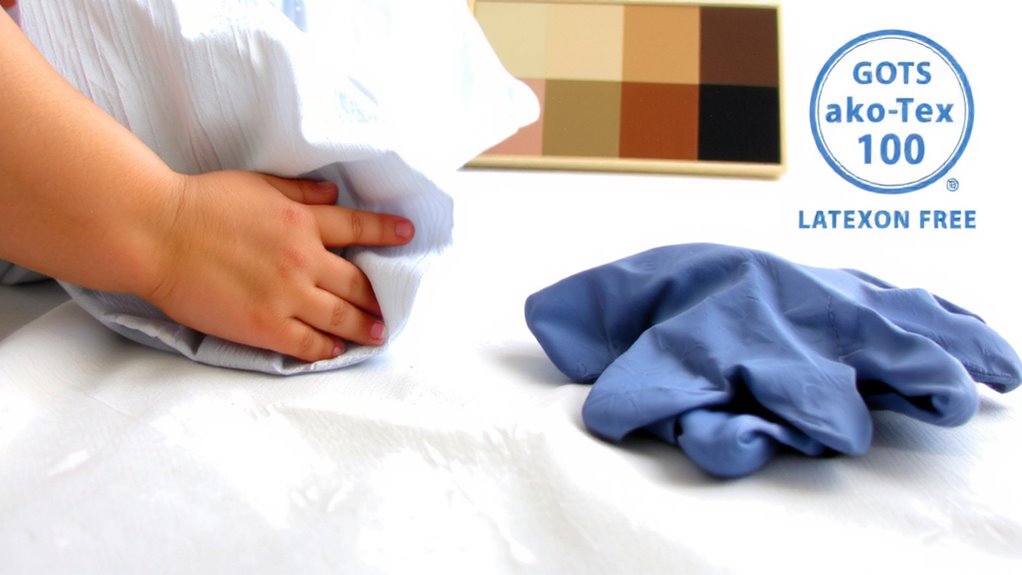
How can you be sure the dyes in your child’s bedding won’t cause a reaction? Look for certifications like OEKO-TEX® Standard 100 and GOTS (Global Organic Textile Standard). These labels mean the dyes have been tested for low dye toxicity and won’t release harmful chemicals. They also guarantee limits on substances known to irritate skin sensitivity. If your child has allergies or eczema, certified bedding adds a layer of protection. OEKO-TEX® checks for over 100 harmful substances, while GOTS confirms both safe dyes and eco-friendly processing. You don’t need to guess whether the fabric is safe-these certifications give clear proof. They’re especially helpful when addressing sleep disruptions linked to discomfort. Choosing certified bedding means you’re considering both material safety and sleep quality. It’s a practical step toward reducing nighttime irritation. For added assurance, consider bedding made with hypoallergenic materials that resist common allergens like dust mites and mold.
How to Find Trusted Hypoallergenic Dye Suppliers?
Where do you start when looking for dependable suppliers of hypoallergenic dyes for children’s bedding? Begin by prioritizing supplier transparency-reputable companies openly share ingredient lists and processing methods. You’ll want proof that dyes are free from common allergens and harsh chemicals. Check for documentation that confirms material traceability, so you know exactly where each component comes from and how it’s handled. Look into suppliers who partner with certified textile labs and provide batch-specific test reports. Direct communication helps too; responsive suppliers who welcome questions are more likely to stand behind their product. Don’t skip sample testing-small-scale trials let you assess colorfastness and skin compatibility before committing. Reliable suppliers often offer warranties or satisfaction guarantees, giving you a risk-free way to verify performance. These steps help guarantee safer, more consistent results for sensitive sleep environments.
Can Hypoallergenic Dyes Be Eco-Friendly Too?
You’ve likely already considered the importance of transparent sourcing when choosing hypoallergenic dyes for children’s bed linens, but another factor deserves attention-environmental impact. Yes, many hypoallergenic dyes can also be eco-friendly, especially when they feature biodegradable composition and renewable sourcing. Dyes made from plant-based materials break down safely over time, reducing pollution in water systems. Renewable sourcing means raw ingredients come from sustainably managed crops or resources, lowering carbon footprint. These dyes often undergo gentler processing, which conserves energy and reduces chemical byproducts. While performance remains strong across washes, always check for certifications that verify both skin safety and environmental claims. Some brands offer trial periods or warranties, letting you test colorfastness and softness. Opting for dyes with both biodegradable composition and renewable sourcing supports not just your child’s comfort but long-term environmental well-being.
Where to Buy Safe Dyes for Kids’ Bedding?
Why settle for uncertain quality when your child’s comfort and safety are at stake? You can find safe dyes for kids’ bedding at trusted specialty retailers and online stores focusing on eco-conscious textiles. Look for brands that use natural pigments derived from plants, minerals, or food sources, as these are less likely to trigger sensitivities. These dyes often rely on organic compounds, avoiding harsh chemicals common in synthetic versions. Check product labels for certifications like GOTS or OEKO-TEX, which confirm the absence of harmful substances. Some manufacturers offer sample swatches, so you can test colorfastness and softness before buying full sets. Many also provide trial periods or warranties on bedding, allowing peace of mind during selection. Choosing bedding with verified safe dyes supports restful sleep and reduces irritation risks, especially important if your child has sensitive skin or sleep disruptions tied to discomfort.
On a final note
You’ll want dyes labeled hypoallergenic and certified by Oeko-Tex or GOTS, especially for kids’ bedding. These standards limit irritants and verify safety through lab testing. Trusted suppliers often provide documentation and batch-specific reports. Many eco-friendly dyes now meet these standards too, combining safety with sustainability. Look for brands offering trial periods or warranties, so you can test comfort and colorfastness. Check return policies to guarantee flexibility if sensitivities arise.