Ventilating Pillows Daily by Hanging Them Outdoors in Sunlight and Wind
Hang your pillows outside each day to refresh them with sunlight and wind, which reduce moisture and deter dust mites. Morning light offers strong UV exposure without overheating fibers, especially safe for down, feather, or polyester fills. Avoid memory foam-it degrades in UV light. Flip them often for even drying and use clips to keep them secure. Thirty to sixty minutes is enough to freshen most pillows without fading or damage. You’ll notice they feel cleaner, smell better, and last longer with this simple habit-there’s more to discover about keeping your sleep surface at its best.
Notable Insights
- Hang pillows outside in morning sunlight for optimal freshness and moisture reduction.
- Flip pillows regularly to ensure even sun and airflow exposure on all sides.
- Use clips or clothespins to secure pillows and prevent them from blowing away.
- Avoid daily sun-drying; 30–60 minutes occasionally suffices to prevent fabric damage.
- Suitable for down, feather, and synthetic pillows; avoid direct sun for memory foam.
Hang Pillows Outside for Best Results
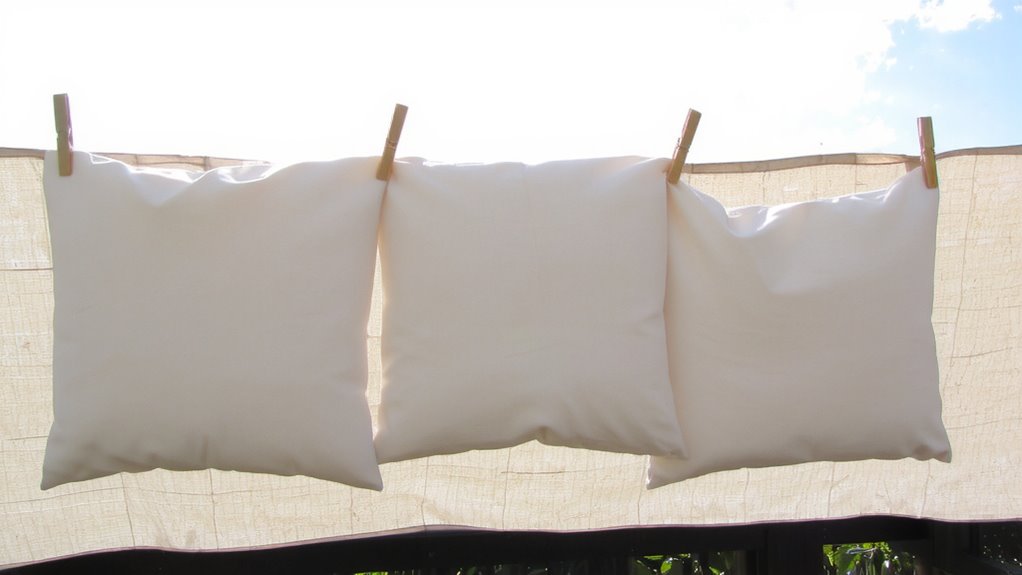
While hanging your pillows outside might seem like a simple step, it’s one of the most effective ways to refresh them and support better sleep over time. Sunlight and airflow naturally reduce moisture and deter dust mites, which can worsen allergies and disrupt rest. For best results, practice regular pillow flipping to expose all sides evenly to the sun and wind, helping prevent uneven wear and improving air circulation. Use clips or clothespins for secure outdoor anchoring so pillows won’t blow away and maintain position for consistent drying. This method works well with down, feather, and synthetic fills, though delicate materials may need shade to avoid fiber breakdown. Most manufacturers don’t cover sun damage under warranties, so monitor exposure. Doing this weekly supports long-term pillow performance, potentially easing sleep discomfort linked to allergens or humidity. It’s a low-cost step with measurable benefits for sleep quality.
Pick the Best Time to Sun-Dry Pillows
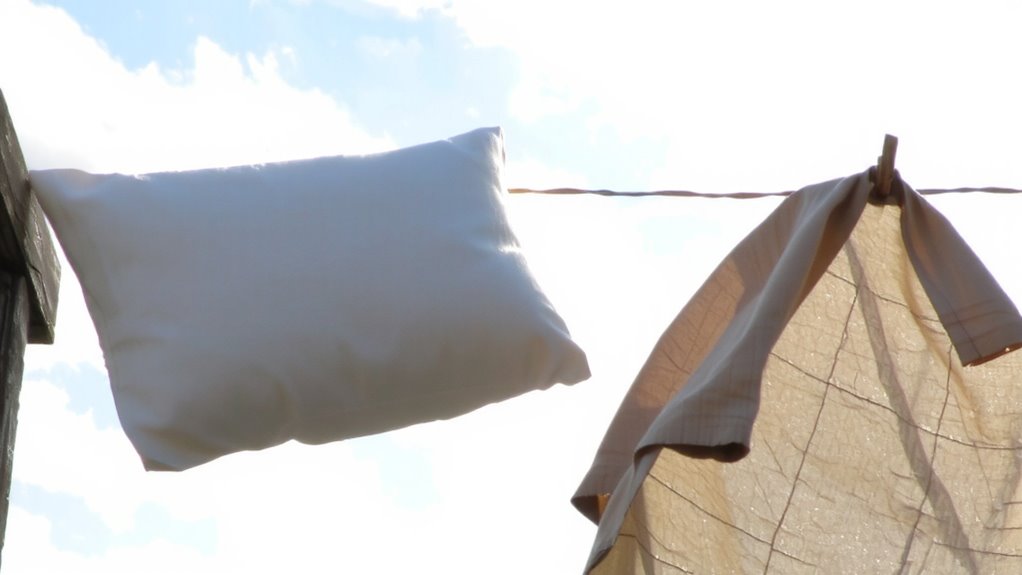
When should you set your pillows out to get the most from sun-drying? Aim for morning exposure, when sunlight is strong but not harsh, letting UV rays break down moisture and odors without risking fabric damage. This early start also aligns with cooler temperatures, helping prevent overheating or warping of pillow materials. You’ll want consistent airflow, so check the wind direction-position pillows where breeze passes freely through, ideally on a clothesline or breathable rack. Facing them into the wind boosts drying efficiency and cuts down on mold or mildew risks. Dry them for at least two to three hours, flipping once midday for even results. Avoid afternoon sun’s peak intensity, which can degrade fibers over time. By timing it right and using natural airflow, you extend pillow lifespan and support better sleep hygiene without added costs or chemicals.
Which Pillows Can You Safely Sun-Dry?
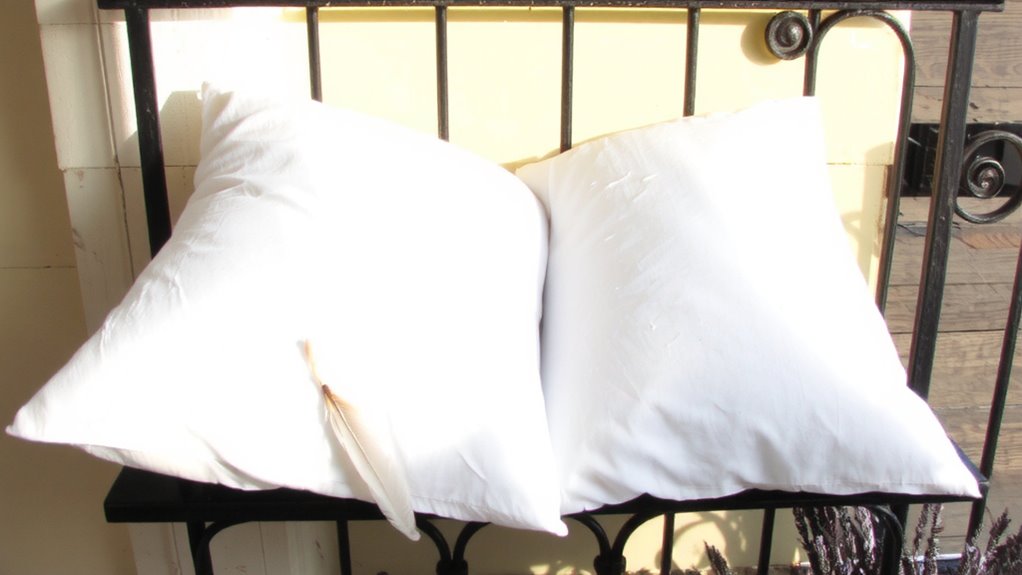
How do you know which pillows can handle a sun-dry without losing their shape or softness? Not all materials respond well to direct sunlight and airflow. You’ll want to check fill type and construction first. Pillows made with memory foam can suffer from degraded memory foam integrity when exposed to prolonged UV rays and heat. Down pillows risk down clumping if moisture remains trapped after drying. Synthetic fills are generally more resilient, but low-density versions may flatten faster. A high-quality memory foam pillow will often have breathable covers or open-cell foam to mitigate heat retention, though UV exposure remains a concern. Here’s a quick guide:
| Pillow Type | Sun-Dry Safe? | Key Consideration |
|---|---|---|
| Memory Foam | No | UV exposure harms memory foam integrity |
| Down | Yes (cautiously) | Air thoroughly to prevent down clumping |
| Polyester Fiber | Yes | Dries fast, maintains loft with fluffing |
Choose based on material stability and your sleep needs.
Avoid These Sun-Drying Mistakes
If you’re keen to freshen your pillow with a bit of sun, it’s easy to overlook small missteps that could shorten its lifespan. Leaving it out too long causes fabric fading, especially with down or cotton covers exposed to strong UV rays. You don’t need hours-30 to 60 minutes is enough to freshen without degrading fibers. Overwashing before sun-drying adds overwashing damage, weakening fill structure and reducing support over time. Always check care labels; synthetic fills like polyester tolerate sun better than delicate natural fills. Turn the pillow frequently so sunlight hits evenly and moisture escapes. Avoid direct contact with rough surfaces or clotheslines that snag fabric. If your pillow feels stiff or brittle afterward, you’re drying too often or too long. Consider sun-drying once a month instead of weekly to preserve integrity. Proper care maintains comfort, support, and breathability-key factors for restful sleep and minimizing pressure points.
How Sunlight Kills Dust Mites and Freshens Pillows
Sunlight does more than just brighten your bedroom-it’s a natural way to keep your pillow clean and comfortable. When you hang your pillow outside, UV exposure from direct sunlight helps destroy dust mites, which thrive in warm, damp environments. These tiny pests feed on dead skin cells and can trigger allergies or worsen asthma, affecting sleep quality. The sun’s rays provide natural disinfection, breaking down allergens and mold spores embedded in the fabric and filling. You’ll notice your pillow feels fresher and smells cleaner after a few hours outdoors. This simple habit requires no chemicals and supports better respiratory health over time. While some pillow materials tolerate sun-drying well, others may degrade with prolonged exposure, so check manufacturer guidelines. Still, occasional ventilation offers a low-cost, effective way to extend your pillow’s life and maintain a more hygienic sleep surface. For asthmatics, choosing the right pillow matters just as much as keeping it clean, and best pillows for asthma relief can significantly reduce nighttime symptoms.
On a final note
Hanging pillows outside in sunlight and breeze helps reduce moisture, kill dust mites, and refresh fill materials naturally. You’ll extend their lifespan and improve sleep comfort, especially if you rotate them seasonally. Check care labels-down, cotton, and some synthetics handle sun-drying well, while memory foam may degrade. Avoid prolonged exposure or damp conditions. This simple habit supports cleaner bedding, which can ease mild allergies and enhance sleep quality over time.