How to Create a Relaxation Routine That Prepares You For Quality Rest
You can create a relaxation routine for better rest by dimming lights and using warm-hue bulbs to support your body’s natural wind-down process. Turn off screens by 9 p.m. to reduce blue light that delays sleep. Try 5 minutes of box breathing or the 4-7-8 method to calm your nervous system. Drink chamomile tea, read a physical book, or take a warm bath an hour before bed. Pair these habits with consistent sleep and wake times, even on weekends, to strengthen your body’s rhythm-small adjustments like these improve sleep quality over time, and there are more ways to fine-tune your approach.
Notable Insights
- Dim lights and use warm-hue bulbs to signal your body it’s time to wind down.
- Set a digital curfew by turning off screens at least one hour before bed.
- Practice 5 minutes of breathwork, like box breathing or 4-7-8, to calm your nervous system.
- Create sleep-friendly habits such as drinking herbal tea or reading a physical book.
- Align your routine with your energy levels by choosing quiet or active winding-down activities accordingly.
Set the Right Environment for Your Wind-Down Routine
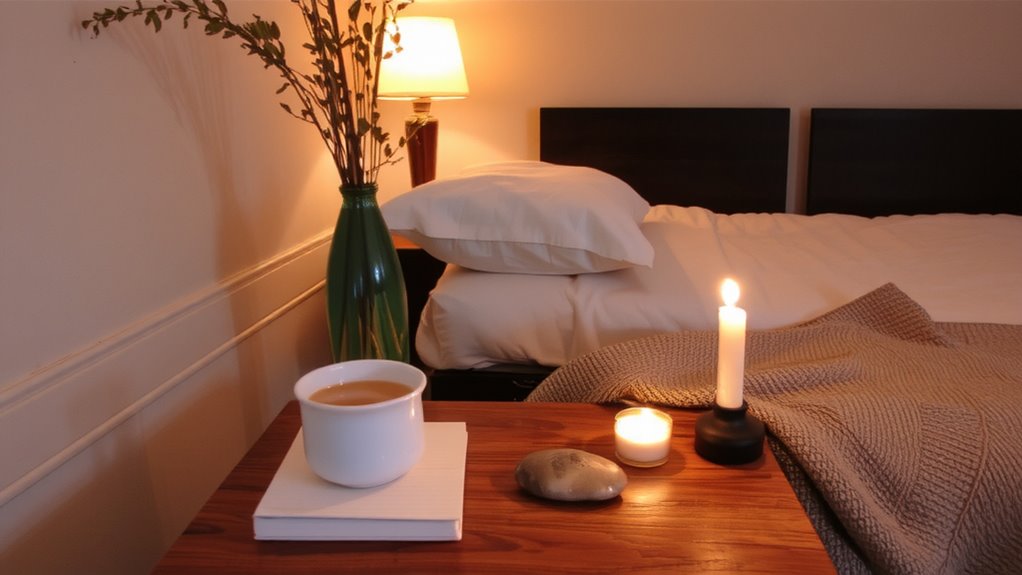
While your bedroom may seem like just a place to sleep, shaping it into a true relaxation zone can make a noticeable difference in how quickly you unwind and the quality of your rest. Good lighting control means using dimmable lamps or warm-hue bulbs that mimic sunset, helping your body ease into sleep mode. Blackout curtains or a sleep mask offer added darkness if streetlights or early sun disrupt your space. For noise management, consider a white noise machine, which masks disruptive sounds with steady background tones-some models even include nature sounds or auto-adjust features. Earplugs are a simple, low-cost option, with foam and silicone types offering varying comfort and noise reduction. Test different solutions over a few nights to see what improves your consistency. Most reputable brands offer at least a 30-day trial or warranty, so you can evaluate performance without risk. Upgrading to high-quality best blackout curtains can significantly enhance both darkness and noise reduction for deeper rest.
Unplug Early to Signal Sleep Time
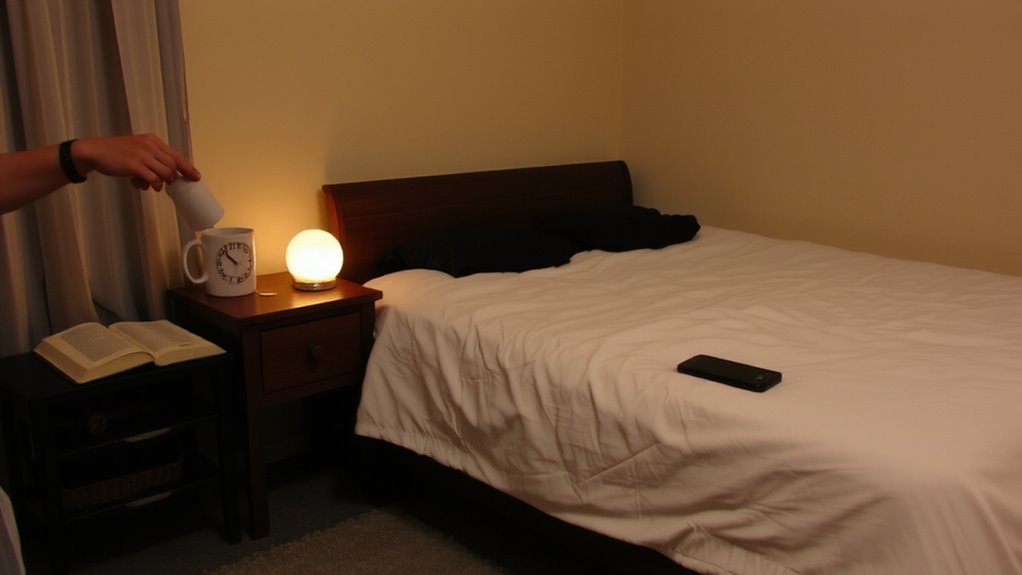
Since your brain responds to light and activity cues, turning off screens at least an hour before bed helps signal that it’s time to shift into rest mode. Setting a consistent screen curfew supports your body’s natural sleep-wake cycle and reduces exposure to blue light, which can delay melatonin release. A nightly digital detox-stepping away from phones, TVs, and computers-gives your mind a chance to slow down. You might replace screen time with low-light reading or light stretching, activities that ease the shift to sleep. Over time, this habit can improve sleep quality and make falling asleep easier. If you’re struggling with rest, adjusting your screen curfew may help without needing sleep aids. Consider starting with a 9 p.m. cutoff and adjusting based on how rested you feel. Small, consistent changes often support long-term sleep health more effectively than quick fixes.
Calm Your Mind With 5-Minute Breathwork
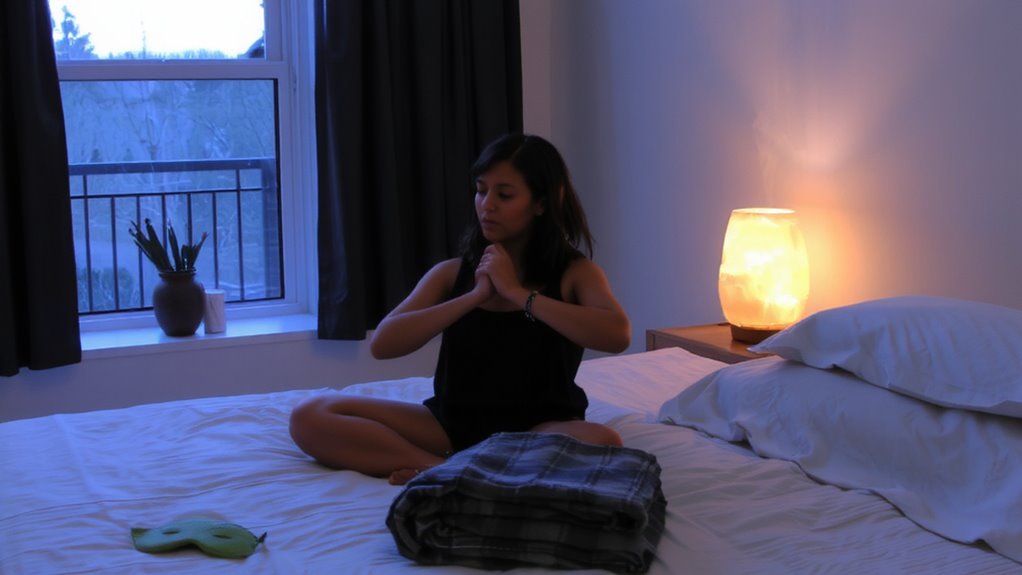
You’ve already taken a step toward better rest by reducing screen time before bed, and now you can build on that calm with a simple breathwork practice. Just five minutes of breath awareness can enhance mental clarity and signal your body it’s time to wind down. This technique requires no tools, has no side effects, and can be adjusted to your comfort level. Try it consistently for a week to assess its impact on your sleep routine.
| Technique | Duration | Benefit |
|---|---|---|
| Box Breathing | 4-4-4-4 | Balances nervous system |
| 4-7-8 Method | 4-7-8 | Promotes relaxation |
| Diaphragmatic | 5 min | Improves oxygen flow |
| Equal Breathing | 4-4 | Enhances breath awareness |
Regular practice supports mental clarity and may reduce reliance on sleep aids.
Try These 5 Rituals That Invite Sleep
Five simple rituals can make a noticeable difference in how easily you fall asleep and how well you stay asleep. Dimming the lights signals your body that it’s time to slow down, reinforcing natural sleep signals. Sipping caffeine-free tea, like chamomile, can gently relax your system. Reading a physical book-instead of a screen-provides calming bedtime cues without blue light interference. Taking a warm bath 1–2 hours before bed helps lower your core temperature, a cue for drowsiness. Finally, using a consistent sleep schedule, even on weekends, strengthens your internal clock. These rituals work best when practiced regularly, helping your body recognize when rest begins. Over time, they enhance sleep quality without medication. If you struggle despite trying these steps, consider tracking sleep patterns or consulting a professional to explore underlying causes. Incorporating best sleep-promoting bath products can further enhance the relaxing effects of your pre-bed bath routine.
Match Evening Activities to Your Energy Level
Some evenings leave you wired and alert, while others find you drained before dinner-working with that fluctuation, rather than against it, can shape a more effective wind-down routine. You’ll make better choices by adjusting your evening pacing to match how you actually feel. If you’re energetic, light chores or gentle stretching may help release tension without overstimulation. When fatigue hits early, opt for calm activities like reading or listening to soft music. Prioritizing energy alignment means skipping rigid schedules that ignore your body’s signals. This isn’t about perfection-it’s about responsiveness. Over time, noticing these patterns can improve sleep quality by reducing frustration and mental resistance. You’re more likely to stick with habits that reflect your real energy, not an idealized version. Let today’s rhythm guide your choices, and you’ll support natural shifts into rest.
Build a Wind-Down Routine You’ll Stick To
While consistency matters, a wind-down routine works best when it’s designed around your habits and preferences, not someone else’s idea of ideal. Start small to create habits that feel manageable, like reading or dimming lights at the same time each night. Choose activities that match how you naturally unwind-some people relax with music, others with light stretching or journaling. The key is picking what fits your life so you can maintain momentum. Avoid screens or intense discussions that disrupt your calm. Test different routines for a few nights, adjusting based on how rested you feel. If you struggle with sleep despite effort, consider discussing sleep disorders with a professional. If needed, short-term use of sleep aids may help, but build your routine first. A practical wind-down plan supports rest without relying on outside fixes. Incorporating Top Sleep Hygiene Picks can enhance your environment for better rest.
Why Consistency Makes Your Routine Work Better
You’ve picked activities that suit your pace and set a routine you can follow most nights, and now it’s time to see how doing them consistently sharpens the results. When you repeat the same steps at a similar time each night, your body picks up on the pattern, syncing with your natural biological rhythm. This helps you fall asleep faster and improves sleep quality over time. Consistency also builds a strong mental association-your mind starts to link those activities with winding down, making relaxation easier. Even small, regular efforts train your system more effectively than occasional, intense routines. If sleep issues persist, a steady routine offers clearer insight into what may be helping or worsening your rest. It also makes any adjustments to sleep aids or habits easier to evaluate. Sticking with it doesn’t require perfection-just steady repetition to see real, lasting improvement.
On a final note
You’ll sleep better when your routine matches your energy and habits. Start small, like unplugging 30 minutes early or trying five minutes of slow breathing. Notice what helps you relax, then do it consistently. If sleep problems continue, track patterns for a week and consult a professional. Not all sleep aids work the same-read labels, check ingredients, and consider talking to your doctor before use.