Genetics of Delayed Sleep Phase Disorder: PER3 & CLOCK Genes
Your delayed sleep pattern isn’t just poor habits-it’s often genetic. Variants in genes like PER3 and CLOCK shift your internal clock, making you fall asleep later and struggle with early schedules. These changes affect melatonin release and light sensitivity, so standard sleep advice might not work. DSPD can run in families, showing a strong biological basis. Treatments like light therapy and timed melatonin can help reset your rhythm. There’s more to how science can support your sleep health.
Notable Insights
- Genetic mutations in circadian rhythm genes like PER3 and CLOCK can cause delayed sleep onset in DSPD.
- Variants in the PER3 gene are linked to longer sleep needs and later sleep timing.
- CLOCK gene variants delay melatonin release, shifting the internal clock to later hours.
- DSPD often runs in families, indicating a strong genetic predisposition to the disorder.
- Inherited differences in light and melatonin response contribute to circadian misalignment in DSPD.
What Is Delayed Sleep Phase Disorder?
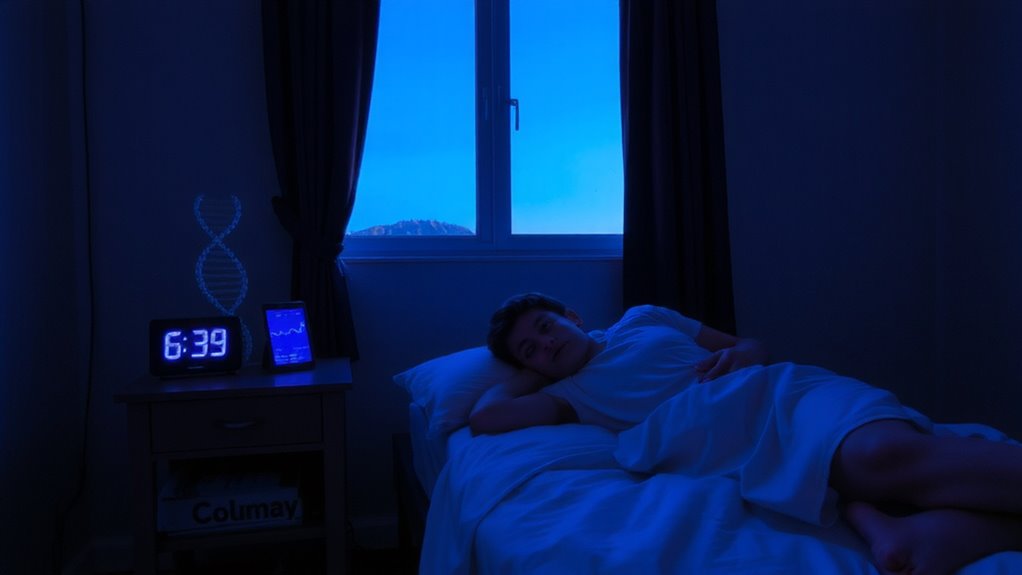
While your body typically follows a 24-hour sleep-wake cycle, if you regularly fall asleep and wake up much later than conventional times-say, not feeling tired until 2 a.m. or later-you might have delayed sleep phase disorder (DSPD). This condition shifts your circadian rhythms, the internal clock regulating sleep patterns, making it hard to follow typical schedules. You’re not lazy or undisciplined-your biology just runs on a different timetable. Symptoms often begin in adolescence and persist without adjustment. Though DSPD doesn’t usually affect sleep quality once you’re asleep, it can disrupt work, school, or social life. Diagnosis involves tracking sleep patterns, sometimes with a sleep diary or actigraphy monitor. Treatments include light therapy, melatonin supplements under medical guidance, and gradual schedule adjustments. Success varies, and consistency matters most. Consider discussing options with a sleep specialist to explore what’s supported and sustainable for your lifestyle.
The Genetics Behind Your Delayed Sleep Schedule
If you’ve always been a night owl and struggle to fall asleep early no matter how hard you try, your genes might be partly to blame. Your circadian rhythm, the internal clock controlling sleep and wake times, can be influenced by genetic mutations that shift your natural sleep window later into the night. These variations affect how your body responds to light, melatonin, and other cues that regulate sleep timing. Some people simply have a biological tendency to fall asleep and wake up later, and it’s not due to poor habits or discipline. Understanding this genetic component helps explain why standard sleep advice doesn’t work for everyone. If your schedule feels out of sync despite good sleep hygiene, discussing your pattern with a healthcare provider could clarify whether a circadian rhythm disorder is involved. Genetic insights may guide effective strategies, including light therapy, timed melatonin, or adjusted sleep schedules, based on your body’s actual needs.
PER3 and CLOCK: Genes That Keep You Up Late
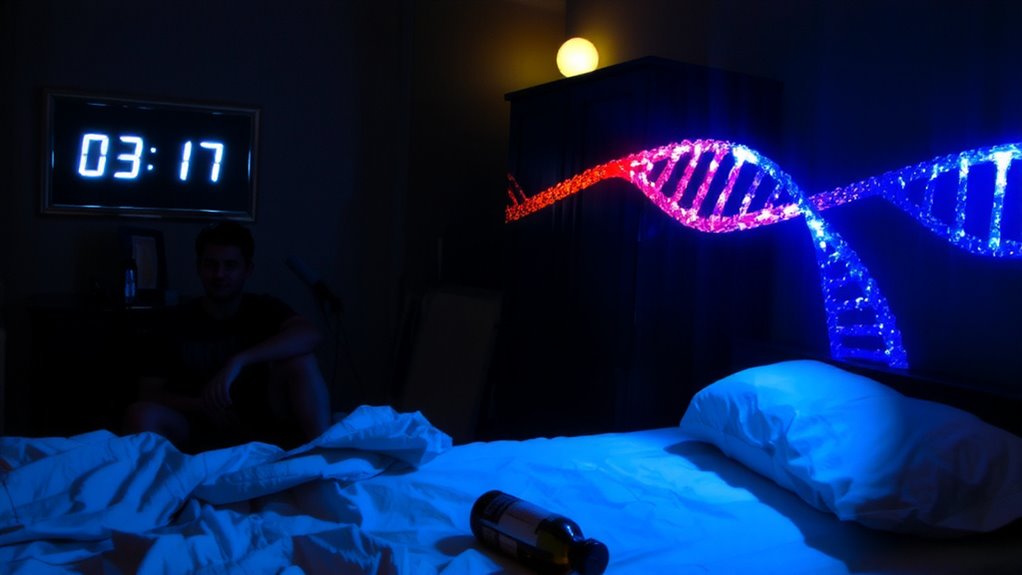
Why do you stay alert late into the night when others are already asleep? It might be your gene variants at work, especially in the PER3 and CLOCK genes that help control your circadian rhythms. These genes influence when you feel sleepy and when you wake up naturally. Some variants shift your internal clock later, making it harder to fall asleep early.
| Gene | Function | Effect of Variant |
|---|---|---|
| PER3 | Regulates sleep duration | Longer version linked to late nights |
| CLOCK | Controls circadian timing | Alters rhythm, delays sleep onset |
| PER3 | Supports deep sleep phases | Shorter version may reduce need for long sleep |
| CLOCK | Influences melatonin release | Delays signal for sleep preparation |
Understanding your genetics helps you make informed choices about sleep routines or potential aids.
Why DSPD Runs in Families
A family pattern might be the clue you need to understand your sleep struggles. If you or your relatives have trouble falling asleep until late at night, a genetic predisposition could be involved. Research shows DSPD often runs in families, suggesting your family history plays a key role. Specific gene variants, like those in PER3 or CLOCK, can be inherited and affect your circadian rhythm. These genes help control when your body feels tired or alert. When they’re altered, your internal clock shifts later, making it harder to sleep and wake at typical times. A strong family history doesn’t guarantee you’ll develop DSPD, but it increases the likelihood. Recognizing this link helps you make informed choices about managing symptoms. Understanding your genetic predisposition allows for earlier, more targeted strategies, such as light therapy or adjusted sleep schedules, to support healthier rest patterns over time.
Can You Reset Your Body Clock Despite Genetics?
You can influence your body’s internal combust even if genetics have set you up for a later sleep schedule. Light therapy helps shift your rhythm by exposing you to bright light soon after waking, which signals your brain to stop producing melatonin and feel more alert. Using a light box for 20–30 minutes daily can gradually move your sleep time earlier. Melatonin supplementation, when timed correctly-usually taken several hours before your current sleep onset-can also help reset your clock over time, especially if taken consistently. These methods work best when combined with strong sleep hygiene, like avoiding screens at night and maintaining a fixed wake-up time. While genetics play a role, daily habits and timed interventions can make a measurable difference. Results vary, but many people see improvement within a few weeks. A dedicated wake-up light can enhance morning light exposure and support circadian alignment.
On a final note
You can’t change your genes, but you can adjust how they affect your sleep. Light therapy, consistent schedules, and melatonin supplements work with your biology to shift your rhythm over time. Exposure to morning light helps reset your internal clock, while avoiding evening screens reduces delays. Treatment takes patience, often weeks, but many see real improvement. If sleep keeps disrupting your days, talking to a sleep specialist gives you access to personalized strategies and proven options worth trying.