How to Recognize and Manage Jet Lag With Scientific Techniques
You feel jet lag when your internal clock’s out of sync with local time, causing fatigue, sleep issues, and low focus. Manage it by adjusting your sleep schedule gradually before travel, using morning light to reset your rhythm, and timing meals and caffeine to match destination hours. Melatonin supplements, taken at the right time, can help shift your clock. Stay hydrated, avoid alcohol, and get natural light after landing. Smart habits speed up adjustment-more strategies can improve your results.
Notable Insights
- Jet lag occurs when your internal circadian clock desynchronizes from local time after crossing multiple time zones.
- Exposure to bright morning light at your destination helps advance your circadian rhythm, especially when using 10,000 lux light therapy.
- Gradually shift your sleep schedule by 15–30 minutes per night before travel to ease circadian adjustment.
- Align meal times and caffeine intake with your destination’s local time to reset internal body clocks.
- Stay hydrated, avoid alcohol, seek natural light, and limit naps to 30 minutes after arrival to accelerate recovery.
Why Jet Lag Hits Hard
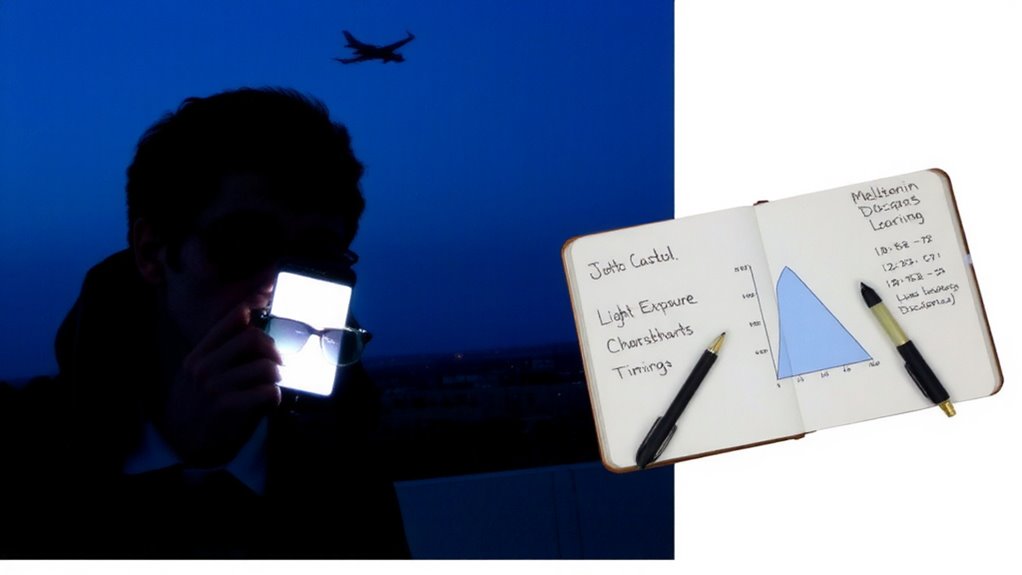
When you travel across multiple time在玩家中, your body’s internal clock gets thrown out of sync with the local environment, and that’s when jet lag sets in. This mismatch causes circadian disruption, meaning your brain still operates on your original time zone’s schedule. You feel tired when you should be alert, struggle with sleep, or wake too early. That’s due to biological inertia-your body resists rapid change, clinging to established rhythms. This delay in adjustment impacts sleep quality, mood, and daily performance. Recognizing these symptoms helps you decide whether to adjust sleep timing pre-travel or use short-term sleep aids. Some travelers benefit from melatonin supplements, which may help reset rhythms when timed correctly. Others assess light exposure or consider over-the-counter options, reviewing product details like dosage, trial periods, or manufacturer guidance to make informed choices. Managing expectations improves adaptation. Tracking these patterns with an exercise and sleep tracker can provide valuable insights into your circadian rhythm adjustments during travel.
Reset Your Clock With Light

Light plays a powerful role in setting your body’s internal clock, and using it wisely can ease the shift to a new time zone. Exposure to morning light helps reset your rhythm, reducing circadian disruption after travel. Light signals your brain to suppress melatonin, making you feel more alert during daytime hours. To optimize adjustment, time your light exposure based on your destination’s schedule.
| Timing | Effect on Circadian Clock |
|---|---|
| Morning light | Advances clock earlier |
| Evening light | Delays clock later |
| Bright light | Stronger resetting signal |
| Dim light | Minimal impact |
| No light | Sustains current rhythm |
Seek natural sunlight when possible, or use a light box with at least 10,000 lux. Aim for 20–30 minutes shortly after waking. This practice supports smoother adaptation without sleep aids. For optimal results, consider using one of the top-rated light therapy lamps designed for circadian rhythm regulation.
Shift Your Sleep Before You Go
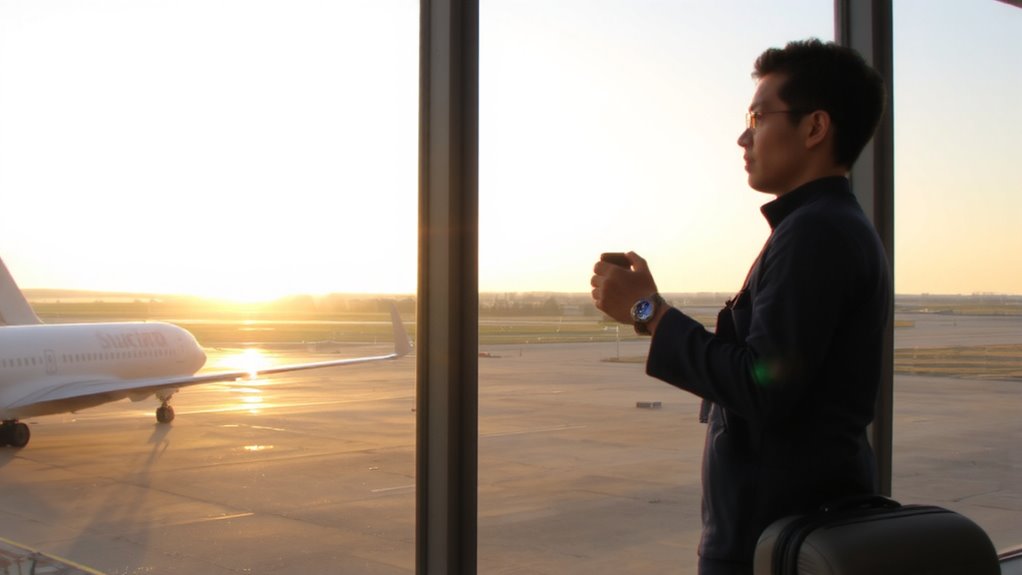
A few days before your trip, you can start shifting your sleep schedule to match your destination’s time zone-this gradual adjustment helps your body adapt more smoothly. If you’re traveling east, go to bed 15–30 minutes earlier each night; if going west, delay sleep by the same amount. This gradual adjustment minimizes internal clock disruption. Practice good sleep hygiene by keeping your room dark, cool, and quiet, and avoid screens at least an hour before bed. Stick to a consistent wake-up time, even on weekends, to strengthen your rhythm. While sleep aids may seem tempting, they can interfere with natural adjustment and often come with next-day grogginess. Instead, focus on consistent cues like light exposure and routine. Over-the-counter options exist, but consider short-term use only and consult a provider if you have underlying sleep disorders.
Sync Meals and Caffeine to Your New Time Zone
You’ve already started aligning your sleep schedule with your destination’s time zone, and now it’s time to bring your eating and caffeine habits into sync. Adjusting meal timing helps reset your internal clock, since your digestive system influences circadian rhythms. Begin eating meals according to your destination’s schedule as soon as you board the plane. If it’s breakfast time at your destination, eat then-even if it feels odd. Avoid heavy meals late in the local evening, as they may interfere with sleep. Pair meal timing with caffeine adjustment: consume caffeine only during morning and early afternoon hours at your destination. Skip caffeine within six hours of bedtime to protect sleep quality. This strategy supports faster adaptation without relying on sleep aids. Small, consistent changes in food and caffeine habits speed up recovery from jet lag, making it easier to stay alert during the day and fall asleep at night.
Use Melatonin to Beat Jet Lag
Why do some travelers adapt to new time zones faster than others? Your body’s internal clock responds to light and hormones, especially melatonin. You can speed up adjustment with smart melatonin timing and hormone supplementation. Take melatonin close to bedtime at your destination to signal “time to sleep,” helping realign your rhythm.
| Direction | Dose (mg) | Ideal Timing |
|---|---|---|
| Eastward | 0.5–3 | 30–60 min before bedtime |
| Westward | 0.5–3 | At local bedtime |
| No shift | 0 | Not needed |
Low-dose supplements (0.5–3 mg) work well for most. Extended-release versions mimic natural release. Always consult a healthcare provider before starting hormone supplementation, especially if you have sleep disorders or take other medications. Try different doses to find what supports your sleep without grogginess. Some brands offer money-back trials-check warranty details. For reliable options, consider the best melatonin supplements based on efficacy and user feedback.
Recover Fast After Landing
Once you’ve landed, your focus shifts from preparing your body to resetting it in real time. To recover fast, prioritize hydration balance by drinking water consistently-avoid alcohol and caffeine, which worsen dehydration and disrupt sleep cycles. Within a few hours of arrival, expose yourself to natural light to help resynchronize your internal clock. Consider light exercise, but pay close attention to exercise timing; a short walk can boost alertness, but intense workouts too soon may increase fatigue. If you land in the morning, try to stay awake until the local evening to adapt faster. A brief nap-under 30 minutes-can help if you’re struggling, but avoid long rests that delay adjustment. Use sleep aids cautiously, and only after evaluating their effect on your sleep quality. Small, informed choices speed recovery without overburdening your system.
On a final note
You can reduce jet lag by adjusting your sleep schedule before travel, using light exposure to reset your internal clock, and timing meals and caffeine with your destination’s time zone. Melatonin may help align your rhythm, especially on long flights. Upon arrival, stay awake until local bedtime. These strategies work best together, improving alertness and sleep quality without relying on strong sleep aids, giving you a clearer, more natural recovery.