How to Support a Child With Delayed Sleep Onset Due to Hyperactivity
You can support your child by creating a consistent bedtime routine with calming activities like reading or light stretching 30–60 minutes before sleep. Cut screen time at least an hour before bed to protect melatonin levels, and use dim, warm lighting to signal the body it’s time to wind down. Keep their room cool, quiet, and clutter-free, with blackout curtains or white noise if needed. If sleep struggles persist despite these changes, underlying factors like ADHD or circadian delays may need further evaluation. More details on tailored strategies follow.
Notable Insights
- Establish a consistent bedtime routine with calming activities like reading or light stretching to signal sleep time.
- Eliminate screen use at least one hour before bed to reduce blue light exposure and support melatonin release.
- Create a sleep-friendly environment with cool, dark, quiet conditions and soothing elements like white noise or lavender.
- Use visual charts to outline bedtime steps and reinforce predictability, especially helpful for hyperactive children.
- Consult a sleep or ADHD specialist if delayed sleep persists despite routines, especially with signs of circadian or arousal disorders.
Build a Bedtime Routine for Hyper Kids
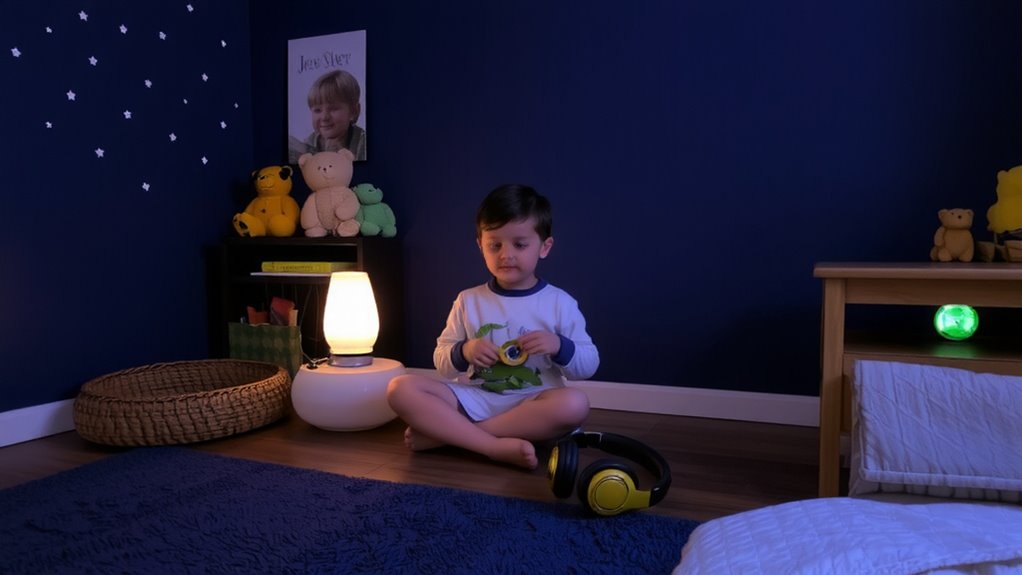
While it might feel like getting a hyperactive child to sleep is an uphill battle, establishing a consistent bedtime routine can make a real difference over time. You’ll want to focus on wind down strategies that ease your child from high-energy activities to calmer ones-like reading or light stretching-about 30 to 60 minutes before bed. These routines signal the brain that sleep is approaching. Pairing this with consistent schedules, even on weekends, helps regulate their internal clock, improving sleep onset. You don’t need special tools, but structured timelines are effective. Try using visual charts to outline steps so your child knows what to expect. If initial attempts fail, adjust timing or sequence, but keep the routine intact. Consistency supports long-term results more than perfection. Track progress over two to three weeks before deciding whether additional support is needed.
Cut Screen Time Before Sleep
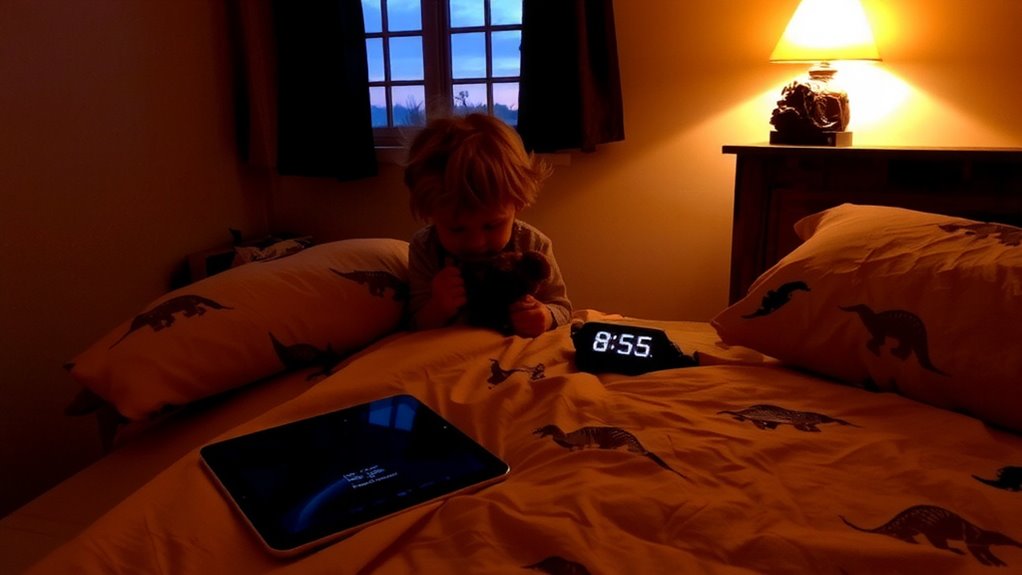
You’ve likely noticed how tough it can be to settle a child who’s been active all day, especially if screens are part of the evening routine. Blue light from phones, tablets, and TVs can interfere with melatonin, making it harder to fall asleep. Cutting screen time at least one hour before bed improves sleep hygiene and supports natural sleep rhythms.
Consider these options and their effects:
| Device | Blue Light Exposure | Impact on Sleep Onset |
|---|---|---|
| Smartphone | High | Delays sleep by 30+ mins |
| Tablet | High | Moderate delay |
| E-reader (non-backlit) | Low | Minimal impact |
| TV (distant) | Moderate | Slight delay |
| Audiobook only | None | Supports faster sleep |
Replace screen time with calming activities like reading or soft music. This shift strengthens sleep hygiene without drastic changes, easing your child into rest. Wearing blue light glasses in the evening can also help reduce melatonin disruption, especially if screen use is unavoidable.
Create a Calm Sleep Environment
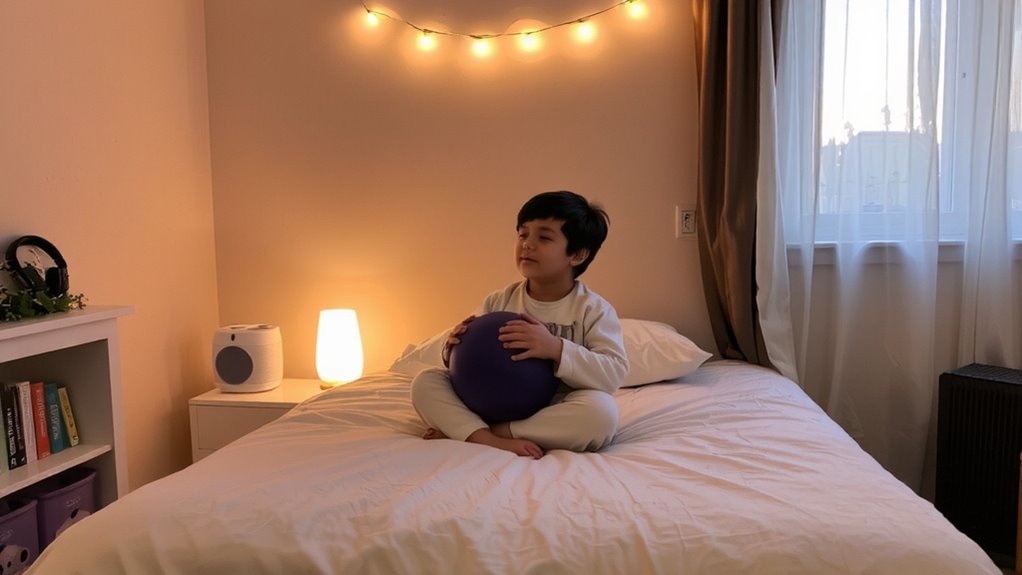
In setting up a restful space for your child, focus on elements that support relaxation and signal it’s time to wind down. Keep the room cool, dark, and quiet, using blackout curtains if needed. Consider using a white noise machine to block distracting sounds-consistent background noise can improve sleep onset and continuity. Many find the aromatherapy benefits of lavender essential oil helpful; a diffuser on a low setting may promote calm, though it’s best to test it during the day first. Choose soft, breathable bedding and minimize clutter to create a sense of order. Opt for dim, warm lighting an hour before bed. Try out different tools like weighted blankets or calming soundscapes, checking return policies in case adjustments are needed. Experiment gently, tracking what helps your child settle more easily night after night. A well-chosen queen-size blanket can enhance comfort and temperature regulation for growing children who may need more coverage.
Why Hyperactivity Leads to Late Nights
A calm sleep environment sets the stage, but even the most soothing bedroom won’t help if your child’s mind and body are still racing when it’s time to lie down. Hyperactivity keeps your child’s nervous system overstimulated, making it hard to shift into rest mode. This isn’t just about behavior-it’s rooted in brain chemistry. Imbalances in neurotransmitters like dopamine and norepinephrine affect attention and arousal, delaying the natural wind-down process. These same imbalances disrupt energy regulation, causing bursts of activity late in the day when other kids are slowing down. As a result, your child may feel alert when they should feel tired. Poor energy regulation also means physical rest doesn’t always lead to mental calm. Understanding these underlying factors helps explain why routines alone aren’t always enough. Addressing brain chemistry and energy regulation is key to improving sleep onset over time.
When to See a Sleep or ADHD Specialist
What if your child’s trouble falling asleep isn’t just a phase or something a bedtime routine can fix? It might be time to entertain professional help, especially if hyperactivity disrupts sleep nightly. Persistent patterns could point to underlying sleep disorders or untreated ADHD. Seeing a sleep or ADHD specialist allows for thorough assessment, including a medication evaluation to determine if current treatments are helping or hindering sleep.
| Symptom | Likely Cause | Next Step |
|---|---|---|
| Takes over 90 mins to fall asleep regularly | Possible circadian rhythm disorder | Sleep study |
| Frequent nighttime awakenings | Sleep disorders like insomnia | Specialist consult |
| Hyperactive even at bedtime | ADHD-related arousal | Behavioral + medical review |
| No improvement after 4+ weeks of routines | Treatment resistance | Medication evaluation |
Early intervention supports healthier sleep and daily functioning.
On a final note
You can help your child by sticking to a consistent bedtime routine, reducing screen time at least an hour before bed, and making their bedroom quiet and comfortable. If hyperactivity still disrupts sleep, consider talking to a sleep or ADHD specialist. Some kids benefit from behavioral strategies or, in certain cases, approved sleep aids under medical guidance. Try these steps one at a time, monitor results, and adjust as needed.