Creating a Natural Sleep Stack With Magnesium, Apigenin, and Theanine
You can create a natural sleep stack with 200 mg magnesium glycinate, 50 mg apigenin, and 100 mg theanine taken 30–60 minutes before bed. This combination supports deep sleep, faster sleep onset, and mental calmness without next-day grogginess. Magnesium promotes relaxation and NREM sleep, apigenin reduces sleep latency via GABA modulation, and theanine eases mental chatter. It’s gentle, well-tolerated, and avoids risks linked to long-term sleeping pill use. Results may vary, but consistent use often shows improvement within weeks-patterns of effectiveness become clearer with time.
Notable Insights
- Combine magnesium, apigenin, and theanine to support natural sleep cycles without dependency risks.
- Use magnesium glycinate for enhanced absorption and nervous system calming before bed.
- Take 50 mg of apigenin to reduce sleep onset time via GABA receptor modulation.
- Include theanine to promote mental calmness and alpha brain wave activity for relaxation.
- Take the sleep stack 30–60 minutes before bedtime for optimal effectiveness and consistency.
Why Natural Sleep Stacks Beat Sleeping Pills

Why rely on a pill that only masks the problem when you could support your body’s natural sleep pathways? Prescription sleep aids may help short-term, but their long term safety is uncertain, and many carry risks like dependency or daytime drowsiness. In contrast, natural sleep stacks-blends like magnesium, apigenin, and theanine-work with your biology, not against it. These ingredients support relaxation and sleep regulation, offering a gentler approach. You’ll often find a better side effect profile with natural options, meaning fewer groggy mornings or rebound insomnia. They’re designed to balance brain chemistry and calm overactivity, not override your system. While results can take days to notice, consistent use builds healthier patterns. You’re not just treating symptoms-you’re addressing root causes, improving sleep quality across weeks. Try them for at least two weeks to assess effects. No magic fixes, just steady, safe support. Research suggests that combining these compounds can enhance their effectiveness, making best supplements for deep sleep an ideal foundation for a natural sleep stack.
How Magnesium Triggers Deep, Restful Sleep

Though you might not realize it, magnesium plays a key role in calming your nervous system and preparing your body for deep, uninterrupted sleep. It helps regulate brain waves, shifting them from alert, fast patterns to slower, synchronized rhythms linked to relaxation. This supports smoother entry into restorative sleep cycles, especially deep NREM stages where your body repairs itself. Magnesium also maintains healthy levels of GABA, a calming neurotransmitter that quiets nerve activity. Without enough magnesium, your brain may struggle to shift between sleep cycles, increasing nighttime awakenings. Common forms like magnesium glycinate are well absorbed and gentle on the stomach, making them practical for nightly use. While not a quick fix, regular use supports long-term sleep quality. If you’re exploring natural sleep aids, consider magnesium’s role in maintaining balanced brain waves and consistent, restful sleep cycles. For those seeking high-quality options, choosing best organic magnesium supplements can enhance bioavailability and overall effectiveness.
How Apigenin Helps You Fall Asleep Faster
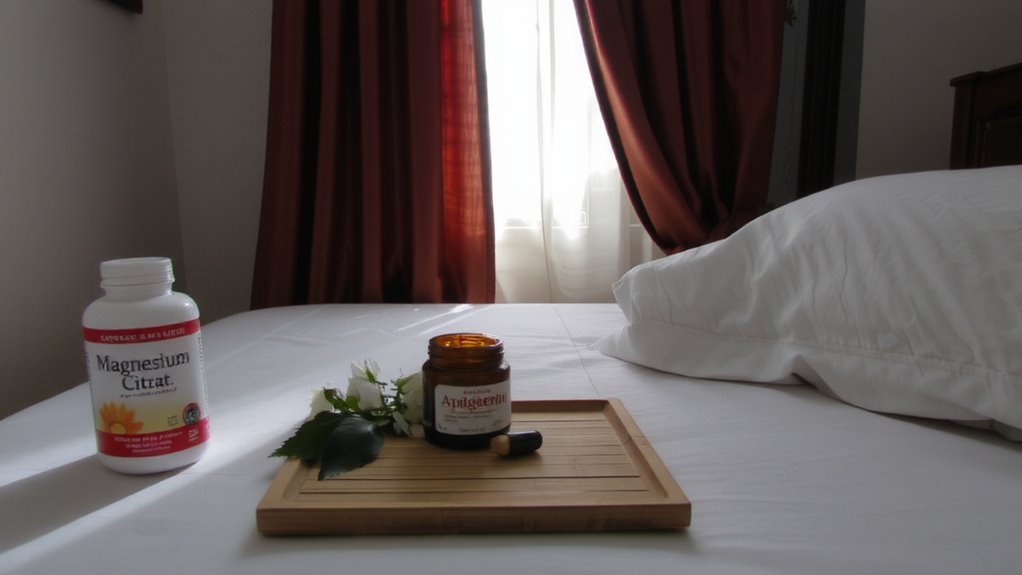
You’ve likely heard about magnesium’s role in calming your nerves and supporting deep sleep, but another compound worth your attention is apigenin. This natural flavonoid, found in chamomile and parsley, supports sleep onset through its flavonoid properties, which interact with brain chemistry. Apigenin promotes relaxation by engaging in receptor binding, specifically targeting GABA receptors that regulate nervous system activity. When these receptors are activated, neuronal excitability decreases, helping you fall asleep faster. Studies suggest that consistent use can improve sleep latency-how long it takes to drift off-without next-day drowsiness. Doses around 50 mg are commonly used, and products often list source extracts for transparency. Look for standardized labels to guarantee potency. While results vary, apigenin is generally well-tolerated, making it a practical addition to natural sleep stacks. Always check with a healthcare provider if combining supplements.
How Theanine Calms Your Mind for Sleep
What if you could quiet a racing mind without feeling drowsy the next day? Theanine does just that by gently shaping your brain chemistry to support relaxation. It works through key neural pathways linked to calm focus, not sedation. Instead of knocking you out, it helps your mind shift smoothly toward rest. Research shows it boosts alpha brain waves, which are tied to a state of relaxed alertness-ideal before sleep.
| Benefit | How It Works | Supported By |
|---|---|---|
| Reduces mental chatter | Modulates neurotransmitters like GABA and glutamate | Studies on brain chemistry |
| Promotes relaxation | Influences neural pathways for stress response | Clinical sleep trials |
| Improves sleep quality | Enhances sleep onset and continuity | Randomized placebo studies |
| Non-drowsy effect | Supports calm without impairing alertness | Cognitive performance tests |
Best Supplement Forms and Doses for Sleep
Theanine sets the stage for better rest by calming mental activity without next-day grogginess, and now it’s time to evaluate how to use it-and other sleep-supporting supplements-most effectively. For theanine, 100–200 mg in capsule or powder form works well, especially when taken 30–60 minutes before bed. Magnesium bisglycinate, at 200–400 mg, is gentle on the stomach and supports deeper sleep quality. Apigenin, best in 50 mg doses, comes from chamomile extract and helps ease nighttime anxiety. Keep dosage timing consistent to align with your body’s natural rhythms. Capsules offer convenience, while powders allow dose adjustments. Not all brands standardize active compounds, so check labels. Minor digestive changes may occur at first. Most people notice improvements within a few nights, but individual results vary. Always consult a healthcare provider before starting new sleep aids, especially if managing sleep disorders.
When to Take Your Natural Sleep Stack
While timing won’t fix underlying sleep disorders, getting it right can help your natural sleep stack work more effectively. For best results, take your blend about 30 to 60 minutes before bed. This window supports ideal absorption efficiency, allowing magnesium, apigenin, and theanine to take effect when your body starts winding down. Timing consistency matters-taking your stack at the same time each night helps regulate your body’s internal clock, which can improve sleep onset and quality over time. If you eat a large meal late, consider adjusting to the later end of the window, since digestion affects absorption efficiency. On the other hand, taking supplements too early might reduce their peak effectiveness when you’re trying to fall asleep. Experiment within this range to find what works with your routine. Consistency, paired with proper timing, enhances the overall performance of your sleep support plan.
Who Should Avoid This Natural Sleep Stack
You’ve likely found that taking your natural sleep stack at the right time helps it work more smoothly with your body’s rhythms, but knowing when to use it is just one part of a safe, effective routine. If you’re pregnant or could become pregnant, consider pregnancy concerns carefully-there’s limited research on apigenin and high-dose magnesium during pregnancy, so it’s best to avoid the stack unless a healthcare provider advises otherwise. You should also check for medication interactions, especially if you take blood thinners, anxiety medications, or muscle relaxants, as magnesium and apigenin may intensify their effects. People with low blood pressure or kidney issues should use magnesium with caution, since it can build up in the body. Theanine is generally well-tolerated, but it’s still smart to start low and observe how your body responds. When in doubt, talk to your doctor before beginning any new supplement, especially if managing a health condition.
On a final note
You can support better sleep by combining magnesium, apigenin, and theanine, each targeting different aspects of rest. Magnesium promotes deep sleep, apigenin helps reduce the time it takes to fall asleep, and theanine calms mental chatter. These are generally well-tolerated, but check with your doctor if you have health conditions or take other medications. Start with low doses to assess tolerance, and adjust based on results over a few nights.