Choosing Seamless Stitching Techniques in Pillow Manufacturing to Prevent Chafing
You’ll reduce nighttime chafing by choosing pillows with seamless stitching that eliminate raised seams and friction hotspots. Techniques like ultrasonic welding fuse fabric without thread, creating smooth, durable bonds, while laser cutting seals edges to prevent irritation. Flatlock stitching also helps by laying flat and moving with you. These methods boost comfort, especially if you have sensitive skin or sleep on your side. Better construction means fewer irritants and more consistent performance over time, and many brands offer trial periods so you can test the difference confidently.
Notable Insights
- Seamless stitching eliminates raised seams that rub against skin and cause chafing during sleep.
- Ultrasonic welding bonds fabric without thread, creating smooth, durable seams that reduce skin irritation.
- Laser cutting seals fabric edges to prevent fraying and minimize contact with rough, exposed fibers.
- Flatlock stitching produces flat, interwoven seams that move with the sleeper and lower friction.
- Proper seam placement avoids high-contact areas like the face and neck to enhance comfort.
How Chafing Happens in Poorly Stitched Pillows
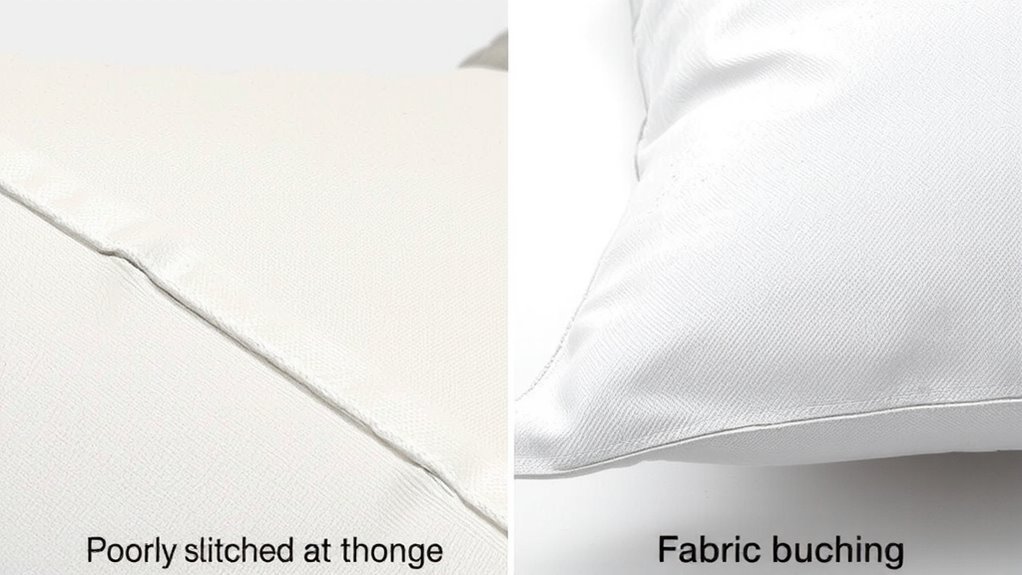
Friction is the main reason you end up with irritated skin from a poorly stitched pillow. When thread tension isn’t balanced, the stitches pull unevenly, creating rough areas along the fabric. You might not notice it right away, but over hours of sleep, these flaws rub against your skin. A seam protrusion sticks out slightly, raising the fabric and increasing contact during movement. This constant rubbing, especially if you shift a lot at night, leads to chafing and discomfort. Poor construction like this often shows up near edges or tags, where stitches are more likely to be inconsistent. You’re more prone to irritation if you have sensitive skin or sleep on your side. Choosing a pillow with even stitching helps reduce these hotspots. While warranties don’t always cover wear from skin contact, some brands offer trial periods so you can test comfort safely. Pay attention to seam smoothness when comparing options.
Why Seamless Stitching Prevents Skin Irritation
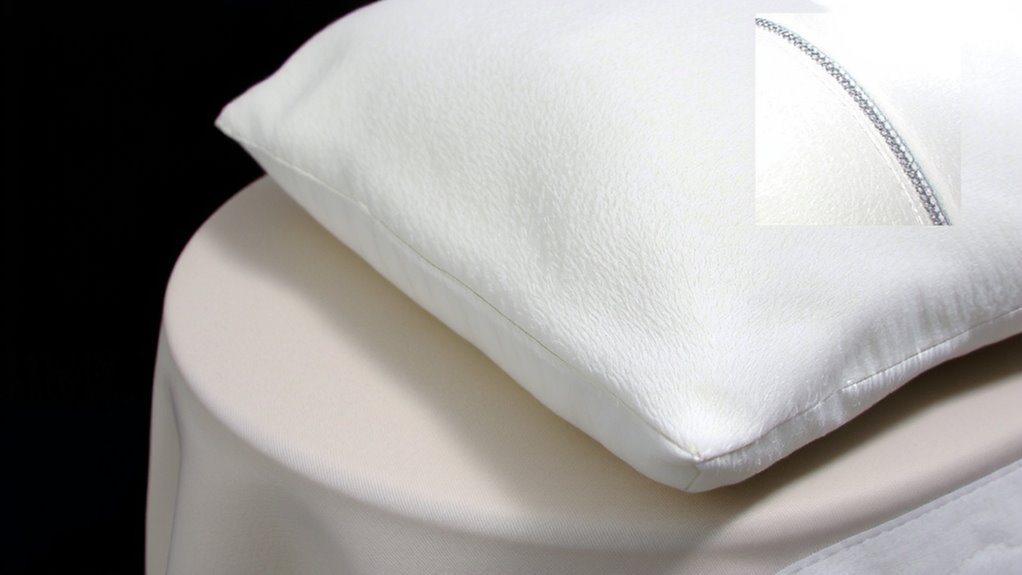
While traditional stitching can create raised seams that rub against your skin, seamless stitching eliminates these pressure points by blending the fabric edges smoothly together. You’ll notice less material friction since there are no threads or ridges catching on your skin as you move. This smooth surface reduces irritation, especially if you tend to shift during sleep. Comfort matters, and smart seam placement guarantees high-contact areas-like where your cheek or neck rests-stay free of abrasive edges. Because seamless designs distribute pressure evenly, they’re often better for sensitive or acne-prone skin. When choosing a pillow, consider how construction affects comfort over time. Look for models that offer trial periods, so you can test how the lack of seams influences your sleep. Manufacturers using this technique often back durability with warranties, reflecting confidence in both performance and comfort. It’s a practical upgrade that supports rest without irritation.
Seamless Stitching With Ultrasonic Welding
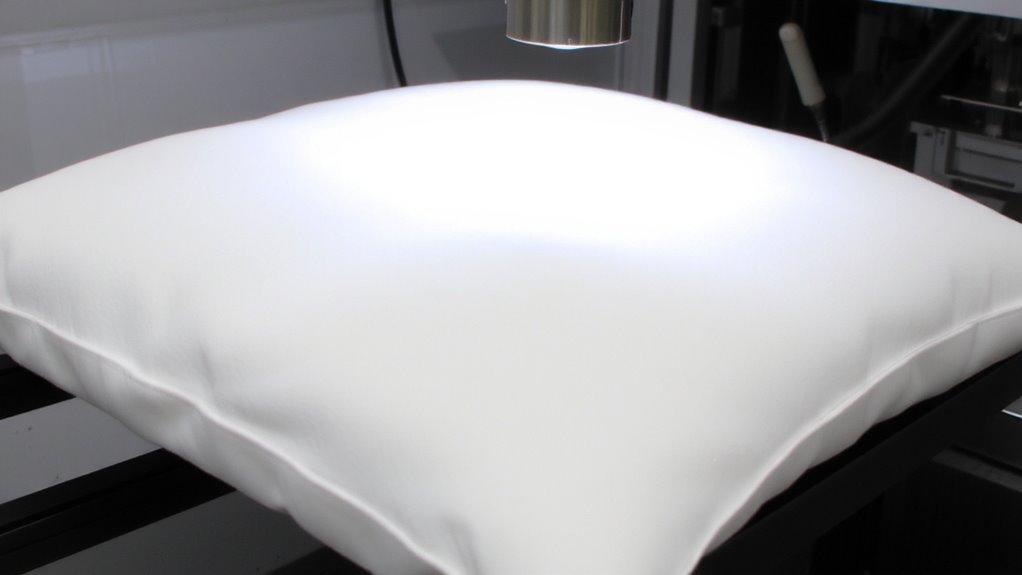
When manufacturers use ultrasonic welding for seamless stitching, they join fabric layers with high-frequency vibrations instead of thread, creating a bond that’s both smooth and durable. You’ll find this method eliminates rough edges that can irritate sensitive skin during sleep. Thanks to ultrasonic precision, each seam aligns perfectly, reducing weak spots and improving the pillow’s longevity. The welding efficiency also means consistent production, which often leads to more affordable pricing without sacrificing quality. These pillows typically resist fraying and hold their shape well, even after repeated washing. If you’re managing sleep discomfort or skin sensitivity, a pillow made this way might offer the irritation-free surface you need. Many brands provide trial periods, so you can test comfort risk-free. Look for warranties covering seam integrity, as that reflects confidence in the construction. Consider this method a strong option when comfort and durability matter.
Smoothing Edges With Laser Cutting Technology
Laser cutting technology offers another way to achieve smooth, seamless edges in pillow manufacturing, building on the same goal of comfort you saw with ultrasonic welding. With laser precision, fabric edges are sealed and shaped in one step, reducing fraying and minimizing irritation against sensitive skin. This method delivers consistent edge refinement, which helps prevent chafing, especially for side sleepers or those with skin sensitivities. You’re looking at cleaner seams and reduced fabric unraveling over time, meaning the pillow maintains its feel and structure through repeated washing. Since each cut is accurate to a fraction of a millimeter, you get uniform pieces that fit together perfectly during assembly. That precision supports long-term durability and comfort. Pillows using laser-cut edges often come with trial periods or warranties, so you can test them risk-free. Consider this method if you value clean finishes and need a smooth, irritation-free sleep surface.
Flatlock Stitching for Smooth, Flexible Seams
A flatlock seam isn’t just a stitch-it’s a thoughtful upgrade in how pillows handle movement and wear. You’ll notice the difference in both feel and function, as this technique creates a smooth, flat surface that moves with you, not against you. By using interwoven threads from both sides of the fabric, flatlock stitching reduces friction where it matters most-against your skin. Good tension control guarantees the seam stays flexible without puckering, which helps maintain the pillow’s shape over time. Your thread selection also plays a key role; durable, soft threads like polyester or spun polyesters add comfort without sacrificing strength. These seams lie flat, minimizing irritation during shifting at night. When choosing a pillow with flatlock stitching, check if the manufacturer includes a trial period or warranty-this lets you test the comfort risk-free. It’s a subtle detail that can support better sleep, especially if you’re sensitive to texture or motion.
Comparing Durability: Seamless vs. Traditional Seams
Though they might look similar at first glance, seamless stitches tend to hold up better over time compared to traditional seams, especially under regular use and washing. You’ll notice less material fatigue with seamless designs since stress spreads evenly across the fabric. Traditional seams, by contrast, often suffer thread degradation at stress points, especially after repeated laundering. This can weaken the pillow’s structure and lead to premature wear.
| Feature | Seamless Stitching | Traditional Seams |
|---|---|---|
| Material Fatigue | Low | Moderate to High |
| Thread Degradation | Minimal | Common over time |
| Long-Term Durability | High | Variable |
When choosing a pillow, consider how often you wash it and how much movement occurs during sleep. Seamless options typically offer more consistent performance, but always check the warranty-many come with extended trial periods, helping you confirm long-term satisfaction.
Best Seamless Stitching Choice for Sensitive Skin
For those with sensitive skin, seamless stitching isn’t just about durability-it’s a comfort essential. You’ll want a technique that eliminates friction and irritation, especially during long sleep cycles. The best choice combines flatlock or overlock stitching with hypoallergenic threads, which reduce the risk of skin reactions. These threads resist mold, dust mites, and chemicals, making them safer for reactive skin. Paired with microfiber padding, the pillow stays soft and smooth without bunching or poking seams. Microfiber also wicks moisture, helping prevent chafing. Look for brands offering trial periods-this lets you test comfort and skin response over time. Some include warranties against seam loosening, which adds long-term value. While seamless designs cost more, they often improve sleep quality by reducing nighttime disturbances from itchiness or discomfort. Check labels for certifications on materials and stitching methods to guarantee compatibility with sensitive skin.
On a final note
You’ll reduce chafing by choosing pillows with seamless stitching, like ultrasonic welding or flatlock seams, which eliminate rough edges. Laser-cut fabrics also smooth perimeter stress points. These methods boost comfort, especially if you have sensitive skin or move at night. While seamless options may cost more, their durability and reduced irritation often justify the price. Check warranty terms and trial periods before buying to guarantee the construction holds up and suits your sleep habits.