How Your Bedroom Environment Affects Quality of Sleep Tonight
Your bedroom’s temperature, light, noise, and comfort directly shape how well you sleep tonight. Keep it cool, between 60–67°F, to support natural body cooling. Block light with blackout curtains or a sleep mask to protect melatonin. Use white noise or soundproofing to minimize disruptions. Choose breathable bedding and a supportive mattress-many brands offer 100-night trials. Swap screens for e-ink readers before bed. Small changes can make a noticeable difference, and there’s more to explore that could help fine-tune your space for better rest.
Notable Insights
- Maintaining a bedroom temperature between 60–67°F supports your body’s natural cooling process for optimal sleep.
- Darkness promotes melatonin production, helping regulate your circadian rhythm and improve sleep onset.
- Consistent low-level noise or sudden sounds can disrupt sleep cycles; white noise machines help mask disturbances.
- A supportive mattress and comfortable pillows maintain spinal alignment and reduce nighttime discomfort.
- Reducing screen exposure before bed minimizes blue light, preventing melatonin suppression and sleep delays.
How Temperature Affects Your Sleep Environment
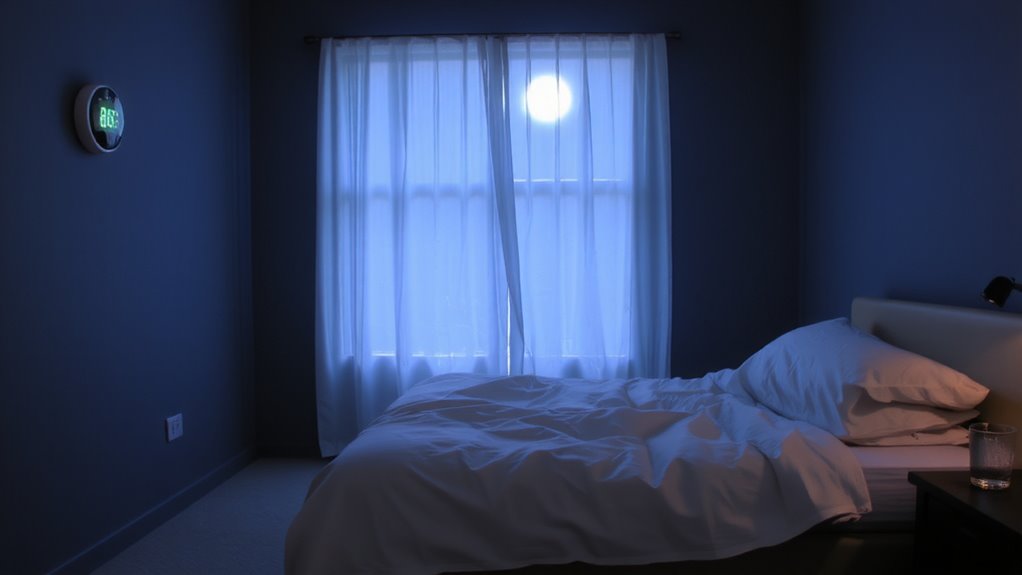
While your body naturally cools down at night to prepare for sleep, an overly warm or cold bedroom can disrupt that process and make it harder to fall or stay asleep. Maintaining an ideal climate helps support thermal comfort, which is key to uninterrupted rest. Most people sleep best in rooms between 60 and 67 degrees Fahrenheit, where the environment supports your body’s natural temperature drop. If it’s too warm, you may experience restlessness; if too cold, your body has to work harder to stay warm. For better thermal comfort, consider breathable bedding, like cotton or moisture-wicking fabrics, and adjustable thermostats. Some sleep aids, like cooling mattresses or heated blankets with auto-shutoff features, can help maintain a stable temperature. Look for models with trial periods so you can test comfort over time. Choosing the right setup improves sleep performance without costly trade-offs. A well-chosen comforter, such as a best comforter for hot sleepers, can significantly enhance breathability and temperature regulation throughout the night.
Why Darkness Is Essential for Better Sleep
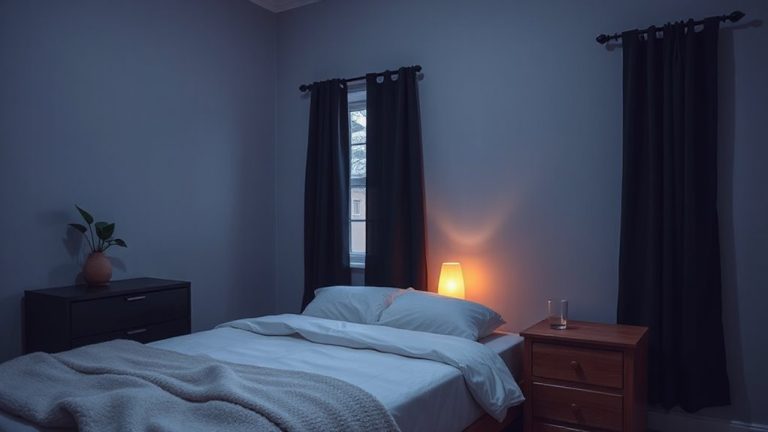
When light seeps into your bedroom at night, it can interfere with your body’s ability to produce melatonin, the hormone that signals it’s time to sleep. This disruption slows melatonin production, making it harder to fall asleep and stay asleep. Your circadian rhythm-the internal clock that regulates sleep-wake cycles-relies heavily on darkness to function properly. Even small amounts of light from electronics or streetlamps can shift this rhythm over time. Using blackout curtains or a sleep mask helps block unwanted light, supporting consistent melatonin levels. These tools are easy to install or wear and often come with trial periods, so you can test what works best. Creating a dark environment doesn’t require expensive changes, but it does improve sleep quality substantially. Over time, better darkness conditioning strengthens your circadian rhythm, leading to more reliable sleep patterns and fewer nighttime awakenings. For best results, consider investing in the best blackout curtains for a dark, quiet room.
How Noise Disrupts Deep Sleep (And What to Do)
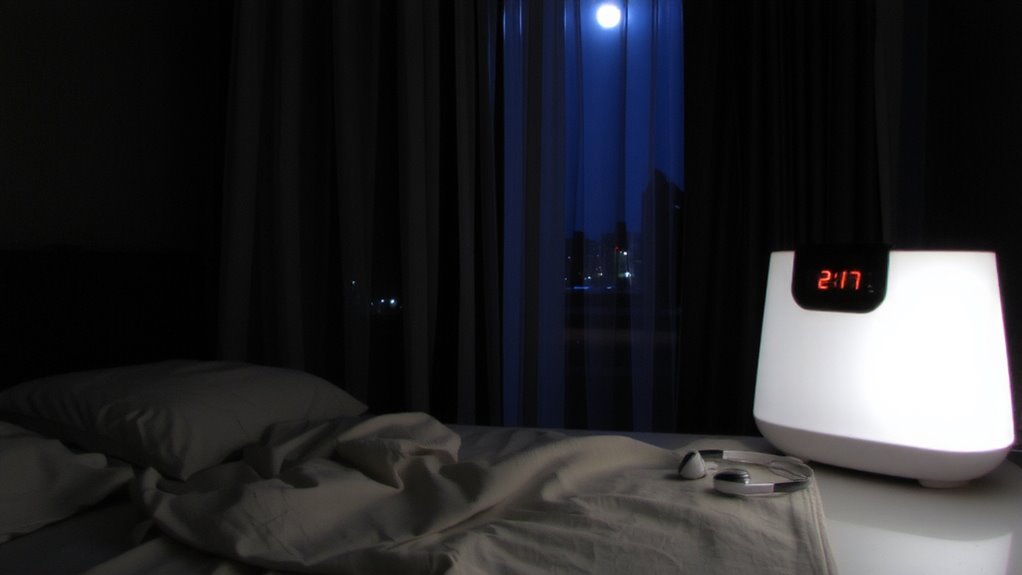
What if the soft hum of your air conditioner or the sudden bark of a dog outside is quietly undermining your deep sleep? Even low-level noise can fragment your sleep cycles, reducing time spent in restorative deep sleep. Your brain still processes sound during sleep, and abrupt noises can trigger micro-awakenings you might not remember. To counter this, consider using white noise machines or apps, which create a consistent auditory backdrop that masks disruptive sounds. Many models offer varying frequencies and timers, often with trial periods to test effectiveness. For long-term solutions, evaluate soundproofing options like heavy curtains, door sweeps, or upgraded window seals. These reduce outside noise before it enters your space. While not always foolproof, combining white noise with basic soundproofing improves sleep continuity. If noise-related sleep issues persist, discuss them with a healthcare provider, as they may indicate underlying sleep disorders worth exploring. For targeted relief, explore the best white noise machines based on sleep expert recommendations and user reviews.
Fix Your Bedding and Mattress for Optimal Rest
If your mattress sags in the middle or your pillows leave you with a stiff neck, it’s likely time to reassess your bedding setup-these aren’t just minor discomforts, but potential barriers to restful sleep. Proper mattress support and bedding comfort play key roles in spinal alignment and pressure relief, especially if you have chronic aches or sleep disorders like insomnia. Materials matter: memory foam contours closely, while latex offers breathable resilience. Innerspring provides firm support but may wear faster. Consider trial periods and warranties when choosing.
| Feature | Benefit |
|---|---|
| Medium-firm support | Improves mattress support for most sleepers |
| Hypoallergenic fabrics | Enhances bedding comfort, especially for sensitive skin |
| 100-night trial | Lets you test bedding comfort and adjust confidently |
Stop Electronics From Ruining Your Sleep Space
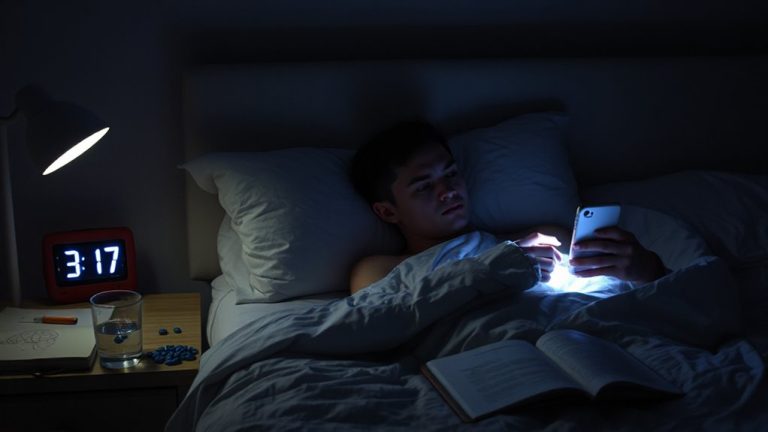
Why does your phone seem so hard to put down at night, even when you’re exhausted? The answer lies in blue light and your screen habits. Blue light from phones, tablets, and TVs suppresses melatonin, the hormone that signals sleep. This delays sleep onset and reduces sleep quality. Even short exposure an hour before bed can shift your internal clock. To protect your sleep space, limit screen use at least 30–60 minutes before bed. If you must use devices, enable night mode or blue light filters-they help, but aren’t perfect. Consider reading a physical book or using a non-backlit e-ink reader instead. Changing screen habits takes time, but the improvement in sleep continuity and depth is measurable. Small shifts now support long-term sleep health and reduce reliance on sleep aids. Your bedroom should signal rest, not stimulation-keep electronics out when possible.
Best Paint Colors for a Sleep-Friendly Bedroom
A calm, restful bedroom starts with the right color choice, and soft, cool tones often lead the way. You’ll find that calm hues like pale blues, gentle greens, and warm grays support relaxation by reducing visual stimulation. These soothing tones mimic natural environments, helping your mind shift into sleep mode. Studies suggest cooler colors lower heart rate and promote drowsiness, making them reliable choices for nightly recovery. Avoid bright or warm shades like reds and oranges-they can increase alertness. Instead, test paint samples at different times of day, since lighting affects how colors appear. Look for low-VOC options with matte finishes to reduce glare and improve air quality. A well-painted room won’t cure sleep disorders, but it can improve your conditions for consistent rest. Choose wisely, and give your space a chance to work with your body’s natural rhythms.
7 Fast Bedroom Upgrades for Faster Sleep Tonight
You’ve picked calming colors to set the mood, and now you can build on that foundation with simple upgrades that make a real difference in how quickly you fall asleep. Adjusting your bedroom lighting is a fast, effective step-switch to warm-toned bulbs under 2700K and use dimmers to signal your body it’s time to wind down. Consider blackout curtains to block outside light, improving sleep onset. For scent diffusion, try a quiet diffuser with lavender or chamomile; studies suggest these may support relaxation. Choose devices with automatic shutoffs for safety and consistent performance. Many come with warranties and adjustable settings, letting you test what works. These changes don’t require renovation, but they influence sleep quality markedly. Small investments in lighting and scent diffusion can help regulate circadian rhythms and ease mild sleep difficulties. Try one or both tonight-you might notice faster sleep onset without drastic lifestyle changes.
On a final note
You can improve your sleep tonight by adjusting your bedroom’s temperature, light, and noise. Choose breathable bedding, a supportive mattress, and calming paint colors. Limit electronics before bed and consider using blackout curtains or a white noise machine. Many sleep aids, like weighted blankets or smart thermostats, offer trial periods, so test what works. Small changes often help more than expensive fixes.