The Impact of Parental Sleep Deprivation on Child Bedtime Enforcement
You’re more likely to delay bedtime or skip steps when you’re sleep-deprived, even with the best intentions. Exhaustion weakens consistency, making it harder to enforce rules like lights out by 8 or limiting stories. A predictable routine with simple, low-effort actions-like PJs on by 7:30-helps maintain stability. Over time, small trade-offs add up, supporting both your rest and your child’s sleep quality. There’s a way to strengthen the routine without adding pressure.
Notable Insights
- Parental sleep deprivation reduces consistency in enforcing bedtime rules due to increased evening exhaustion.
- Fatigue impairs decision-making, weakening the ability to manage child resistance at bedtime.
- Emotionally burned-out parents are more reactive, disrupting calm and predictable sleep routines.
- Lack of parental sleep decreases follow-through on low-effort rules like lights-out times.
- Sleep-deprived caregivers may skip or rush routine steps, undermining sleep environment optimization.
Stop the Stress: Simple Bedtime Wins for Exhausted Parents
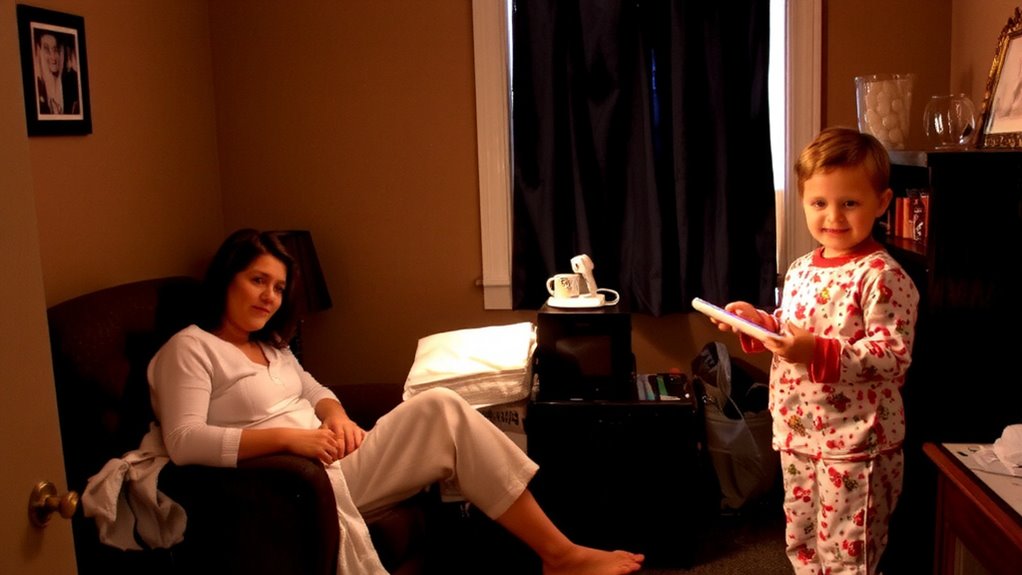
How many nights have you spent pacing the hallway, hoping your child finally settles? Creating a sleep sanctuary can make a real difference-think cool, dark, and quiet, with minimal distractions. You can start with blackout curtains, a white noise machine, or even a favorite stuffed animal that stays in bed. Mindful shifts, like a 20-minute wind-down with dimmed lights and no screens, help signal it’s time to sleep. Try a consistent routine: bathroom, book, bed. You’ll notice fewer protests over time. Some parents find success with breathable cotton pajamas or weighted blankets, though you should consult a pediatrician before using sleep aids. Most quality sleep products come with trial periods, so test what works. A white noise machine that blocks disruptive sounds can be especially helpful if snoring affects your household’s sleep, and the best options offer noise machines for snoring with adjustable frequency settings. These small changes don’t fix everything overnight, but they build better conditions for rest-for your child, and for you.
Why Inconsistent Bedtimes Backfire on Kids’ Sleep
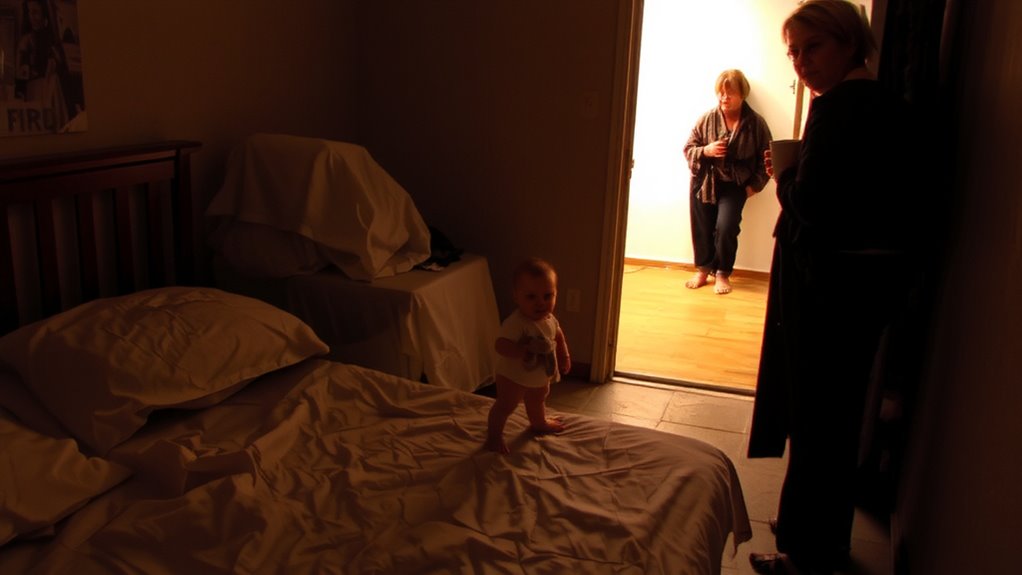
You’ve already taken steps to create a calm sleep environment and a steady routine, but if bedtime shifts too much from night to night, your child’s sleep quality can still suffer. Inconsistent bedtimes often lead to bedtime chaos, making it harder for kids to fall asleep and stay asleep. Their internal clock gets confused, increasing the risk of sleep regression, especially in toddlers and preschoolers. When sleep patterns aren’t predictable, even small delays can disrupt total sleep duration and quality. Over time, this affects mood, focus, and development. A reliable bedtime-even on weekends-supports better sleep hygiene and helps prevent setbacks. Think of it like setting a thermostat: consistency keeps the system stable. If you’re facing resistance or frequent night wakings, reevaluating timing might be more effective than adding sleep aids or behavioral fixes. A steady schedule isn’t rigid-it’s a foundation that adapts while maintaining balance.
How Parent Fatigue Fuels the Bedtime Struggle
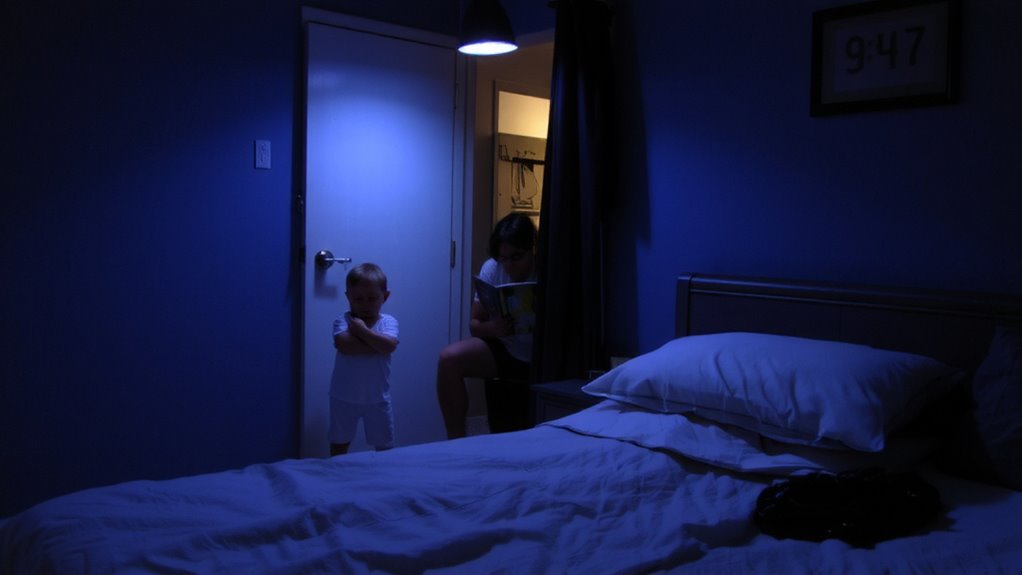
Even when you stick to a consistent bedtime, the real challenge often isn’t the schedule-it’s your energy level by the time night rolls around. By then, decision fatigue has set in from managing chores, meals, and kid conflicts all day. You’re more likely to give in when your child stalls or negotiates, not because you don’t care, but because emotional burnout makes firmness feel impossible. This fatigue weakens your ability to enforce rules calmly, turning small delays into full bedtime battles. Every extra request feels overwhelming, and your responses may become inconsistent or reactive. Over time, that erodes the routine you’ve built. Recognizing these limits helps you plan ahead-simplifying choices earlier in the day, sharing responsibilities, or adjusting routines to reduce strain. When you’re less drained, enforcement feels more manageable, and bedtime stays on track without constant conflict.
Low-Effort Rules That Actually Stick
Why do some bedtime rules stick without constant battles while others fall apart by Wednesday? The difference often lies in consistency rewards and minimal tweaks. You don’t need a flawless plan-just one simple enough to follow even when exhausted. Start with one clear rule, like “PJs on by 7:30” or “lights out at 8.” These small actions, repeated nightly, build predictability. When kids know what to expect, resistance drops. Consistency rewards kick in subtly-better moods, smoother mornings-without needing praise or prizes. If a rule fails, make minimal tweaks instead of overhauling everything. Maybe move storytime five minutes earlier or swap pajamas before dinner. Test changes for three nights. Notice patterns. Adjust based on what actually works in your home, not ideals. Low-effort rules last because they fit real life, not perfect conditions. Try one. Stick with it. Let small wins build.
Build a Realistic Routine That Survives Bad Days
When life gets chaotic, a bedtime routine that works on tough nights is worth more than perfect timing or ideal behavior. You need a plan that relies on flexible consistency-keeping core steps intact, even if timing shifts. Start with a simplified version: brush teeth, one story, lights out. That structure stays, whether it’s 7:30 or 8:15. Set realistic expectations: some nights, energy is low, patience thinner. That’s okay. Adjust tasks, not goals. If bath time’s too much, swap it for a washcloth wipe. Keep shifts predictable but brief. Use quiet time before bed as a buffer, not a rigid window. Track what works over a week, then refine. The best routines aren’t flawless-they’re durable. They account for off days without falling apart, helping both you and your child reset. Prioritize sleep continuity over strict schedules. That balance supports long-term rest, especially when exhaustion hits.
On a final note
You’re more likely to stick with a bedtime routine when it fits your energy levels and daily challenges. Simple, consistent rules-like a fixed wind-down cue or shared family quiet time-support kids’ sleep without demanding perfection. If fatigue makes enforcement tough, adjust timing or add low-effort steps you can maintain, even when tired. Small, realistic changes improve sleep over time, and many sleep strategies offer trial periods or clear instructions so you can test what works without pressure.