Calibrating Adjustable Bed Articulation Points to Match Skeletal Proportions
You should measure your body while lying flat to match the bed’s articulation points to your limbs and spine. Adjust the head and lumbar zones to support your neck’s curve and lower back’s natural alignment. Elevate the knee section 5 to 15 degrees to ease circulation and reduce leg pressure. Use incremental angle changes, test positions over full sleep cycles, and rely on memory settings and trial periods to refine comfort. Proper calibration improves spinal support, reduces pain, and enhances sleep quality-there’s more to discover about fine-tuning for your ideal rest.
Notable Insights
- Measure head to toe while lying flat to ensure accurate bed segment alignment with your body proportions.
- Account for limb asymmetries like uneven leg length by customizing articulation settings for balanced support.
- Adjust neck elevation to follow the natural spinal curve and maintain proper head-to-neck angle.
- Set lower back support to firmly contour the lumbar region, preserving spinal alignment during elevation.
- Use manufacturer apps or templates to calibrate articulation points precisely to your skeletal dimensions.
Measure Your Body for an Adjustable Bed
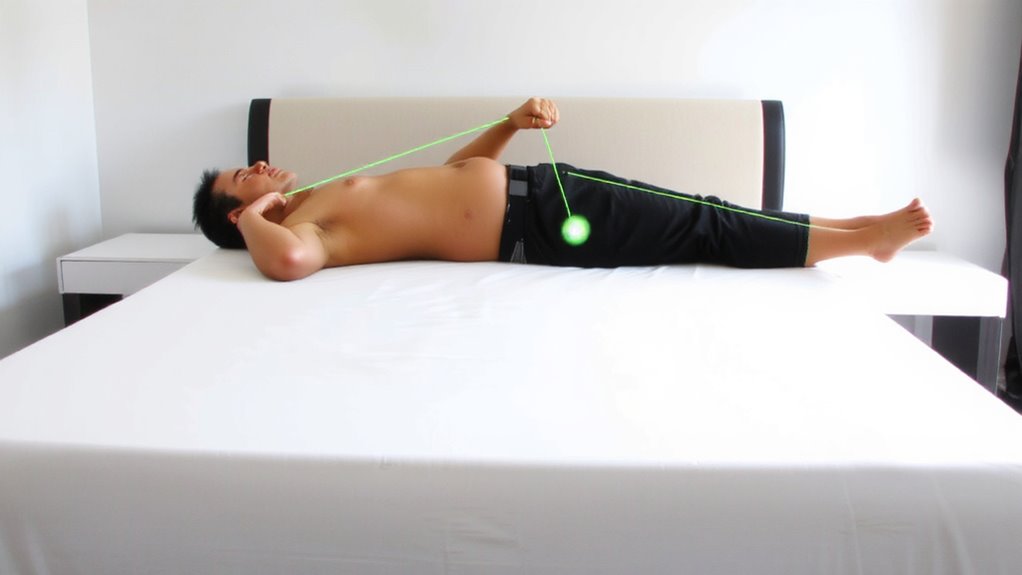
Start by measuring your body from head to toe, since getting the right fit guarantees you’ll get full support when the bed adjusts. Use a tape measure while lying flat to capture your full length accurately-this helps align the bed’s segments with your body symmetry. Pay attention to how your limbs rest naturally, as proper limb alignment reduces tension in joints and muscles. If one leg is longer or your shoulders sit unevenly, note those details, since customizable articulation can compensate. Many adjustable beds let you tweak each zone independently, so your measurements guide precise setup. Models often come with templates or apps to simplify calibration. Check warranty terms that cover fit issues-some offer trial periods where you can fine-tune settings. Accurate sizing supports better sleep posture, especially if you have mild sleep apnea or back discomfort. It’s not about perfection-it’s about creating balanced support that moves with you.
Match the Bed’s Curve to Your Neck and Lower Back

Now that you’ve measured your body to align the bed’s segments with your frame, focus on shaping the adjustable base to support your neck and lower back just right. Proper spinal alignment reduces strain and improves pressure distribution, especially when lying on your back or side. Small adjustments in the bed’s curve can make a big difference in comfort and long-term musculoskeletal health. Choosing the right pillow can complement your adjustable bed setup by maintaining proper alignment, particularly with options designed to prevent nerve compression like those in the best pillows to prevent numb arms and hands.
| Body Area | Recommended Support Level |
|---|---|
| Neck | Gentle lift to match natural curve |
| Lower Back | Firm contour to maintain alignment |
Take time to test different positions, noting how your spine feels after 10–15 minutes. Most premium adjustable bases allow fine-tuning and come with trial periods, so you can refine settings without risk. Consistent pressure distribution helps prevent discomfort and supports restful sleep, especially for those with mild sleep-related musculoskeletal issues.
Set the Knee Lift for Better Blood Flow
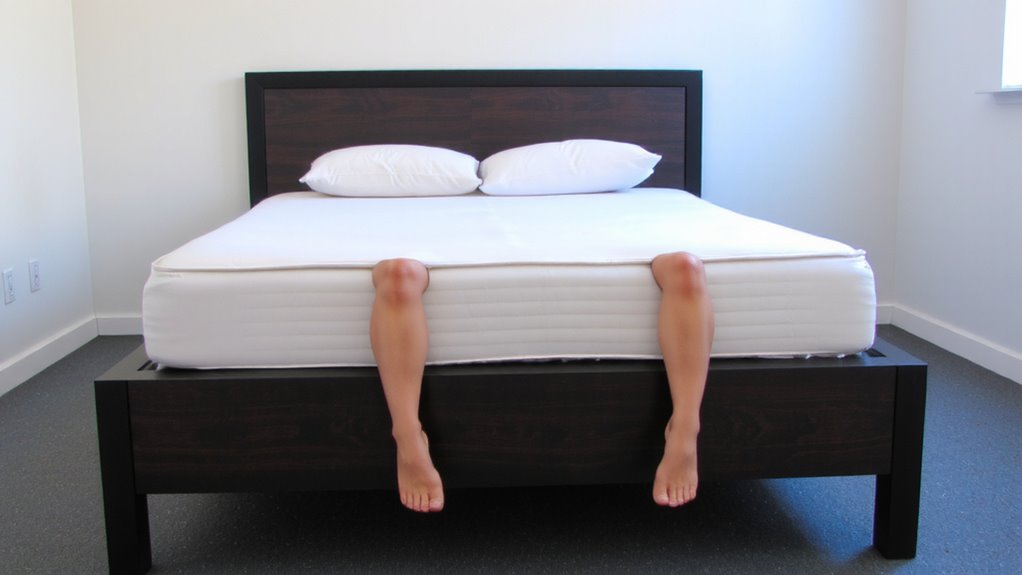
Elevating your knees slightly isn’t just about comfort-it can help circulation, especially if you spend long hours in bed. Knee elevation reduces pressure on your legs and encourages blood to flow back toward your heart, delivering a steady circulation boost. Most adjustable beds let you raise the knee section between 5 to 15 degrees; start at a modest angle and adjust based on how your legs feel. Even a small lift can ease swelling and discomfort, especially if you have mild circulatory concerns. Look for models with smooth, gradual articulation so your thighs and calves stay supported without strain. Many include memory settings, letting you save your preferred knee elevation for consistency. Test the feature during a home trial-some effects on circulation take time to notice. A good warranty covers motor performance, so you can adjust with confidence. For those managing acid reflux, pairing knee elevation with an elevated upper body can enhance comfort and reduce symptoms, making best adjustable beds a smart choice for overall sleep health.
Relieve Back Pain and Snoring by Adjusting Zone Angles
While you’re adjusting your bed’s zones, tweaking the angles can make a real difference in how your back feels and how quietly you sleep. Raising the head section slightly improves spinal alignment, reducing strain on your lower back. This position also opens your airway, which can lessen snoring for you and your partner. Proper pressure distribution across your torso and legs helps avoid stiffness and discomfort. You’ll want to experiment with small angle changes-just 5 to 10 degrees-to find what supports your body best. Most adjustable beds allow precise control through remote settings, and some even save preferred positions. Manufacturers often include a trial period, so you can test settings nightly without risk. Focus on even support from head to hips, ensuring your spine stays neutral. Over time, these adjustments may reduce nighttime awakenings and improve sleep quality, especially if back pain or snoring is a concern. For optimal comfort, consider adding a compatible mattress pad designed specifically for adjustable bed frames.
Test Your Position for All-Night Comfort
You’ve adjusted the zones to support your spine and ease snoring, but the real test comes when you stay in that position all night. Start with a full sleep cycle to see how your body responds-minor pressure points may not show up right away. Make sure your pillow support aligns with the bed’s head elevation so your neck stays neutral. Too high or too low can lead to stiffness or disrupted sleep. Use sleep tracking tools, like wearable devices or bed-integrated sensors, to gather data on movement, heart rate, and rest periods. This info helps spot nighttime disturbances you might not recall. If you wake up sore or notice frequent shifts, the settings may need reviewing. Most adjustable bases offer a 30- to 100-night trial, so take time to evaluate comfort. Track patterns over several nights, as one-off results can be misleading. Adjust gradually, using data to guide decisions-not guesses.
Fine-Tune for Your Height and Sleep Style
How often do you wake up with a stiff back or sore shoulders-could your height or sleep position be working against your bed’s settings? Adjusting your bed’s articulation points to match your body improves comfort and alignment. If you’re taller, raise the bed’s leg section slightly to prevent foot compression; shorter users may need less incline to avoid hip pressure. Your sleep style matters, too-side sleepers often need extra pillow support to keep the neck neutral, while back sleepers benefit from slight head elevation. Use sleep tracking to monitor rest quality and spot patterns linked to positioning. Most adjustable beds allow small, incremental changes, so test adjustments over a few nights. Check the warranty for motor durability and movement limits. These tweaks, combined with proper support, can ease discomfort without drastic changes.
On a final note
You’ve adjusted the bed to fit your frame, so now test the settings nightly for a few weeks. Small tweaks in the head, neck, or knee zones can ease back strain or reduce snoring. Most models offer a 30- to 100-night trial and a solid warranty, so use the time to assess comfort. Choose positions that support natural posture, and remember, what works varies by height and sleep style.