How to Address Sleep Issues in Children With Anxiety Disorders
You can help your child sleep better by creating a consistent bedtime routine with calming steps like brushing teeth, reading a favorite book, and using a comfort object. Keep the bedroom quiet, dark, and screen-free to support melatonin release. Practice deep breathing or guided imagery to ease anxious thoughts. Discuss worries earlier in the evening, not at bedtime. Limit caffeine and screen time before sleep. Small, steady changes often bring improvement within a few weeks-there’s more to explore if you’re still looking for solutions.
Notable Insights
- Establish a consistent bedtime routine to signal the brain that it’s time to wind down and reduce anxiety.
- Create a calm bedroom environment with soothing colors, soft lighting, and removal of screens to support relaxation.
- Practice relaxation techniques like deep breathing or the 4-7-8 method to ease physical and mental tension before sleep.
- Hold gentle, daytime conversations about worries to prevent bedtime anxiety without reinforcing fears.
- Eliminate screen exposure and caffeine at least one hour before bed to protect melatonin levels and sleep onset.
Set a Predictable Bedtime Routine
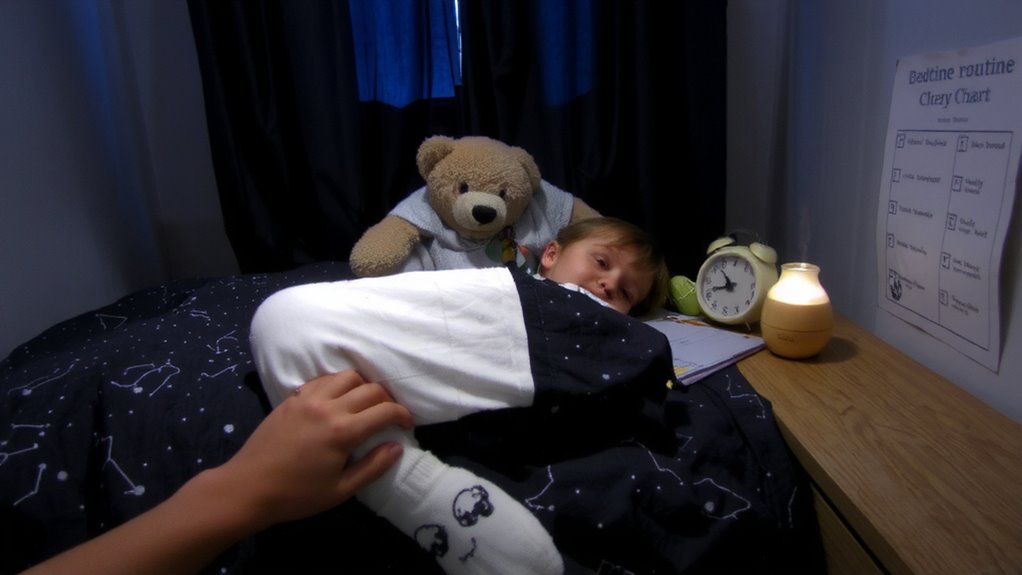
You’ll find that a consistent bedtime routine can make a real difference when your child struggles with anxiety and trouble sleeping. A predictable sequence-like brushing teeth, changing into pajamas, and dimming lights-signals the brain that it’s time to wind down. Including bedtime stories every night helps build familiarity and eases anxious thoughts through calming narratives. Let your child choose a favorite book; repetition often increases comfort. Comfort objects, such as a stuffed animal or blanket, can also provide emotional security and reduce nighttime fears. Position them consistently as part of the routine so your child associates them with sleep. These tools don’t require special preparation or cost, yet they perform reliably when used nightly. Most families see improvement within two to three weeks, with no risk or side effects.
Make the Bedroom a Calm Retreat
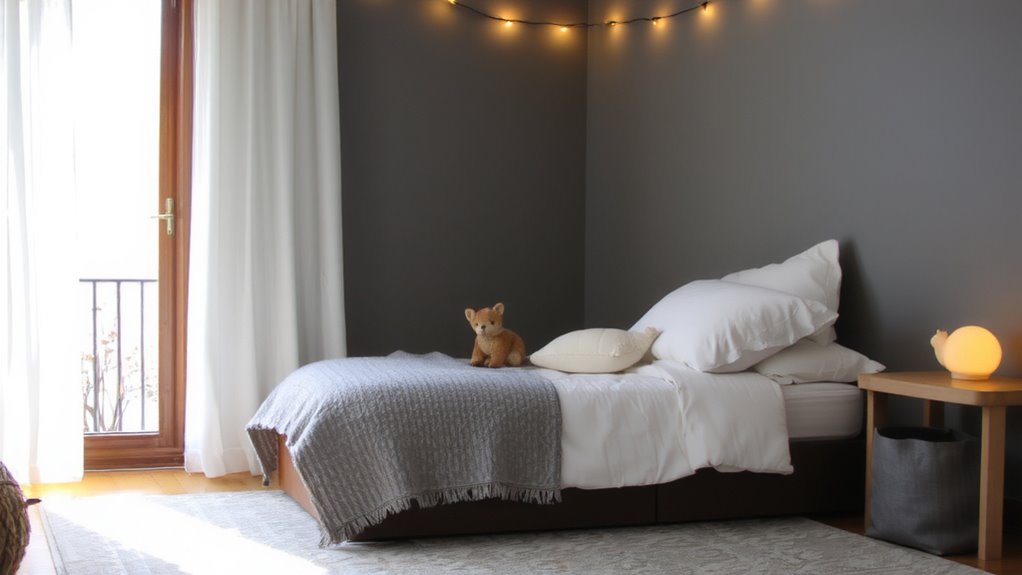
A peaceful sleep environment starts with the bedroom itself-a space that should feel safe, quiet, and free from overstimulation. Choose soothing colors like soft blues, greens, or warm neutrals on walls and bedding to help reduce anxiety and signal restfulness. Keep the room dim as bedtime approaches using soft lighting, such as a salt lamp or adjustable nightlight, to support natural melatonin release. Remove bright screens and noisy electronics that disrupt calm. Opt for breathable, comfortable bedding and consider blackout curtains to control light. For maximum light blockage and improved sleep quality, consider the best blackout blinds for bedrooms. Test different adjustments-light levels, color tones, textures-and observe your child’s response over several nights. A consistent, gentle atmosphere makes it easier for an anxious mind to settle. You’re not fixing everything at once but building a retreat that supports rest through small, thoughtful changes that can be refined over time.
Calm Your Child’s Mind With Relaxation
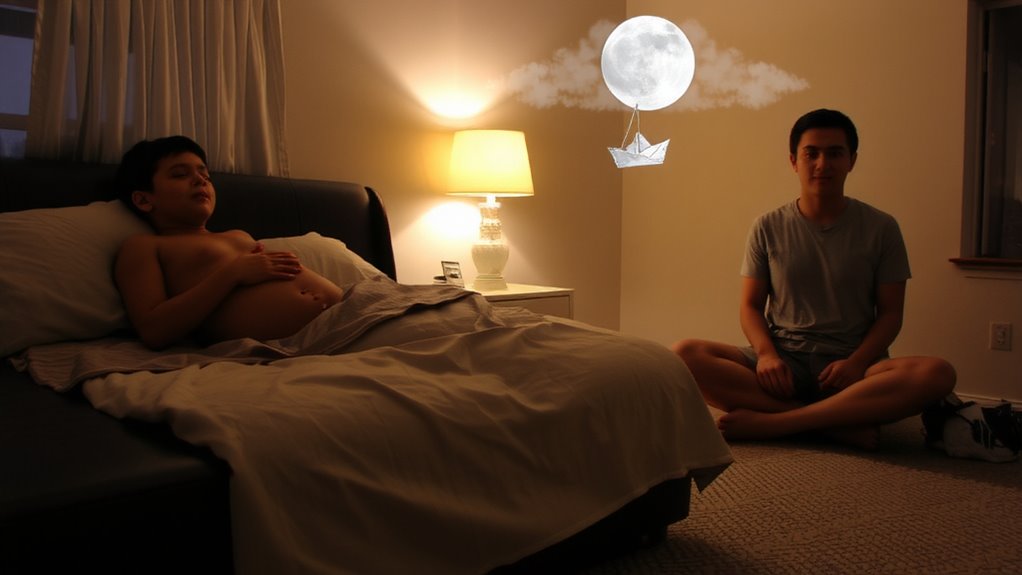
What if your child’s racing thoughts could be soothed just by breathing a little differently? Deep breathing and guided imagery are simple, evidence-based tools that help ease anxiety before bedtime. These methods work by slowing the nervous system, making sleep more accessible without medication. Try a short routine tonight: dim the lights and guide your child through one of these calming strategies.
| Technique | How It Helps |
|---|---|
| Deep breathing | Slows heart rate, reduces tension |
| Guided imagery | Redirects focus from worries to peaceful scenes |
| 4-7-8 method | Inhale 4 sec, hold 7 sec, exhale 8 sec |
| Story-based imagery | Engages imagination, promotes relaxation |
With consistent practice, these techniques can improve sleep onset and reduce nighttime anxiety. Many families see results within a week. No side effects-just better rest through gentle, natural methods. For some children, combining these techniques with high-quality CBD for pain and anxiety may provide additional calming support.
Talk Through Worries Without Amplifying Fear
When your child lies awake with racing thoughts, calming their breathing might help, but it won’t always address what’s behind the worry. You can foster an open dialogue during calm moments, not bedtime, so feelings surface without fueling nighttime fear. Ask gentle questions like, “What feels heavy on your mind?” and let them lead the conversation. Offer gentle reassurance-acknowledge their feelings without reinforcing fears by saying, “That sounds scary, but it’s not likely to happen.” Avoid over-explaining or dismissing concerns. Keep responses brief, grounded in facts, and focused on safety. Talking earlier in the evening helps separate worry time from sleep time. This approach supports emotional processing without conditioning anxiety at bedtime. It’s not about fixing every fear but building trust, reducing overload, and guiding your child toward rest with steadier thoughts and fewer sleep disruptions.
Avoid Screens and Stimulants at Night
Why does your child still struggle to wind down, even after talking through worries and following a calm routine? The answer might lie in nighttime habits involving screens and stimulants. Blue light exposure from phones, tablets, or TVs can disrupt melatonin production, making it harder to fall asleep. This is especially impactful for children with anxiety, whose nervous systems are already on high alert. You’ll want to limit screen use at least one hour before bed to reduce this effect. Similarly, caffeine intake-even from soda or chocolate-can increase restlessness and delay sleep onset. Monitoring when and how much caffeine your child consumes during the day helps manage its impact. Small changes, like switching to decaf drinks in the afternoon or using night mode on devices, can make a measurable difference. Consider treating screen time like a trial period: test removal for a week and track sleep improvements.
Help Your Anxious Child Sleep With Consistency
While anxiety can make falling asleep feel unpredictable, sticking to a consistent bedtime routine helps signal safety to your child’s nervous system, easing the shift into rest. Use gentle lighting and soothing sounds each night to create a predictable atmosphere that supports relaxation. Here’s how key elements work together:
| Element | Purpose |
|---|---|
| Gentle lighting | Reduces alertness, cues the brain for sleep |
| Soothing sounds | Masks background noise, eases worry loops |
| Fixed bedtime | Stabilizes internal sleep-wake rhythms |
| Quiet activities | Prepares mind and body without stimulation |
Performing the same steps nightly-like brushing teeth, reading, or listening to calming music-builds familiarity. Consistency doesn’t require perfection, but regularity strengthens sleep patterns over time. Test small changes and observe what works. Warranties on sound machines or lamps won’t fix sleep, but reliable tools support the routine.
Know When to Seek Professional Help
How do you know when sleep struggles go beyond typical bedtime resistance or passing worry? If your child’s anxiety consistently disrupts their sleep-night after night-and changes to their sleep environment don’t help, it might be time for a professional evaluation. Watch for signs like frequent nightmares, refusal to sleep alone, or chronic fatigue that affects school or mood. These could point to a deeper sleep disorder linked to anxiety. A pediatrician or mental health specialist can assess whether the problem is behavioral, emotional, or physiological. They’ll review sleep patterns, daily routines, and family history. Don’t wait months; early intervention supports better outcomes. A professional evaluation helps match your child with the right support-therapy, adjusted routines, or, in some cases, safe sleep aids-so they can get the rest they need.
On a final note
You can help your child sleep better by sticking to a calm, consistent routine and making the bedroom screen-free and comfortable. Try relaxation techniques like deep breathing to quiet an anxious mind. Talk through worries gently, but don’t dwell on them. Avoid stimulants like caffeine late in the day. If sleep problems persist despite these steps, consider consulting a pediatrician or sleep specialist to explore underlying causes or safe interventions.