Standardizing Sleep Lab Protocols to Capture Nocturnal Foot Pronation Episodes
You’re tracking brain waves and breathing, but sleep labs still miss foot pronation. Current protocols don’t include sensors for arch collapse or heel angle, leaving gaps in biomechanical data. Wearable foot sensors, lightweight and wireless, sync with sleep systems to record motion comfortably overnight. They’re hypoallergenic, rechargeable, and work across sleep positions. Look for models with a 30-day trial and weekly calibration. You’ll start seeing how alignment affects rest-especially when patterns repeat across three-night trials. There’s more to uncover about how foot stability shapes sleep quality.
Notable Insights
- Current sleep lab protocols overlook foot pronation due to lack of lower-limb motion tracking.
- Wearable sensors on feet can capture nocturnal arch collapse and heel angle changes accurately.
- Standardized metrics for foot position must be integrated into sleep scoring guidelines.
- Three-night trials with calibrated sensors improve detection of recurring pronation episodes.
- Syncing foot motion data with polysomnography enables holistic analysis of sleep-related biomechanics.
Why Sleep Labs Overlook Nocturnal Foot Pronation
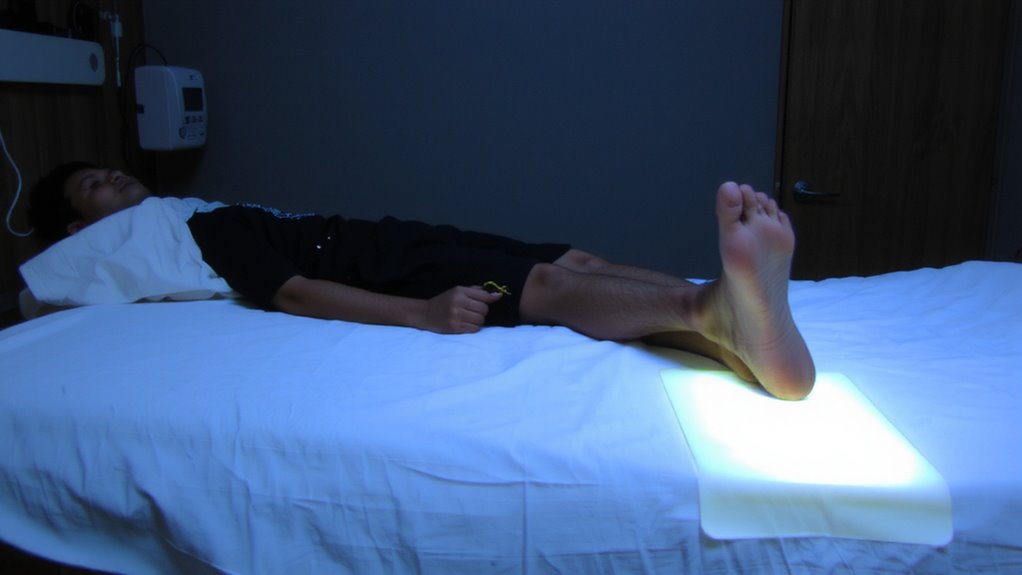
Why do sleep labs so often miss something as subtle yet potentially telling as nocturnal foot pronation? You’re not alone in wondering-current setups aren’t built to track lower-limb micro-movements. Standard sleep studies focus on breathing, brainwaves, and cardiac activity, leaving foot alignment out of view. Even slight pronation during sleep can disrupt neural feedback loops tied to muscle tone and posture control, but without sensors tracking foot position, these signs vanish. Bed anatomy plays a role too-many lab mattresses lack the support or surface markers needed to reveal how body positioning influences foot alignment. Since protocols rarely include lower extremity monitoring, you might unknowingly experience frequent pronation episodes with no record. Recognizing this gap helps you consider supportive sleep aids or home assessments that target full-body alignment, especially if you wake with unexplained discomfort.
How Today’s Protocols Miss Nighttime Foot Motion
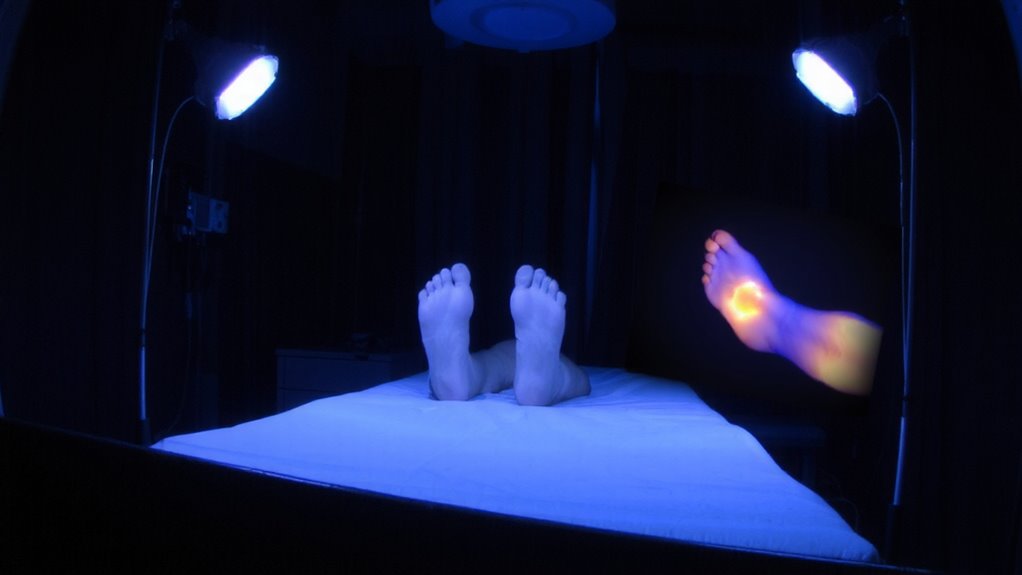
Most sleep labs don’t track foot motion because their equipment simply isn’t set up to catch it, and that’s a gap worth understanding-especially if you’ve ever woken with soreness that doesn’t have an obvious source. Current setups focus on breathing and brain activity, skipping key details about foot anatomy and movement. Without monitoring subtle shifts during sleep, labs miss how nighttime pronation affects nerve signaling and alignment. This oversight may explain lingering discomfort, even after “good” rest.
| What’s Tracked Now | What’s Missed |
|---|---|
| Brain waves | Foot motion |
| Breathing patterns | Arch collapse |
| Eye movement | Nerve signaling changes |
Ignoring foot motion limits how well providers can link symptoms to sleep behavior. You might adjust your sleep setup more effectively if full biomechanics were visible. Better data could guide choices in support surfaces or positional changes, giving clearer paths to relief.
Use Wearable Sensors to Detect Sleep-Time Pronation
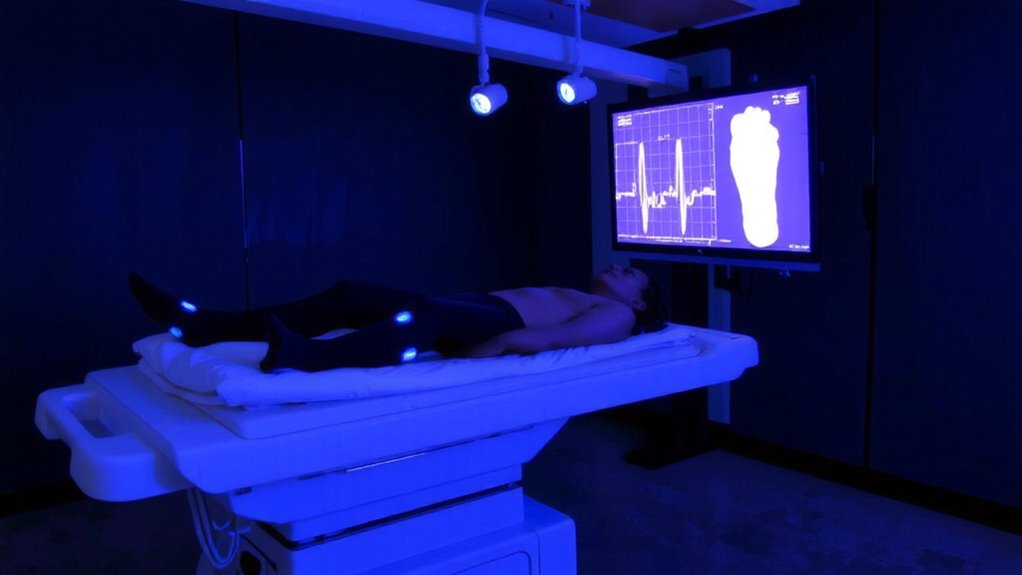
While your sleep lab data might show normal brain and breathing patterns, it’s likely missing how your feet roll inward during the night-a movement known as pronation that can quietly affect your comfort by morning. You can now use wearable sensors on the feet or ankles to capture these episodes without disrupting sleep. These small, flexible devices track motion continuously, but they rely on proper sensor calibration to guarantee accuracy across different foot sizes and sleeping positions. For reliable results, data synchronization with your main sleep tracking system is essential, aligning foot movement timestamps with breathing and brainwave recordings. Most models sync wirelessly and store data securely for clinician review. They’re lightweight, comfortable, and designed for overnight wear, with rechargeable batteries lasting several nights. Some come with trial periods or warranties, letting you test them risk-free. When added to standard sleep studies, they give a fuller picture of what happens while you rest.
Scoring Guidelines Must Include Foot Position
If you’re tracking sleep quality, don’t overlook how foot position affects overall comfort and alignment, since current scoring systems often ignore this detail. Proper assessment of foot anatomy during sleep gives clearer insight into potential disruptions caused by excessive pronation. When scoring nocturnal episodes, you should include foot position because misalignment can influence biomechanical alignment throughout the lower limbs, possibly contributing to morning discomfort or disrupted rest. Standardized guidelines that document heel angle, arch displacement, and toe orientation allow for consistent, objective evaluation across patients. These metrics support better identification of patterns linked to restless sleep or musculoskeletal strain. By integrating foot position into scoring, labs enhance data accuracy without complicating analysis. You’ll improve diagnostic clarity and help tailor interventions-like supportive sleep surfaces or positional aids-based on reliable biomechanical alignment trends observed overnight. This small update strengthens overall protocol precision.
How Clinicians Can Start Monitoring Tonight
Why not begin tonight? Start by placing motion sensors on your patient’s feet before sleep, using lightweight, flexible straps that guarantee patient comfort. Position the sensors mid-foot to track pronation without restricting movement. Sync them wirelessly to your existing sleep monitoring system for real-time data. Make sure the software is set to flag prolonged pronation episodes beyond five seconds. This improves data accuracy and helps distinguish normal movement from clinically relevant events. Use hypoallergenic adhesives so skin irritation doesn’t disrupt sleep. Calibrate each device weekly and document setup conditions for consistency. Run a trial over three consecutive nights to observe patterns while maintaining natural sleep habits. Most equipment comes with a 30-day warranty, so test thoroughly. These small steps tonight build the foundation for standardized, reliable nocturnal foot tracking across your lab.
On a final note
You can start tracking nocturnal foot pronation tonight using wearable sensors designed for sleep use. These devices capture motion without disrupting rest, offering clear data on foot position. Current sleep lab protocols often miss this, but adding foot-specific scoring improves accuracy. Choose models with long battery life, comfortable straps, and reliable sync features. Many offer trial periods or warranties, letting you test them risk-free. Check compatibility with your devices and review data export options before deciding.