The Role of Sleep Centers in Diagnosing and Treating Complex Parasomnias
Sleep centers help uncover the causes of complex parasomnias using overnight studies that track your brainwaves, heart rate, and movements with sensors and video. This setup catches events in action, helping distinguish parasomnias from seizures or neurological issues. Based on the data, specialists create personal treatment plans involving sleep scheduling or stimulus control. If episodes are frequent, harmful, or confusing, expert care becomes essential-knowing more could guide your next step.
Notable Insights
- Sleep centers use overnight studies with video and EEG to diagnose complex parasomnias accurately.
- They differentiate parasomnias from seizures using brainwave patterns and recorded behaviors during sleep.
- Specialized testing helps identify underlying causes like epilepsy, Parkinson’s, or PTSD.
- Personalized treatment plans include sleep consolidation, stimulus control, and scheduled awakenings.
- Referral to a sleep center is critical for frequent, injurious, or treatment-resistant parasomnia episodes.
Why Complex Parasomnias Require Specialized Care
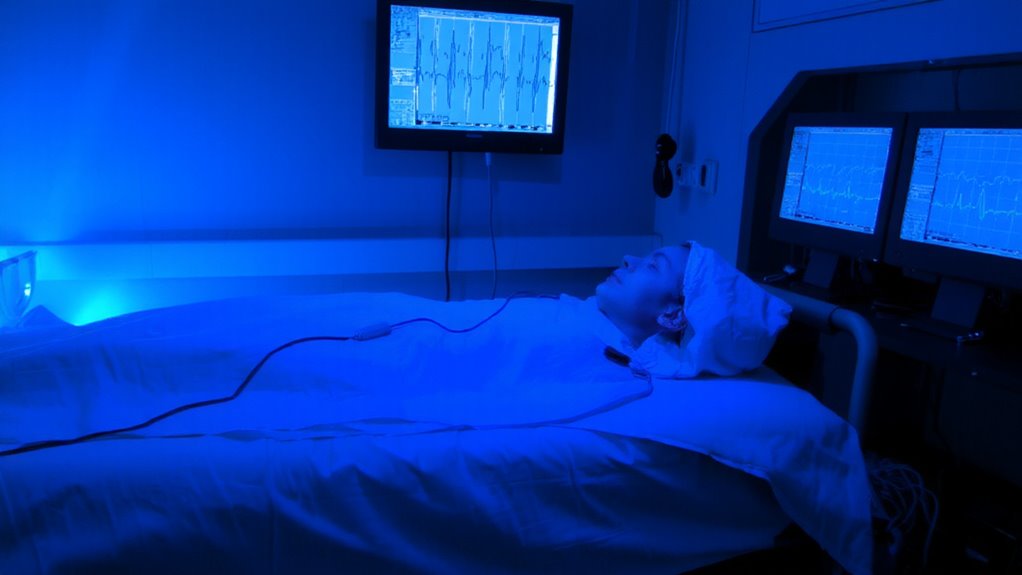
Why do some nighttime behaviors go beyond simple sleepwalking or talking? Because complex parasomnias often stem from deeper issues like neurological comorbidities or medication side effects. If you’re experiencing intense night movements, confusion, or memory gaps, it’s not just poor sleep-it might signal an underlying condition. Sleep disorders tied to epilepsy, Parkinson’s, or PTSD can blur into your rest hours, making diagnosis tricky. Over-the-counter sleep aids won’t fix this; some may even worsen symptoms. That’s why specialized care matters: experts can untangle whether your symptoms link to brain patterns, health conditions, or what you’re taking. Tailored treatment plans consider your full medical picture, including how medications interact. You’ll get clearer answers through targeted evaluation, not guesswork. Taking this step doesn’t mean your case is dire-it means you’re choosing a precise path forward, backed by science, to improve both safety and sleep quality over time.
How Sleep Centers Catch Complex Parasomnias in Action
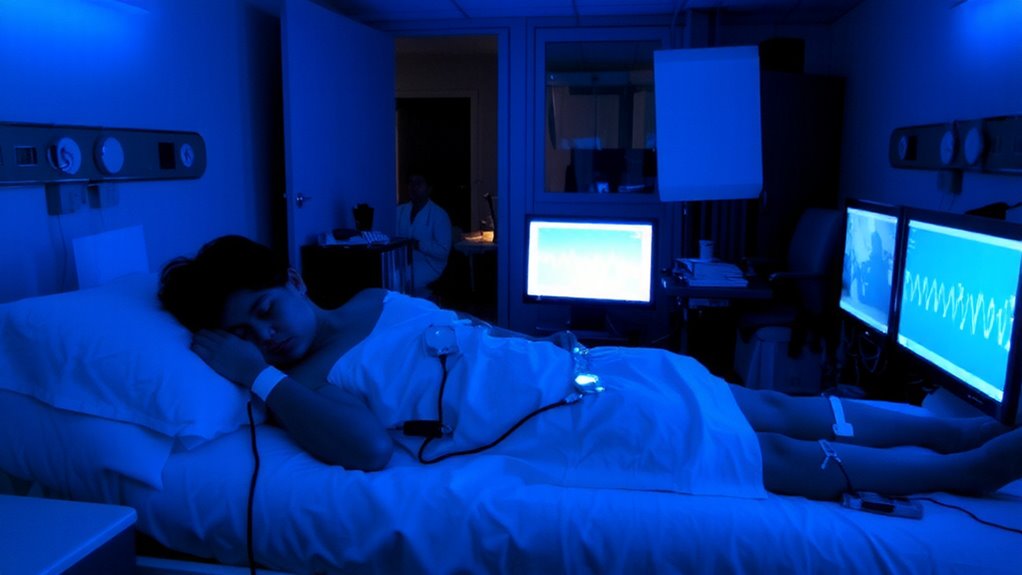
How do doctors see what happens while you sleep? They use video monitoring during overnight studies, letting specialists observe your behavior in real time. You’re connected to sensors that track brainwaves, heart rate, and muscle activity, while cameras record your movements. This combo helps catch complex parasomnias as they happen. Doctors also look for behavioral triggers-like stress, sleep deprivation, or medication changes-that might set off episodes. By reviewing the video alongside the physiological data, they can pinpoint patterns tied to your parasomnia. You might talk, sit up, or move without waking fully, and the team notes when and how often these occur. The setup’s non-invasive, designed for comfort so your sleep stays as natural as possible. Results guide next steps, helping you and your care team decide on monitoring, lifestyle changes, or treatment.
Parasomnia or Seizure? Spotting Complex Parasomnia Mimics
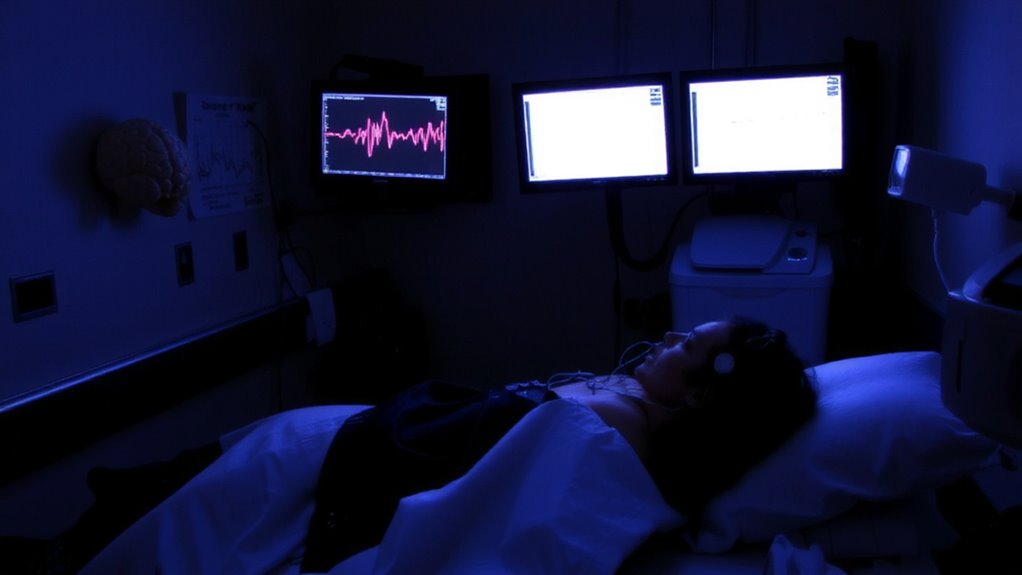
You’ve seen how sleep centers capture the details of complex parasomnias using video and sensor data, but not all nighttime events are what they seem-some mimic seizures so closely that even experienced doctors need careful analysis to tell the difference. You might notice sleep talking during episodes, which often points to a parasomnia rather than a seizure. Night terrors, too, typically happen during non-REM sleep and can look intense, with screaming or thrashing, yet they usually aren’t epileptic. Seizures, in contrast, often follow more predictable patterns on EEG and may involve different muscle movements or post-event confusion. Sleep centers use both video monitoring and brainwave analysis to spot these key differences. That clarity helps guarantee you get the right diagnosis-because treating a parasomnia like a seizure disorder could lead to unnecessary medications or missed solutions. Accurate data guides effective, tailored care.
From Diagnosis to Treatment: Personalized Care Plans
Once a sleep center confirms your diagnosis through detailed video and EEG monitoring, you and your care team can begin shaping a personalized treatment plan that reflects your specific needs and daily routines. This plan often targets improving your sleep architecture and reducing disruptive episodes with tailored behavioral interventions. Your provider might adjust sleep schedules, suggest environmental changes, or recommend stress management techniques. The approach varies, depending on your symptoms and lifestyle.
| Strategy | Purpose | Expected Outcome |
|---|---|---|
| Sleep consolidation | Stabilize sleep architecture | Fewer nocturnal episodes |
| Stimulus control | Reinforce bed-sleep association | Faster sleep onset |
| Scheduled awakenings | Prevent episode triggers | Reduced frequency |
You’ll likely trial strategies over weeks, with follow-ups to assess progress. Most plans are adjustable, with no long-term commitments, allowing flexibility as your sleep patterns respond. Warranty isn’t applicable, but ongoing support guarantees practical, evidence-based care.
Red Flags: When to See a Sleep Specialist
If you’re already working on a treatment plan but still notice frequent disruptions or worsening symptoms, it might be time to contemplate whether something more is going on. Night terrors or sleepwalking that happen more than twice a week, or lead to injuries, are red flags. You might also feel confused or disoriented upon waking, or have no memory of the episode. These aren’t just minor sleep quirks-they can signal underlying disorders. If routines fail or episodes increase, a sleep specialist can help identify triggers or conditions like sleep apnea or neurological factors. Sleep centers use monitoring tools to observe brain and body activity, offering precise diagnoses. Don’t wait if daily life is affected. Early evaluation improves outcomes, especially when parasomnias disrupt safety or well-being. Seeing a specialist is a practical step, not an overreaction.
On a final note
You’ll get the clearest answers about complex parasomnias by visiting a sleep center, where specialists use overnight studies to observe symptoms firsthand. These labs can tell apart parasomnias from seizures or other conditions, ensuring accurate diagnosis. From there, you’ll receive a tailored plan-one that may include lifestyle changes, therapy, or devices like CPAP. Most centers offer follow-up visits and adjustments, with some providing equipment trials or warranties. Knowing your options helps you make informed, practical choices for safer, better sleep.