What to Look for in an Innerspring Mattress for Maximum Spinal Alignment
Look for pocketed coils made from at least 800 tempered steel springs-they support your spine by adjusting to your body’s curves. Pair this with a firmness that fits your sleep position: medium-soft for side sleeping, medium-firm for back or stomach sleeping. Add thin, responsive comfort layers to prevent sinkage and keep your spine neutral. Strong edge support and motion isolation help maintain alignment, especially with a partner. A 100-night trial and 20-year warranty let you test long-term support, so you’ll know how well it truly works over time.
Notable Insights
- Choose pocketed coils to isolate movement and provide targeted support for hips and lower back alignment.
- Opt for 800+ tempered steel coils to ensure durable, even weight distribution and long-term spinal support.
- Select firmness based on sleep position: medium-soft for side sleepers, medium-firm to firm for back and stomach sleepers.
- Use high-density foam or latex comfort layers to prevent excessive sinkage and maintain a neutral spine.
- Prioritize reinforced edges and motion isolation to enhance stability and reduce disturbances during sleep.
Prioritize Pocketed Coils for Spinal Support
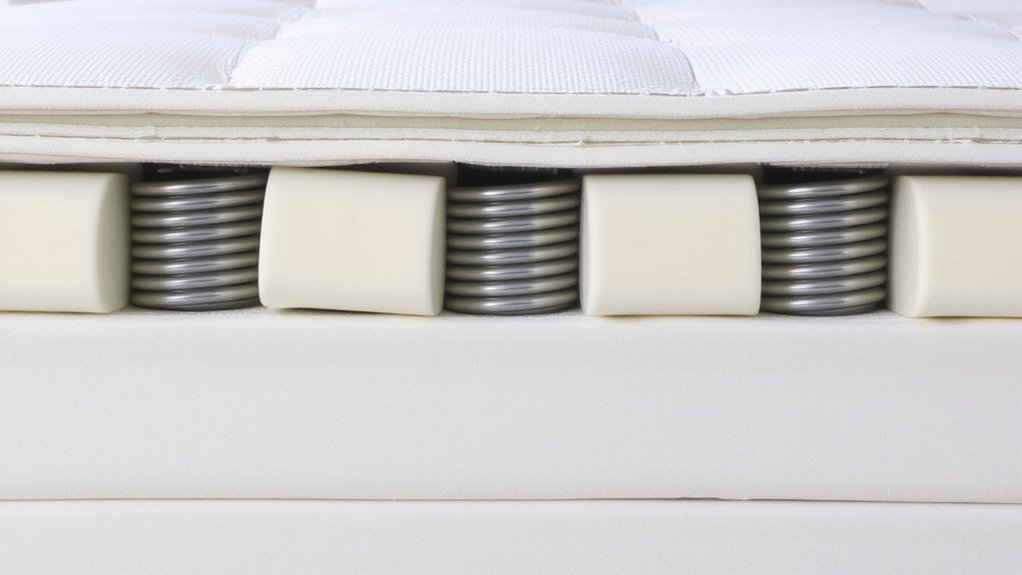
While not every spring matters, pocketed coils can make a real difference in how well your spine stays aligned while you sleep. Each coil is wrapped individually, allowing it to compress on its own-this is called coil isolation-and respond to your body’s unique curves. You’ll get targeted support where you need it most, like your lower back or hips, helping keep your spine in a neutral position all night. Since the coils move independently, motion transfer is reduced, which matters if you share the bed. Pocketed coils also adapt better to different sleep positions, offering balanced support whether you’re a side, back, or stomach sleeper. Look for models with a solid warranty-20 years or more-so you can test comfort and durability risk-free. Trial periods often last 100 nights, giving you time to assess real spinal alignment improvements. A top pick among experts is the best spring coil mattresses for combining durable support with comfort.
Choose High Coil Counts in Tempered Steel
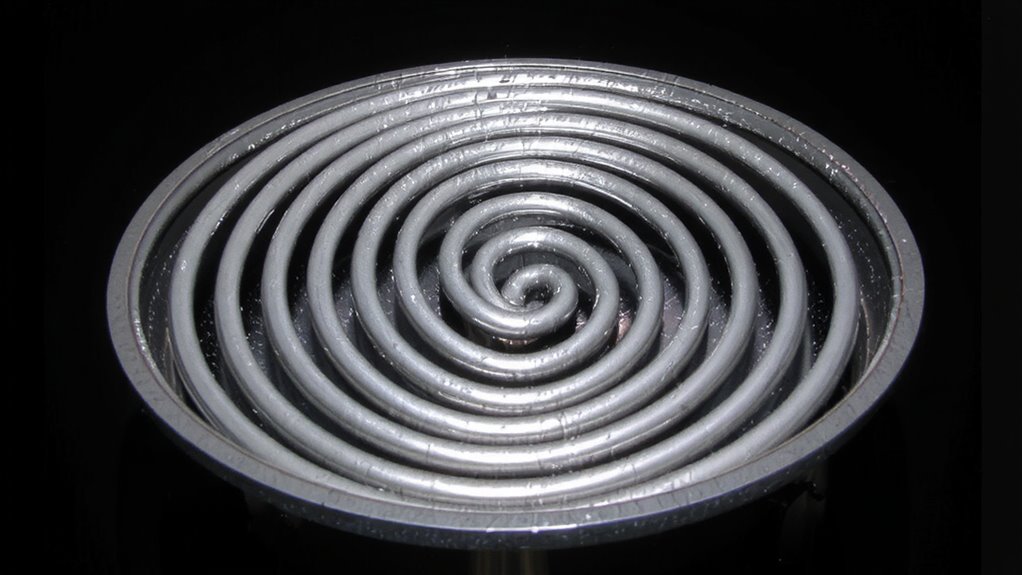
Aim for at least 800 tempered steel coils in your innerspring mattress to guarantee strong, lasting support for your spine. Higher coil counts enhance spinal alignment by distributing body weight evenly and reducing pressure points. Tempered steel offers superior coil durability and resilience compared to untreated metals. Combined with good steel quality, these coils resist sagging and maintain shape over time-critical if you suffer from back pain or sleep disturbances.
| Coil Count | Steel Quality | Coil Durability |
|---|---|---|
| 600 | Standard | Moderate |
| 800 | Tempered | High |
| 1000+ | High-Grade Tempered | Very High |
Look for certifications or warranties that back long-term performance. A solid trial period lets you assess real-world support. Choosing high coil counts in tempered steel balances support, longevity, and alignment-key for healthy, restorative sleep.
Match Mattress Firmness to Your Sleep Position
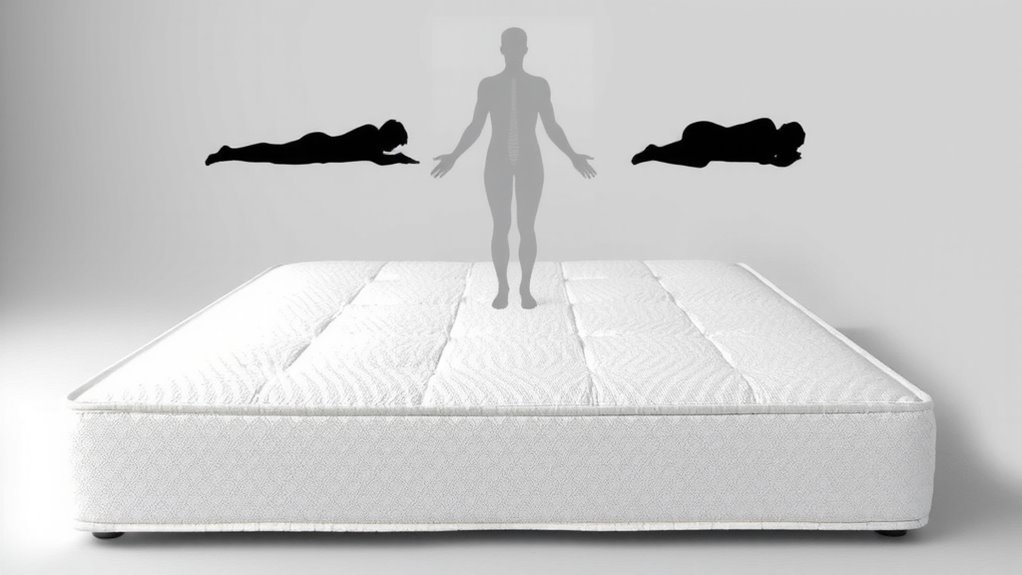
How does your sleep position affect the right firmness for your mattress? Your sleep style and body weight play key roles in spinal alignment. Side sleepers usually need a softer surface to cushion shoulders and hips, letting the spine stay neutral. If you’re under 130 pounds, a medium-soft to medium feel often works best. Back sleepers typically benefit from medium firmness, which supports the spine’s natural curve without sinking too deeply. With a body weight between 130 and 230 pounds, this firmness maintains balance. Stomach sleepers should choose medium-firm to firm options to prevent lower back strain. Heavier individuals-over 230 pounds-usually need extra support to avoid over-sinking, regardless of sleep style. Lighter sleepers might find firm models too rigid. Always check trial periods and warranties to test firmness risk-free.
Add a Comfort Layer That Prevents Sinkage
If you’re looking to maintain proper spinal alignment without feeling stuck in your mattress, choosing the right comfort layer matters. You want comfort materials that offer support without deep sinkage, so your spine stays neutral throughout the night. Materials like high-density foams or responsive latex provide pressure relief while limiting excessive sag. These layers cradle your hips and shoulders just enough, but keep your midsection lifted to prevent misalignment. A thinner, firmer comfort layer often works better with innersprings, enhancing durability and minimizing body impressions over time. Look for mattresses with zoned padding or targeted support in the center third, where sinkage most affects posture. Many quality models include trial periods, so test how the surface feels after several sleeping positions. Check the warranty, too-some brands penalize sag deeper than 1 inch. Memory foam options with best memory foam mattresses offer excellent contouring and support when layered over coils.
Reduce Motion Transfer for Spinal Stability
While you might not think about how much your partner’s movements affect your sleep, reducing motion transfer can play a key role in maintaining spinal stability through the night. Good motion isolation means you won’t feel every roll or shift, helping you stay in deep sleep without subconscious adjustments that misalign your spine. Look for pocketed coils with edge to edge stability-they limit bounce and absorb motion at the source. Pairing this with a supportive comfort layer enhances overall performance.
| Feature | Benefit | Sleep Impact |
|---|---|---|
| Pocketed Coils | Minimize motion transfer | Better motion isolation |
| Dense Foam Layers | Absorb movement | Reduced partner disturbance |
| Edge Support | Reinforces perimeter | Consistent edge to edge stability |
| Coil Count | Higher counts improve responsiveness | Balanced support |
| Dual-Zone Design | Separates sleep areas | Less shared motion |
Reinforce Edges for Full-Bed Support
Your bed’s edge support plays a quiet but critical role in how well you move and rest throughout the night. When you sit or sleep near the edge, weak construction can sag, limiting usable space and reducing support. Look for reinforced edges with high-density foam or additional coils along the perimeter-this boosts edge durability and extends the mattress’s lifespan. Strong edges also improve perimeter stability, so you don’t feel like you’re sliding off when you sleep near the side. This is especially helpful if you share the bed or need extra space for sitting up. Innerspring models with wrapped coils often pair well with reinforced borders for better structural integrity. Check warranty details, as some manufacturers cover edge sagging after prolonged use. A solid edge won’t fix alignment on its own, but it supports consistent movement and posture across the full surface, giving you reliable support where you need it most.
Keep Your Spine Neutral With Proper Alignment
A supportive mattress doesn’t just feel firm-it holds your spine in a straight, neutral line from your neck to your lower back, and the right innerspring design makes that possible. When your mattress supports natural spinal curvature, you wake with less stiffness and fewer aches. Balanced coil tension helps maintain alignment, whether you sleep on your side, back, or stomach. Look for zoned support, where coils are calibrated to respond differently under your hips, shoulders, and torso-this aids posture maintenance over time. High-quality innersprings work with your body’s shape, not against it, reducing strain on joints and muscles. Paired with a responsive comfort layer, they prevent sinking that can misalign your spine. Check warranty length and trial periods; a solid return policy lets you test spinal support in real conditions. Proper alignment isn’t luxury-it’s a foundation for restorative sleep and long-term comfort.
On a final note
You’ll want pocketed coils in tempered steel-they support spinal alignment by isolating movement and adapting to your body. Pair high coil counts with a firmness that matches your sleep position: firmer for back and stomach sleepers, slightly softer for side sleepers. A responsive comfort layer prevents excessive sinkage, while reinforced edges boost stability. Look for a trial period and solid warranty to test alignment over time, ensuring long-term spinal support.