Preventing Flat Head Syndrome: Sleep Position & Head Rotation Tips
Your baby’s sleep position plays a key role in preventing flat head syndrome, especially since their skull is soft and easily shaped by repeated pressure. Always place them on their back to sleep, but gently rotate their head direction each time-left, right, or center-to spread the pressure evenly. Pair this with daily tummy time when they’re awake to build strength and reduce head pressure. Watch for early signs like flat spots or uneven hair loss. If positioning doesn’t help by 4 months, check with your doctor-you’ll find effective next steps with a little more insight.
Notable Insights
- Back sleeping is safe and recommended, but requires head position changes to prevent flat spots.
- Rotate your baby’s head direction during each sleep to evenly distribute skull pressure.
- Alternate between left, right, and center head positions to support balanced skull development.
- Use crib placement to encourage your baby to turn their head in different directions.
- Combine safe sleep positioning with daily tummy time to reduce skull pressure and build strength.
Why Sleep Position Causes Flat Head Syndrome
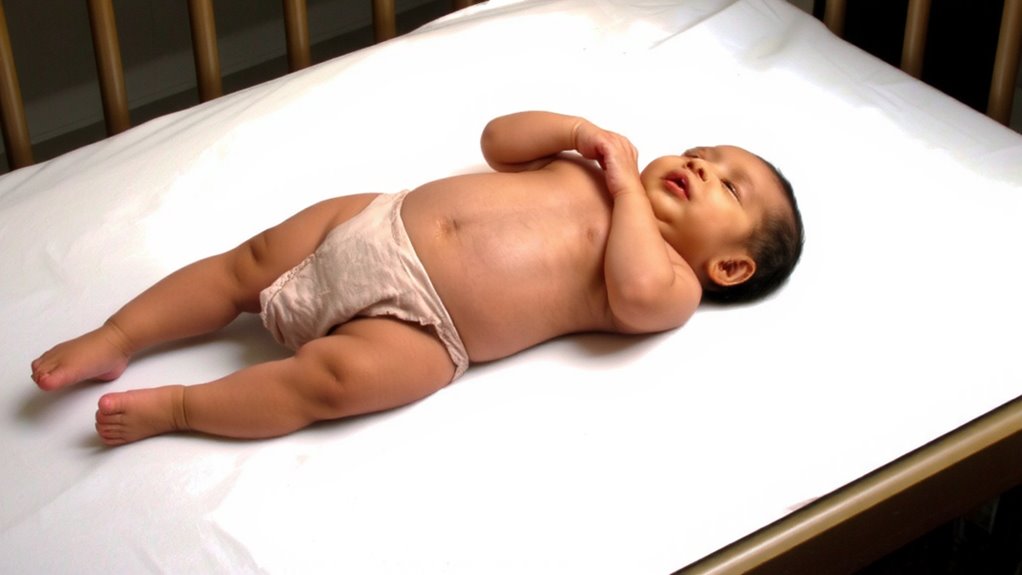
While your baby’s skull is still soft and malleable in the first few months, the position they sleep in can have a real impact on head shape. Poor pressure distribution over time may lead to flat spots, especially if your baby rests in the same position most nights. Head molding happens gradually, influenced by constant contact with a firm mattress or sleep surface. You can reduce risk by changing your baby’s head orientation each night-left, right, center-encouraging balanced pressure distribution. Though sleep positioners exist, the FDA hasn’t approved most due to safety concerns. Instead, consider firm, flat sleep surfaces meeting CPSC standards, which support natural head shaping. Rotate crib placement to draw attention in different directions during waking hours. Watch for signs of consistent head tilting, which may need evaluation. Simple adjustments improve symmetry without special aids.
Can Back Sleeping Cause a Flat Spot on Baby’s Head?

Putting your baby to sleep on their back is the safest position to reduce the risk of SIDS, and health experts strongly recommend it. While back sleeping supports safe breathing, it can lead to prolonged pressure on one part of your baby’s head, possibly affecting head shaping over time. You might notice a flat spot developing, especially if your baby consistently rests in the same position. This is common and usually mild, but it’s important to monitor. Avoid using pillow support or commercial head-shaping pillows, as they aren’t safe for infants and increase suffocation risks. Instead, focus on safe positioning practices. You can support healthy head shaping through supervised tummy time and varying how your baby lies during rest. Always prioritize a firm, flat sleep surface that meets safety standards. Most flat spots improve as your baby gains mobility and spends less time lying down.
Rotate Your Baby’s Head Position During Sleep
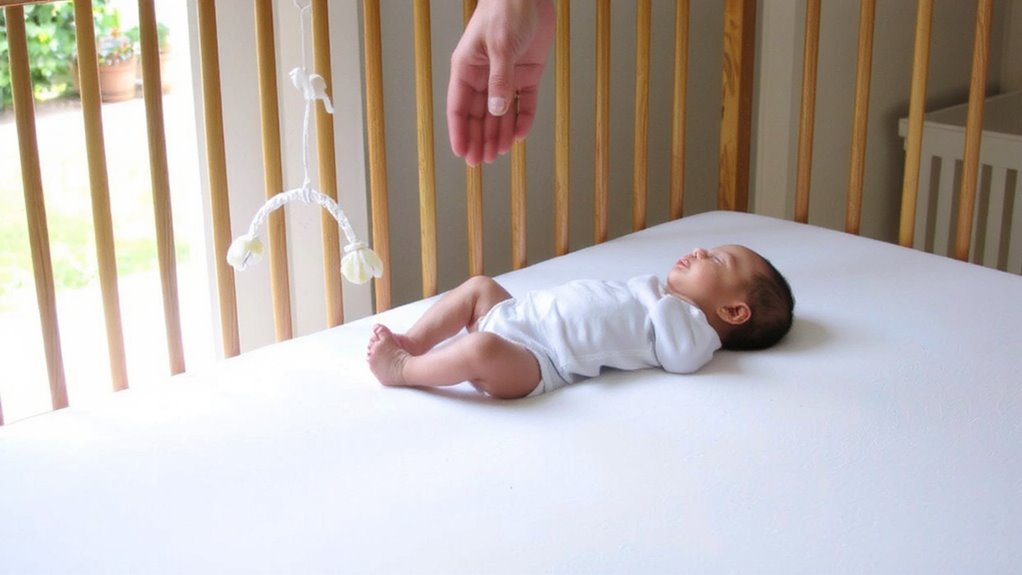
How can you help prevent a flat spot from forming on your baby’s head? You can support healthy head shaping by regularly rotating your baby’s head position while they sleep. Each time you lay your baby down, gently turn their head to face the opposite direction-left one night, right the next. This simple change helps distribute pressure evenly across the skull. Consistent head positioning leads to uneven pressure, encouraging flat spots due to repeated positional habits. Switching sides discourages prolonged contact on one area. You don’t need special pillows or sleep aids-just mindful placement. Most babies naturally look toward the crib entrance or room activity, so repositioning the crib or your baby’s head can encourage varied orientation. Over time, this practice promotes balanced skull development. Always keep your baby on their back to sleep, but feel confident adjusting head direction safely. Consistency and small shifts make a measurable difference in prevention.
How to Do Tummy Time Safely and Effectively
You’ve already taken steps to protect your baby’s head shape by changing their sleep position regularly, and adding tummy time to their daily routine builds on that same idea-giving their skull and muscles balanced support. Start tummy time when your baby is awake and alert, placing them on a safe surface like a firm playmat or clean carpet. Begin with short sessions-just three to five minutes, two or three times a day. As your baby gains strength, use gradual progression, increasing time slowly. Support their arms under their shoulders to help them lift their head. Always supervise and avoid doing tummy time right after feeding to prevent spit-ups. Use a low, stable surface without loose bedding or toys. Over days and weeks, your baby will gain neck, shoulder, and arm strength, which helps naturally reduce prolonged pressure on the back of the head.
Watch for These Early Signs of Flat Head Syndrome
Have you noticed a flat spot developing on the back or side of your baby’s head? That could be an early sign of flat head syndrome. Visual cues like a flattened area, uneven hair loss, or a tilted forehead often appear within the first few months. You might also see one ear slightly forward compared to the other. These changes are subtle at first, so regular check-ins during diaper changes or tummy time help catch them early. Early diagnosis makes a big difference, since small adjustments in sleep position or daily activity can guide head shape back on track. Watch how your baby rests their head during naps and at night-consistently favoring one side increases risk. Monitoring these patterns gives you clear, practical insight into what’s working and what might need a slight change. Stay observant, but don’t worry-most cases respond well to simple, consistent steps.
When to See a Doctor for Flat Head Syndrome
When should you contact a doctor about flat head syndrome? If you notice a lasting change in your baby’s head shape or suspect a skull deformity, it’s best to consult a pediatrician. Early evaluation guarantees proper development and rules out conditions like craniosynostosis.
| Sign | Action |
|---|---|
| Flat spot doesn’t improve by 4 months | Schedule a check-up |
| Head shape becomes more uneven | Seek professional advice |
| Baby resists turning head one way | Mention to doctor |
| Skull deformity worsens over time | Get assessed promptly |
| No improvement with repositioning | Discuss next steps |
Most cases improve with positioning and tummy time, but some may need a helmet. Your doctor can guide you on whether sleep adjustments or specialist care are needed. Trust your instinct-if something seems off, a quick visit offers peace of mind.
On a final note
You can help prevent flat head syndrome by rotating your baby’s head position each time they sleep, giving them daily tummy time while awake, and avoiding prolonged time in car seats or swings. Back sleeping is still safest, but slight shifts in head angle can reduce pressure. Watch for flat spots and consult your doctor if you notice uneven shaping. Most cases improve with simple position changes, and early action supports better results.