How Daily Squats and Lunges Contribute to Better Sleep Posture
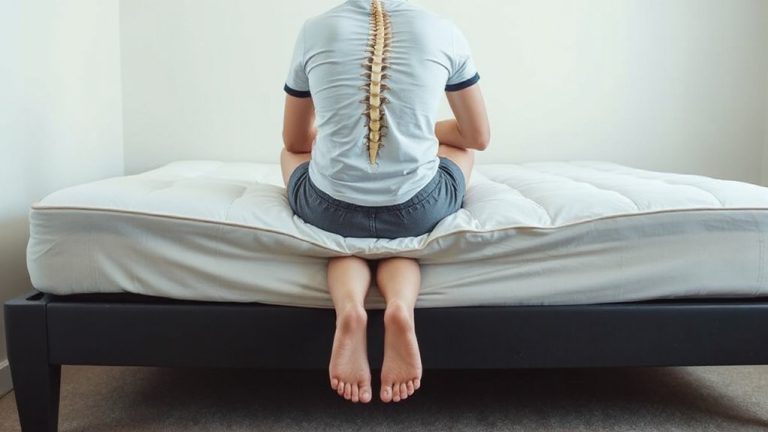
Weak legs can throw off your spine’s alignment at night, but daily squats and lunges build the strength to keep your hips stable and back supported. Stronger quads, glutes, and core help maintain neutral posture, reducing tosses and morning stiffness. These moves improve joint mobility and muscle balance over time, so you rely less on special pillows or mattresses. Consistency matters more than intensity-small efforts add up. You’ll notice deeper, more comfortable rest with regular practice, and there’s more to discover about optimizing your routine.
Notable Insights
- Weak legs can disrupt spinal alignment during sleep, leading to frequent tossing and turning.
- Daily squats strengthen quads and glutes, reducing lower back strain and supporting neutral spine posture.
- Lunges correct hip imbalances by promoting equal muscle engagement and improving pelvic alignment.
- Squats and lunges engage core muscles, enhancing spinal stability and reducing nighttime discomfort.
- Consistent practice improves joint mobility and muscle activation, leading to more comfortable sleep posture.
Why Weak Legs Wreck Your Sleep Posture
Balance, often taken for granted, starts in the muscles you use every time you stand, walk, or shift in bed. When leg weakness sets in, your body struggles to support itself, even during sleep. Weak legs can’t maintain proper posture, leading to poor alignment of your hips and spine as you lie down. This misalignment often causes discomfort, tossing, and frequent waking. Over time, poor alignment may contribute to chronic stiffness or pain, especially if you already have a sleep disorder. Daily squats and lunges strengthen the muscles that stabilize your pelvis and support spinal positioning. Improved strength helps your body stay in a neutral posture through the night. While sleep aids might offer temporary relief, addressing leg weakness targets the root cause. Consider this: stronger legs mean better control, fewer adjustments, and more restful nights. Try simple movements daily-many notice improvement within weeks. Most programs are free, low-risk, and easy to start at home, no equipment needed.
How Squats Keep Your Spine Aligned at Night
When you strengthen your legs with daily squats, you’re not just building muscle-you’re creating a stable foundation that supports your spine while you sleep. Strong quadriceps and glutes help maintain proper spinal stability by preventing your lower back from overcompensating during rest. This balance reduces unnatural shifts in your pelvic tilt, which can otherwise lead to misalignment and discomfort. With consistent squatting, your body learns to hold a neutral posture, making it easier to stay aligned through the night. You’ll likely notice less stiffness in the morning and fewer urges to adjust your position. Over time, this improved alignment may reduce reliance on specialized pillows or mattresses designed to correct posture. Squats won’t fix all sleep issues, but they do support your skeleton in a way that complements quality sleep surfaces and minimizes strain.
Fix Hip Imbalance With Better Lunges
Strong legs do more than support your spine-they also play a key role in keeping your hips even, especially when you’re lying down. If one hip sits higher or tighter than the other, it can disrupt your alignment and lead to restless sleep. That’s where better lunges come in. By focusing on controlled, full-range movements, you build hip stability and correct imbalances over time. Make sure each lunge feels equal in depth and effort-this promotes muscle symmetry and prevents overcompensation. Stand tall, step forward with intention, and lower slowly, keeping both hips level. Do these daily, and you’ll notice less tension when you lie on your side or back. Improved alignment doesn’t guarantee perfect sleep, but it may reduce discomfort that leads to tossing and turning. It’s a simple, equipment-free move with measurable benefits worth trying for a few weeks to assess changes in comfort.
Strong Core, Better Sleep: The Missing Link
Though you might not feel it at first, a weak core can quietly undermine your sleep by letting your lower back sag out of alignment. This misalignment disrupts your body’s natural posture, reducing core stability and putting strain on your spine throughout the night. Over time, poor core strength can compromise your sleep quality, making it harder to stay in deep, restorative stages. Daily squats and lunges engage not just your legs but also your abdominal and lower back muscles, building the foundational strength needed for better spinal support. Improved core stability helps maintain a neutral spine while lying down, whether on your side or back. You don’t need fancy sleep aids-just consistent movement that supports your body’s natural mechanics. Strengthening your core is a practical, evidence-based step toward healthier sleep posture and more consistent rest.
Stop Waking Up Stiff: Start Doing Squats
Why do you wake up feeling tight and stiff, as if your body seized up overnight? It might be due to poor joint mobility and inactive muscles from prolonged sitting. Daily squats improve both joint mobility and muscle activation, helping your body support itself better-even while you sleep. When your hips, knees, and ankles move freely and your glutes and quads engage properly, you’re less likely to wake with tension.
Here’s how squats help over time:
| Weeks | What You’ll Notice |
|---|---|
| 1–2 | Less morning stiffness |
| 3–4 | Improved joint mobility |
| 5–6 | Better muscle activation |
| 7–8 | Easier movement daily |
| 9+ | More comfortable sleep posture |
Incorporate just 10-15 bodyweight squats daily. You don’t need equipment-just consistency. Over time, your body adapts, reducing the strain on your spine and joints at night.
The 10-Minute Evening Routine for Deeper Sleep
After a long day, your body needs time to wind down, and a simple 10-minute routine can make a real difference in how deeply you sleep. Start with five minutes of evening stretching, focusing on your hips, hamstrings, and lower back-areas tightened by sitting and daily movement. Gentle lunges and bodyweight squats ease joint stiffness and improve circulation. Follow with five minutes of bedtime mobility, using slow, controlled motions like cat-cow and spinal twists to release tension. This routine supports better sleep posture by aligning your spine and relaxing muscles. It’s not a cure for sleep disorders, but consistent practice may reduce reliance on sleep aids. Perform it nightly in a quiet space with comfortable clothing. No equipment is needed, and most movements carry no risk if done gently. Try it for two weeks to assess improvements. Many report feeling looser, calmer, and more prepared for rest.
Squatting Wrong? Avoid These 5 Form Mistakes
How often do you check your form when squatting at home? Small mistakes can affect your posture and, over time, your sleep quality. Poor knee tracking is one of the most common issues-your knees should stay aligned with your toes, not caving inward. That misalignment stresses joints and reduces stability, which may disrupt your body’s evening relaxation. Foot placement matters just as much: your feet should be shoulder-width apart, flat on the floor, for balanced support. If they’re too close or turned unevenly, it throws off your entire form. You might not notice it during the day, but over time, it can contribute to tension that makes settling into bed harder. Fixing these errors doesn’t take extra time, just attention. Paying close attention to knee tracking and foot placement builds better habits-habits that support not just movement, but rest.
On a final note
You’re more likely to sleep well when your legs and core support your spine properly. Daily squats and lunges improve posture, reduce stiffness, and may ease common sleep disruptions. These moves strengthen muscles used all day-and all night. Start with short routines, watch your form, and allow a few weeks to notice changes. Results vary, but consistency matters most. Consider pairing the routine with other proven sleep practices for best results.