How to Use Bright Light Therapy to Improve Alertness in Narcolepsy
Use bright light therapy every morning within 30 minutes of waking to boost alertness and support your sleep-wake cycle. Sit 16–24 inches from a 10,000 lux lamp, slightly above eye level, for 20–30 minutes while eating or reading-don’t stare directly. Choose a UV-filtered lamp with a large, evenly lit surface and adjustable brightness. Consistent morning use strengthens circadian timing, and pairing it with medication and good sleep habits improves results over time. More details on optimizing your routine follow.
Notable Insights
- Use a 10,000 lux light therapy lamp for 20–30 minutes each morning to boost daytime alertness.
- Time sessions between 6:00 and 8:00 a.m., within 30 minutes of waking, to strengthen circadian rhythm.
- Position the lamp 16–24 inches from your face, slightly above eye level, without staring directly at it.
- Choose a UV-filtered lamp with a large, evenly lit surface for safe and effective light exposure.
- Combine daily light therapy with consistent sleep habits, medication, and morning routines for best results.
How Light Therapy Reduces Daytime Sleepiness in Narcolepsy
While your body’s internal clock relies on light to stay aligned, exposure to bright light at key times can help strengthen wakefulness during the day if you have narcolepsy. Proper timing supports circadian entrainment, helping your sleep-wake cycle run more predictably. Light exposure, especially during daytime hours, triggers melatonin suppression, which reduces drowsiness when you need to stay alert. Devices used for this therapy typically emit 10,000 lux of cool-white light and require 20 to 30 minutes of use. You should sit nearby-not staring directly-at a distance of about 16 to 24 inches. Most units are portable, with warranties ranging from one to three years. Clinical trials show modest but consistent improvements in alertness with regular use. Over time, this therapy may reduce reliance on stimulant medications. Results vary, so a two-week trial helps assess effectiveness for your routine.
Use Light Therapy in the Morning for Maximum Wakefulness
Using bright light therapy in the morning helps you feel more alert earlier in the day and supports a steadier rhythm of wakefulness and sleep. Morning exposure to bright light signals your brain to reduce melatonin production, boosting alertness when you need it most. This practice strengthens circadian alignment, making your internal clock more consistent over time. You’ll likely notice fewer sleep attacks and smoother shifts from sleep to wakefulness. For best results, aim for 20 to 30 minutes of light therapy shortly after waking, ideally between 6:00 and 8:00 a.m. Consistent timing improves effectiveness, so try to use it at the same time each day. Your body responds well to routine, and steady morning exposure enhances overall sleep-wake stability. You don’t need intense brightness to benefit-10,000 lux is standard, but lower intensities may work if used longer.
Choose the Right Light Therapy Lamp for Narcolepsy
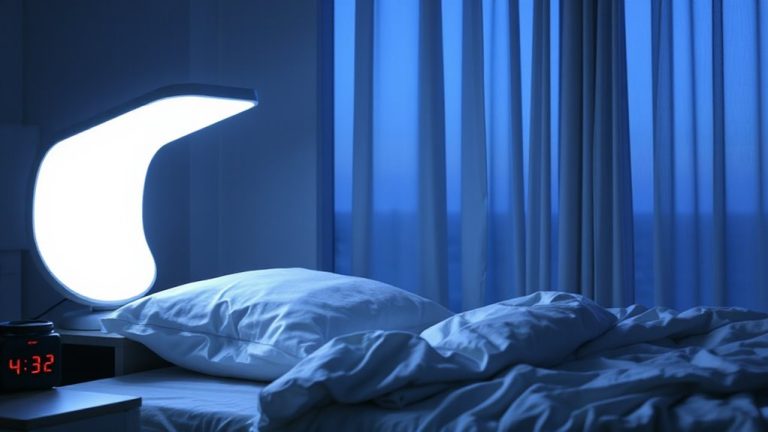
A good light therapy lamp can make a real difference in managing narcolepsy symptoms, especially when you choose one that fits your daily routine and treatment needs. Look for a lamp with at least 10,000 lux of lamp brightness-this level delivers strong, effective light in shorter sessions, usually 20 to 30 minutes. Make sure the light spectrum closely mimics natural sunlight, without harmful UV rays, to support alertness safely. Choose a lamp with a large, evenly lit surface so your eyes receive consistent exposure, even if you’re reading or working. Many models come with adjustable brightness settings, letting you ease into treatment. Opt for one with a solid build and a stable base. Check if the manufacturer offers a trial period or warranty-testing it yourself helps confirm comfort and effectiveness.
Follow a Simple Morning Light Routine to Reset Your Clock
How do you start your day when narcolepsy makes mornings a struggle? A simple morning light routine can help. Sit near your light therapy lamp shortly after waking, ideally within 30 minutes. Use it for 20–30 minutes while eating breakfast or reading-just keep it within your peripheral vision. This morning exposure helps signal your brain that the day has begun. Consistency matters most: do it daily, even on weekends. Over time, it supports better circadian alignment, which strengthens your sleep-wake rhythm. Choose a lamp that offers 10,000 lux at a comfortable distance, so you don’t need to sit too close. Position it just off-center to reduce glare. Most models are durable, with filters that block UV light. Look for brands offering a 1–2 year trial or warranty to test effectiveness. This small habit adds up, helping you feel more alert each morning.
Avoid These Common Light Therapy Mistakes
Why do some people still feel groggy despite using light therapy? You might be making common mistakes that reduce its effectiveness. Improper placement is a frequent issue-if your light box isn’t positioned correctly, the light won’t reach your eyes at the right angle, weakening the signal to your brain’s clock. Make sure it’s about 16 to 24 inches from your face and slightly above eye level, angled toward you. Overuse risks are real, too. Using the device too long or too late in the day can disrupt your rhythm instead of helping it. Stick to 20–30 minutes in the early morning to stay safe and effective. Avoid staring directly at the light, but keep your eyes open and engaged in normal activities like reading. Consistency matters more than intensity. Fix these issues and you may finally feel the alertness boost you’re after.
Combine Light Therapy With Medication and Lifestyle Habits
While light therapy can help regulate your sleep-wake cycle, pairing it with prescribed medication and healthy daily habits often leads to better outcomes for managing narcolepsy. Stick to your medication schedule and maintain consistent sleep times, even on weekends, to support therapy adherence. Include morning light sessions right after waking-it helps sync your internal clock. If you experience light sensitivity, use a filter or sit farther from the device to stay comfortable. Combine therapy with light exercise and balanced meals to boost daytime alertness. Avoid heavy meals and screen exposure close to bedtime, as they can disrupt sleep quality. Remember, consistency is key: the benefits build over time when you follow your full treatment plan. Small adjustments can improve comfort and long-term success without replacing necessary medical care.
Track Your Alertness and Adjust Your Light Routine
When do you feel most drowsy during the day-mid-morning, after lunch, or in the early evening? Tracking your alertness helps identify how bright light therapy affects your sleep patterns and energy levels. Keep a simple log for a week, noting when you use the light box and how awake you feel. Do you notice sharper focus after 30 minutes of morning exposure? Or does an afternoon session lift your energy levels when drowsiness hits? Adjust timing or duration based on your patterns. If morning light increases alertness but disrupts nighttime sleep, try shorter sessions or earlier use. Consistency matters-use the device at the same time daily to support stable sleep patterns. Over time, you’ll see which routine fits your needs. This trial process helps match light therapy to your unique schedule, improving outcomes without changing medication.
On a final note
You can use bright light therapy each morning to help reduce daytime sleepiness caused by narcolepsy. Choose a lamp that delivers 10,000 lux, sit about 16–24 inches away for 20–30 minutes, and keep your eyes open but avoid staring directly. Pair this routine with medication and good sleep habits for best results. Track how you feel and adjust timing or duration as needed. Many lamps come with warranties, so test one with a clear return policy to see what works for your schedule and symptoms.