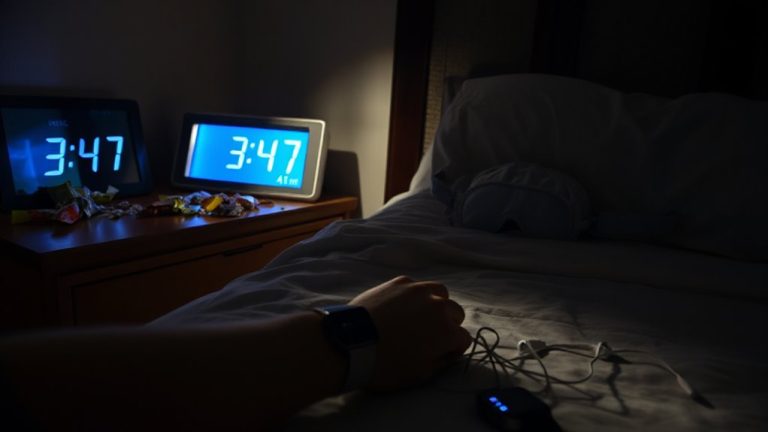
How Sleep Cycle Entrainment Helps With Shift Work Disorder
You can manage shift work disorder by aligning your body clock with your schedule through sleep cycle entrainment. Timed bright light during shifts boosts alertness, while blue-blocking glasses and darkness help trigger melatonin when it’s time to sleep. Keeping consistent sleep and wake times-even on days off-strengthens your rhythm. A dark, quiet, cool bedroom supports better rest. Devices using light or sound cues may help synchronize your internal clock, offering noticeable improvements with regular use. These methods work best when combined, and trying them together could bring clearer results.
Notable Insights
- Sleep cycle entrainment aligns the body’s internal clock with irregular work hours using timed light exposure.
- Controlled bright light during night shifts boosts alertness and shifts circadian rhythms to match the work schedule.
- Blue light reduction after shifts supports melatonin release, improving daytime sleep quality.
- Consistent sleep and wake times, even on days off, stabilize the circadian rhythm over time.
- Darkness therapy and sleep-friendly environments enhance entrainment by minimizing disruptive light and noise.
Why Shift Work Disrupts Sleep
Your body runs on a natural rhythm, one that’s finely tuned to the sun’s daily cycle. When you work night shifts or irregular hours, you fight against this internal clock, leading to circadian misalignment. That means your body expects wakefulness during daylight and sleep at night, but your job flips that. Over time, this mismatch often causes sleep deprivation, making it harder to focus, recover, or stay healthy. You might struggle to fall asleep during the day due to light, noise, or even household activity. Even if you block those out, your alertness systems remain active, reducing sleep quality. These challenges aren’t just discomfort-they affect job performance and long-term well-being. Recognizing the signs early helps you decide whether to adjust schedules, seek light therapy, or consider short-term sleep aids under guidance. Solutions should align with your health, work demands, and lifestyle-balancing risks and benefits thoughtfully.
Use Light to Control Your Sleep Clock
How could something as simple as light reshape your sleep when working odd hours? Light exposure strongly influences your internal clock, signaling when to feel alert or sleepy. During night shifts, bright light-especially blue-enriched light-can boost alertness and help shift your sleep cycle. Use bright lights at work to reinforce wakefulness. Afterward, wear blue-blocking glasses to reduce unwanted light exposure. When you’re ready to sleep, darkness therapy is key: darken your bedroom with blackout curtains and avoid screens to support melatonin release. Consistent timing improves results, even on days off. This method doesn’t rely on medication and can work alongside other sleep aids. Devices like light therapy lamps are easy to use and often come with adjustable settings and warranties. Try them for several days to evaluate effects. Proper use can make sleep more restful and easier to maintain.
Stick to a Sleep Routine Despite Rotating Shifts
Consistently maintaining a sleep schedule can still work, even when your shifts keep changing. The key is strong sleep hygiene-going to bed and waking up at the same time every day, no matter your shift. This regularity supports your body’s internal clock and improves sleep quality over time. Use noise control strategies like earplugs or white noise machines to block out daytime sounds when sleeping during daylight hours. Keep your bedroom cool, dark, and free from electronic distractions to strengthen your routine. While rotating shifts make consistency harder, sticking to a fixed sleep window helps reduce fatigue and improves alertness at work. Planning your sleep around your most frequent shift can also ease changes. Over time, this steady approach supports better rest and sharper performance. For shift workers, effective sound management is crucial, and choosing the right solution can make a significant difference-consider exploring the best noise masking picks for shift workers to find a suitable option.
Reset Your Body Clock With Sleep Entrainment
Even if your work hours shift from week to week, resetting your body clock through sleep entrainment can help align your sleep schedule with your daily routine by using consistent cues that influence your circadian rhythm. You can support melatonin regulation by exposing yourself to bright light during wakeful hours and reducing blue light before bedtime. This helps signal your body when to stay alert or prepare for sleep. Devices that use gentle sound patterns or rhythmic light pulses may aid brainwave synchronization, easing your shift into restful sleep. These tools don’t work instantly, but with regular use, they can improve sleep quality over time. Look for models with adjustable settings and clinical backing. Consider trying ones with free trial periods so you can assess comfort and effectiveness. While results vary, combining light cues, sound, and consistent timing increases your chances of adapting more smoothly to shift work demands.
Fix Common Problems That Break Shift Workers’ Sleep
What’s keeping you from getting solid rest when your schedule runs against the sun’s rhythm? Often, it’s a poor sleep environment or unexpected disruptions. Your body needs consistency, and even small disturbances like light leaks or sound spikes can break rest. To fix this, prioritize noise reduction-use earplugs, white noise machines, or soundproof curtains. Make your bedroom dark with blackout shades, and keep the temperature cool. Remove electronics that emit light or noise. A stable sleep environment trains your brain to associate bed with rest, not alertness. Consider testing different tools-for example, a fan for masking sound or a weighted blanket for comfort. Look for products with trial periods so you can test performance without risk. Small, informed changes build better sleep, even on shifting schedules. For effective noise blocking, consider trying top-rated best sleep ear plugs that are designed for comfort and long-term wear.
On a final note
You can manage shift work disorder by aligning your sleep schedule with your body’s natural rhythms. Use bright light during shifts and darkness to signal sleep. Even with rotating shifts, a consistent routine helps. Sleep entrainment tools, like timed light exposure and melatonin, support this reset. Consider trying wearables or apps that track circadian patterns. Many offer free trials and clear instructions, letting you test what works before committing.