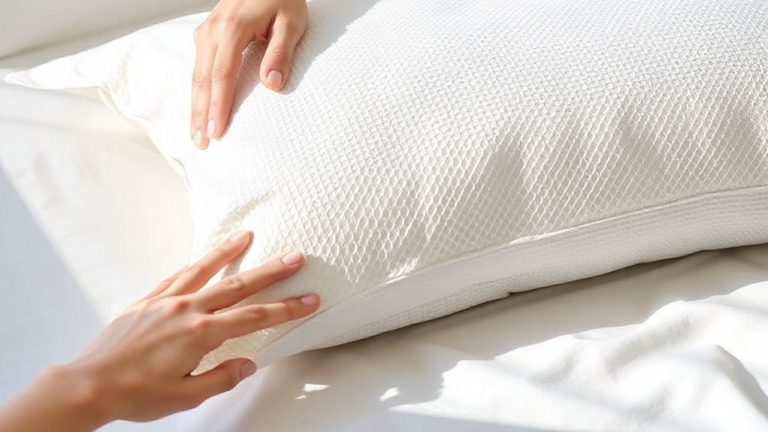
Creating a Luxurious Mix With Silk Pillows, Cotton Sheets, and Wool Duvet
You’ll feel the difference when silk pillows reduce friction on your hair and skin, cotton sheets let your body breathe, and a wool duvet balances temperature all night. Choose high-momme silk, long-staple cotton with a percale weave, and a wool duvet with a natural cotton shell for best results. These layers work together to wick moisture, regulate heat, and stay comfortable in changing seasons. Many come with sleep trials, so you can test their fit for your sleep needs-there’s more to discover about getting it just right.
Notable Insights
- Combine silk pillows, cotton sheets, and a wool duvet for a sleep system that balances softness, breathability, and temperature control.
- Choose high-momme silk pillows to reduce hair and skin friction while preserving moisture and skincare products.
- Opt for long-staple cotton sheets in a percale weave to enhance airflow and provide a crisp, luxurious feel.
- Layer with a wool duvet for natural insulation, moisture wicking, and consistent comfort in varying temperatures.
- Maintain the set by hand-washing silk, machine-washing cotton, and spot-cleaning wool, storing all in breathable cotton bags.
Why Natural Fabrics Improve Sleep Comfort
Many sleep experts agree that natural fabrics like silk, cotton, and wool can make a noticeable difference in how well you rest. You’ll find they support moisture wicking, pulling sweat away from your skin so you stay dry through the night. These materials also provide excellent temperature regulation, keeping you cool in summer and warm in winter. Cotton breathes well, wool insulates evenly, and silk balances both traits. Their fibers respond to your body’s needs, reducing overheating and discomfort. If you struggle with restless sleep or night sweats, switching to natural bedding may help. Most high-quality options come with trial periods, so you can test comfort without risk. Look for tight weaves and pure fiber content to guarantee durability and performance. While they may cost more upfront, their longevity and benefits to sleep comfort make them a practical choice. You’re likely to notice fewer disruptions and a smoother sleep cycle over time. For those interested in the softest and most durable options, consider starting with best silk sheets as a key component of a luxurious, natural bedding ensemble.
How Silk Pillows Benefit Hair and Skin
Your nightly rest gains a subtle advantage when you choose a silk pillow, thanks to its smooth surface and natural composition. It reduces friction on your skin and hair, helping retain moisture and prevent breakage. For those concerned with hair hydration and skin smoothing, silk’s tightly woven fibers minimize absorption of oils and skincare products. Unlike rougher fabrics, silk supports your skin’s natural barrier and may help reduce sleep creases over time. Choosing a comforter filled with mulberry silk can enhance these benefits by maintaining a consistent, luxurious sleep environment.
| Benefit | How It Helps |
|---|---|
| Hair hydration | Less moisture loss overnight |
| Skin smoothing | Reduced friction during sleep |
| Lightweight feel | Comfortable for side and back sleepers |
| Temperature | Naturally regulates heat and humidity |
Consider trying one with a high momme count (19–25) and OEKO-TEX certification. Many brands offer trial periods, so test it for at least 30 nights to assess effects on hair and skin.
What to Look for in Breathable Cotton Sheets
A well-chosen set of cotton sheets can make a noticeable difference in how comfortably you sleep, especially if breathability is a priority. Look for sheets made from long-staple cotton like Egyptian or Pima, which offer softness and durability without trapping heat. A thread count between 200 and 400 often provides the best balance-higher isn’t always better, as excessive thread count can reduce airflow. Opt for percale weaves; they’re lightweight and promote breathability. Moisture wicking is key if you tend to sleep hot or experience night sweats-cotton naturally pulls moisture away from the skin, helping regulate temperature. Check if the manufacturer offers a sleep trial or warranty, so you can test the sheets in your own bed. This way, you can assess comfort and performance over time without risk. A supportive neck pillow for recliners can enhance your overall sleep environment when used during evening relaxation.
Why Wool Duvets Keep You Comfortable All Night
Wool duvets regulate temperature better than most fills, making them a strong choice if you wake up too hot or too cold. Their natural fibers support excellent temperature regulation by adapting to your body’s heat, keeping you comfortable all night. Wool also offers superior moisture wicking, pulling sweat away before it builds, which helps prevent that clammy, overheated feeling. Unlike synthetic fills, wool absorbs humidity without feeling wet, so your sleep stays dry and balanced. The breathable structure maintains airflow, reducing stuffiness even in warmer rooms. Many wool duvets use cotton shells that enhance breathability and durability. They’re often encased in hypoallergenic covers, helpful if you have sensitivities. Most brands offer trial periods and long warranties, so you can test them risk-free. Because wool adjusts so well to changing conditions, it’s a practical option for year-round comfort.
Layering Silk, Cotton, and Wool for Perfect Sleep
While each fabric brings unique benefits, layering silk, cotton, and wool thoughtfully can improve sleep by balancing temperature, comfort, and breathability. You’ll notice a subtle texture contrast between the smooth silk pillow, soft cotton sheets, and fluffy wool duvet-this variety supports sensory comfort without irritation. Silk helps maintain hair and skin hydration while offering a cool first layer. Cotton adds lightweight breathability, wicking moisture to keep you dry. Wool excels in temperature regulation, adapting to your body’s needs by releasing heat when warm and retaining it when cool. Together, they create a sleep environment that minimizes overheating and reduces nighttime disruptions. This combination works well if you experience mild temperature-related sleep issues. The natural fibers are gentle on sensitive skin and support airflow, which promotes consistent rest. Many high-quality versions come with trial periods, letting you test the blend risk-free.
How to Wash and Store Silk, Cotton, and Wool Bedding
Since proper care affects both the longevity and performance of your bedding, knowing how to wash and store silk, cotton, and wool is essential for maintaining comfort and hygiene. For silk preservation, hand wash or use a gentle machine cycle with cool water and mild detergent-never bleach or wring dry. Air-dry silk away from direct sunlight to prevent weakening fibers. Cotton sheets tolerate machine washing well; use warm water and tumble dry on low to minimize wear. For wool duvets, avoid frequent washing-spot clean when possible, and always air out. When storing, choose breathable cotton bags instead of plastic to support proper wool storage and prevent moisture buildup. Keep all bedding in a cool, dry place, away from pests and sunlight. Regular fluffing and rotation help maintain loft and even wear, supporting long-term sleep quality without compromising material integrity.
Designing a 5-Star Bedroom With Natural Textures
You’ve taken the time to care for your silk pillows, cotton sheets, and wool duvet, preserving their quality with the right washing and storage methods-now consider how these materials contribute to a bedroom environment that supports restful sleep. Natural textures like silk, cotton, and wool enhance bedroom aesthetics while offering distinct performance benefits. Silk feels cool and smooth, reducing friction for hair and skin; cotton breathes well, regulating warmth; wool naturally wicks moisture and resists dust mites. Thoughtful texture coordination creates depth and comfort without overwhelming the senses. Layering these fibers adds visual interest and functional support, helping maintain ideal sleep temperatures. Choosing natural materials may aid those with mild sleep disruptions by improving comfort and air quality. Try rotating pieces to assess what works best. Many brands offer trial periods, letting you test feel and performance before committing. This practical approach supports smarter decisions for long-term rest.
On a final note
You can improve sleep comfort by choosing natural fabrics like silk, cotton, and wool, each offering unique benefits. Silk pillows reduce friction, helping delicate skin and hair. Breathable cotton sheets regulate warmth, while wool duvets manage moisture and temperature. Layering them balances softness, airflow, and insulation. Most brands offer trial periods, so test what suits your sleep needs. Follow care labels to extend lifespan, and store properly between seasons.