How Caffeine-Free Herbal Blends Can Serve as Natural Alternatives to Traditional Coffees Before Bedtime
You can replace evening coffee with caffeine-free herbal blends like chamomile, valerian root, or passionflower to avoid sleep disruption. These herbs support relaxation by gently influencing brain chemicals like GABA, helping you fall asleep faster and improve sleep quality. They’re non-habit forming and work best when steeped 5–10 minutes before bed. Since individual responses vary, trying a few over several nights helps determine what fits your routine. Choosing additive-free blends guarantees purity and consistent results. With the right choice, you’ll get closer to restful nights and a more natural wind-down.
Notable Insights
- Caffeine-free herbal teas avoid sleep disruption by not blocking adenosine, unlike traditional coffee.
- Chamomile, valerian root, and passionflower contain compounds that naturally support relaxation and sleep onset.
- These herbs increase GABA activity, calming the nervous system without sedative side effects.
- Drinking herbal tea before bed establishes a calming ritual that signals the body to wind down.
- With no caffeine and minimal side effects, herbal blends offer a safe, natural alternative to evening coffee.
Why Caffeine Wrecks Your Sleep
While you might enjoy that afternoon coffee, caffeine can linger in your system longer than you think, often disrupting your ability to fall or stay asleep. It blocks adenosine, a brain chemical that promotes sleep, which increases sleep latency-meaning it takes you longer to drift off. Even if you doze off, the quality of rest may suffer, leaving you unrested. Caffeine anxiety is another common side effect, especially in sensitive individuals, causing restlessness or a racing mind when you’re trying to wind down. Your metabolism and age affect how long caffeine stays active, sometimes up to 10 hours. Reducing intake after noon helps minimize interference with sleep cycles. Choosing caffeine-free options earlier in the day lowers risks of disrupted rest. You don’t need to eliminate coffee entirely-just time it wisely to support better sleep hygiene and long-term sleep health.
The Best Caffeine-Free Teas for Deep Sleep
You’ve probably felt the alertness caffeine brings, but once you’ve cut it out later in the day, finding a soothing replacement can make a real difference in how easily you fall asleep and stay that way. Caffeine-free herbal teas like chamomile, valerian root, and passionflower are backed by research showing they may support longer sleep duration and improved dream quality. These blends work gently, helping your body ease into rest without grogginess. Chamomile contains apigenin, a compound that binds to receptors linked to sleep regulation. Valerian root may increase GABA levels, reducing the time it takes to fall asleep. Passionflower supports relaxation, which can enhance overall sleep quality. Most brands offer blends free of additives, with clear steeping instructions for best results. While effects vary, consistent use over one to two weeks often shows the best results. Always check labels for purity and consult your doctor if you have a sleep disorder or take other medications. For those seeking quality options, exploring the best chamomile tea picks can help ensure effective, flavorful results.
How Chamomile, Valerian, and Passionflower Calm Your Mind
A quiet mind often starts with the right herbal support. Chamomile, valerian, and passionflower each help support mind relaxation through natural compounds that gently influence brain activity. Chamomile contains apigenin, a flavonoid that binds to receptors involved in reducing nervous tension. Valerian root works by increasing levels of GABA, a neurotransmitter that promotes calm and supports nervous balance. Passionflower boosts GABA activity too, easing repetitive thoughts that can interfere with winding down. Together, these herbs don’t sedate but instead encourage a gradual shift toward stillness. You’ll notice effects more consistently with regular use, especially if stress or mild anxiety affects your sleep. They’re non-habit forming and work best when taken 30–60 minutes before bed. While results can vary, most people report improved calmness within a week of nightly use. Consider trying a blend standardized for active compounds to guarantee consistent potency.
Why Herbal Tea Is the Perfect Bedtime Ritual
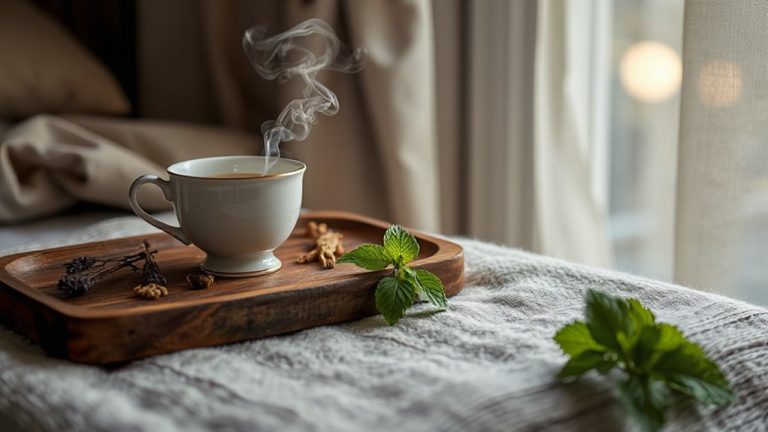
What if the simplest step toward better sleep isn’t a pill or a device, but a warm cup of herbal tea? You’re not just drinking a beverage-you’re starting a mindfulness practice that signals your body it’s time to slow down. The gentle steam carries aromatherapy benefits, calming your senses with natural scents that ease tension. This nightly routine doesn’t rely on chemicals or prescriptions, making it a practical choice if you’re cautious about sleep aids. By focusing on the warmth of the mug, the fragrance, and the quiet moment, you create space to unwind without screens or stress. It’s an easy habit to adopt, with no special equipment or cost. Over time, this consistent act helps train your body’s sleep cycle. While results may vary, many find this small ritual supports better sleep patterns without side effects. Try it for a week and note how you feel. Pair this calming ritual with the comfort of Sleep Number Flex Top King beds for an even more restful night’s sleep.
Which Herbal Tea Fits Your Nightly Wind-Down?
How do you choose the right herbal tea when so many promise relaxation and better sleep? Start by considering your preferred flavor profile-chamomile offers a mild, floral sweetness, while valerian root has an earthier, stronger taste that some find intense. If you’re sensitive to bitterness, a blend with lavender and lemon balm might suit you better. Pay attention to brewing time too; most herbal teas need 5–10 minutes steeping to fully release their calming compounds. A longer brewing time can enhance potency, especially for herbs like passionflower, which support nervous system relaxation. Not every tea works the same for each person, so trial is key. Try one blend consistently for a few nights before deciding. There’s no warranty on results, but tracking how you feel can guide better choices. Match the tea’s traits to your taste and routine for the best fit. For a natural solution backed by tradition and modern interest, consider best herbal sleep teas known for promoting restful nights.
Turn Tea Into a Nightly Sleep Habit
Isn’t it interesting how a simple cup of tea can signal your body that it’s time to slow down? Turning tea into a nightly sleep habit starts with consistency-choose a caffeine-free herbal blend and sip it at the same time each evening. This small routine builds a natural tea ceremony, cueing your mind and body to prepare for rest. Pair your drink with a few quiet minutes, away from screens, to deepen the effect. Consider tracking your experience in a sleep journal to note how different herbs influence your sleep patterns, onset, and quality. Over time, you’ll gather useful data on what works best for your needs. While not a cure for sleep disorders, this habit can support better sleep hygiene. Many blends are backed by trial data on relaxation and digestion. It’s a low-risk, soothing option worth trying.
On a final note
You might choose herbal tea as a gentle alternative if caffeine disrupts your sleep. Blends with chamomile, valerian, or passionflower support relaxation without stimulants. These teas are easy to incorporate into a nightly ritual, helping signal your body it’s time to wind down. Results vary, so try different types over a few nights. Most brands offer satisfaction guarantees, letting you test blends risk-free. Consider them a safe, non-habit-forming option alongside other sleep hygiene practices.