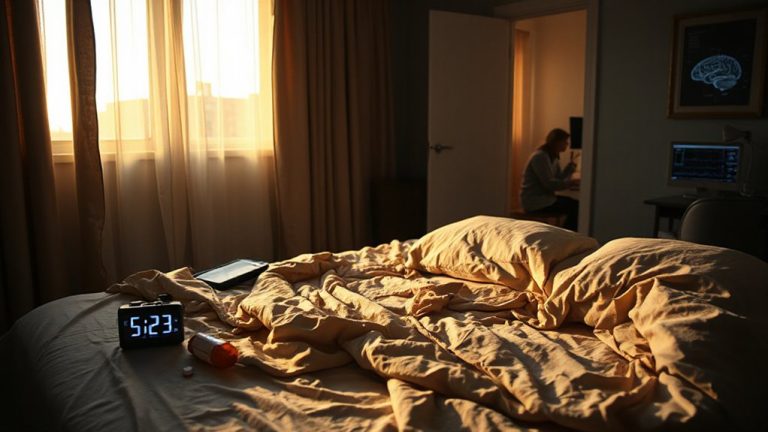
How Nighttime Rituals Can Prepare Your Body and Mind for Restful Slumber
Turn off screens an hour before bed to protect melatonin and reset your brain’s sleep rhythm. Keep your bedroom cool, dark, and quiet, using blackout curtains or white noise if needed. Spend five minutes breathing deeply or journaling to quiet mental chatter. Stick to light snacks, limit fluids, and avoid caffeine or alcohol. Go to bed and wake up at the same time every day. A consistent wind-down routine strengthens your body’s natural sleep cues-small changes can make a noticeable difference over time, and there’s more to discover about fine-tuning your approach.
Notable Insights
- Disconnect from screens one hour before bed to minimize blue light and support natural melatonin production.
- Optimize your bedroom for sleep by keeping it cool, dark, quiet, and clutter-free.
- Practice 5 minutes of deep breathing or journaling to calm the mind and reduce mental clutter.
- Eat a light, balanced snack if needed and avoid caffeine, alcohol, and heavy meals before bed.
- Maintain a consistent wind-down routine and sleep schedule to strengthen your body’s sleep-wake rhythm.
Start With a 1-Hour Screen Curfew to Reset Your Brain
If you’re spending your evenings glued to screens, it might be time to contemplate a 1-hour screen curfew before bed, since the blue light from phones, tablets, and TVs can interfere with your brain’s production of melatonin, the hormone that signals it’s time to sleep. Exposure to blue light in the evening can delay your circadian rhythm, making it harder to fall asleep at a consistent time. By powering down devices just one hour before bed, you give your body a chance to naturally shift into rest mode. This small shift supports your internal clock without requiring sleep aids or drastic changes. Many people find they fall asleep faster and feel more refreshed in the morning. It’s a low-effort, no-cost step with measurable benefits. If you rely on screens at night, consider apps or settings that reduce blue light-but know they’re not a full substitute for turning them off. Trial this curfew for several nights to gauge improvements in your sleep onset and overall quality.
Make Your Bedroom a Sleep Sanctuary
You’ve already taken a step toward better rest by limiting screen time before bed, and now you can build on that progress by shaping your bedroom into a space designed for sleep. Keep the room cool, dark, and quiet-blackout curtains and a white noise machine can help. Choose comfortable bedding made from breathable materials like cotton or bamboo to regulate temperature throughout the night. Consider the aromatherapy benefits of lavender or chamomile using a diffuser or pillow spray, which may support relaxation and improve sleep quality. Avoid clutter and reserve your bed for sleep and intimacy to strengthen the mental link between bed and rest. Test different textures and scents over several nights to see what works best for you, and check return policies when buying new products. Simple, thoughtful changes can quietly boost your sleep environment’s effectiveness. For maximum light blockage and noise reduction, consider high-quality best blackout curtains.
Quiet Your Mind With 5-Minute Breathing or Journaling
A quiet mind often starts with a simple choice-five minutes of focused breathing or journaling before bed. This brief practice uses mindful reflection to ease mental clutter, helping you process the day without letting thoughts spiral. Try deep breathing: inhale slowly through your nose for four counts, hold for four, then exhale through your mouth. Repeat for five minutes. This signals your nervous system to relax. Or, journal freely-write down worries, to-dos, or gratitude. The act isn’t about solving problems, but creating space between you and your thoughts. Both methods are portable, free, and require no tools. They support emotional regulation and cognitive winding down, features proven to improve sleep onset. You can test either nightly. There’s no trial period or risk-just consistent, gentle input with cumulative effects. Over time, this routine strengthens your mind’s ability to shift from alertness to rest, a practical step for those managing mild sleep challenges without immediate need for sleep aids.
Support Sleep With Light Snacks and Hydration Control
While your body winds down at night, what you eat and drink in the hours before bed can either support or disrupt your sleep cycle. A light snack with complex carbs and protein helps maintain blood sugar balance, preventing nighttime wakefulness. Avoid heavy, spicy, or high-fat foods that slow digestion. If you’re thirsty, sip water-but don’t overdo it to avoid disruptive bathroom trips. Caffeine and alcohol should be limited, as both can interfere with sleep quality. Instead, try chamomile tea, which is caffeine-free and may promote relaxation for some people. While research on chamomile tea’s sedative effects is limited, many find it a calming ritual. Monitor how your body responds to evening snacks and hydration patterns, adjusting as needed. Small, consistent changes can support more restful, uninterrupted sleep over time-without relying on sleep aids. For additional support, consider trying one of the best sleep-inducing teas known for their calming properties.
Lock in Your Schedule With a Consistent Wind-Down Time
Because your body thrives on routine, setting a consistent wind-down time each night helps signal when it’s time to shift into sleep mode. Going to bed and waking at the same time daily-even on weekends-builds sleep consistency, which supports deeper, more restorative rest. Your bedtime routine isn’t just about what you do, but when you do it. Starting wind-down activities at the same time nightly, like dimming lights, reading, or stretching, trains your brain to associate those actions with sleep. This predictability improves sleep onset and quality over time. If you struggle with falling asleep or feel unrested, adjusting your wind-down schedule may help more than sleep aids. Small, consistent changes often outperform quick fixes. Consider tracking your routine and sleep patterns for a few weeks to spot trends. This evidence-based approach guides better decisions without relying on medication.
On a final note
You’ll sleep better by tuning your routine with small, smart changes. Turn off screens early, keep your room cool and dark, and quiet your mind with breathing or journaling. A light snack won’t hurt, but avoid excess fluids. Stick to a fixed wind-down time, even on weekends. These steps support natural sleep cycles, reduce reliance on aids, and help spot potential sleep issues early-giving you clearer, long-term results.