Best Sleep Aids for Insomnia That Actually Help You Drift Off
You can fall asleep faster with doxylamine succinate, found in Unisom SleepTabs and Amazon Basic Care, both proven to shorten sleep onset. Melatonin blends, like the 12-in-1 capsule with magnesium and L-theanine, support natural sleep cycles without habit risk. Softgels absorb quickly, while time-release tablets help maintain sleep. Essential oil roll-ons offer calming aromatherapy. Consider side effects like morning drowsiness and try options that match your sleep challenges-faster results with synthetics or gradual improvement with naturals. More details on how each works follow.
We are supported by our audience. When you purchase through links on our site, we may earn an affiliate commission, at no extra cost for you. Learn more. Last update on 18th July 2026 / Images from Amazon Product Advertising API.
Notable Insights
- Doxylamine succinate, found in Unisom and ZzzQuil ULTRA, helps users fall asleep 33% faster by blocking histamine receptors.
- Melatonin sleep aids with added magnesium glycinate and L-theanine support natural sleep cycles and improve sleep onset.
- Liquid softgels and meltaway tablets offer faster absorption, reducing time to fall asleep compared to standard tablets.
- Herbal blends with valerian root, ashwagandha, and chamomile provide non-habit-forming relaxation for occasional insomnia.
- ZzzQuil ULTRA is clinically proven to reduce nighttime awakenings and increase total sleep duration by 27% on average.
Unisom SleepTabs, Nighttime Sleep-aid, Doxylamine Succinate, 80 Tablets

If you’re looking for a sleep aid that helps you fall asleep faster and stay asleep through the night, Unisom SleepTabs might be a solid choice, especially since it’s backed by clinical studies showing users fall asleep 33% faster than with a placebo. I take one tablet per night from the 80-count bottle, and it’s non-habit forming when I follow the directions. The active ingredient, doxylamine succinate, helps me sleep without next-day grogginess. As the pharmacist-recommended OTC brand in 2019, Unisom offers reliable options, and this one fits well into my routine.
Best For: Individuals seeking a non-habit forming, over-the-counter sleep aid to fall asleep faster and stay asleep through the night.
Pros:
- Clinically shown to help users fall asleep 33% faster than placebo
- Contains doxylamine succinate, which supports restful sleep without next-day grogginess
- Pharmacist-recommended OTC brand according to the 2019 Pharmacy Times Survey
Cons:
- May cause drowsiness or impair alertness the following day in some individuals
- Not intended for long-term use without consulting a healthcare provider
- Some users may experience dry mouth or other mild anticholinergic side effects
Amazon Basic Care Sleep Aid Tablets (96 Count)
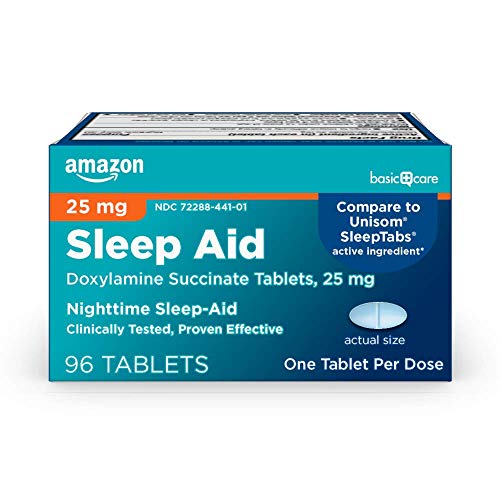
I find Amazon Basic Care Sleep Aid Tablets work best for adults and older teens struggling to fall asleep, especially when looking for a straightforward option without added pain relief. Each tablet contains 25 mg of doxylamine succinate, the same active ingredient in Unisom SleepTabs, and is clinically tested to help you fall asleep faster. The formula is gluten-free, contains no pain reliever, and is meant for nighttime use only. You take one tablet about 30 minutes before bed, and it’s designed solely for sleep onset, not staying asleep. It’s a cost-effective, reliable choice if you’re avoiding extra ingredients.
Best For: Adults and older teens seeking a simple, effective sleep aid without pain-relieving ingredients to help with falling asleep.
Pros:
- Contains 25 mg doxylamine succinate, the same clinically tested ingredient as Unisom SleepTabs
- Gluten-free and free of pain relievers, ideal for those avoiding extra additives
- Cost-effective option for occasional sleep onset difficulties
Cons:
- Not intended to help maintain sleep throughout the night
- Contains a sedating antihistamine that may cause morning drowsiness
- Not suitable for children under 12 years old
HealthA2Z Sleep Aid 50mg Softgels (250)

The HealthA2Z Sleep Aid 50mg Softgels offer a dependable option for adults and older teens struggling with occasional sleeplessness, especially when fast-acting support is needed. I take one softgel at bedtime, and the 50 mg of Diphenhydramine HCl helps me fall asleep faster and stay asleep longer. The liquid-filled design makes them easy to swallow and absorb quickly. With 250 softgels per bottle, I’ve got a long-lasting supply for regular use. They’re meant for anyone 12 and up, so I feel confident keeping them on hand. I use them only as needed, since they’re best for short-term help.
Best For: Adults and children 12 years and older seeking a fast-acting, over-the-counter sleep aid for occasional sleeplessness.
Pros:
- Contains 50 mg of Diphenhydramine HCl per softgel to help users fall asleep faster and stay asleep longer
- Liquid-filled softgels are easy to swallow and designed for rapid absorption
- Large supply of 250 softgels per bottle, ideal for extended or occasional use
Cons:
- Contains a sedating antihistamine, which may cause morning drowsiness or grogginess
- Intended only for short-term use, not suitable for chronic insomnia
- May cause dry mouth, dizziness, or other side effects common with diphenhydramine
12-in-1 Melatonin Sleep Capsules (90ct)
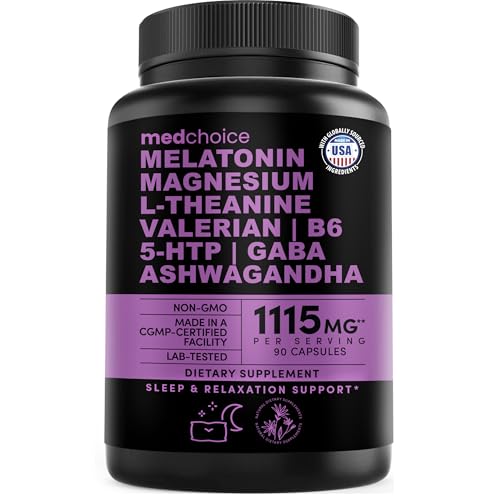
You’ll find the 12-in-1 Melatonin Sleep Capsules (90ct) work best if you’re looking for a non-habit-forming option with multiple science-backed ingredients in one capsule. I take mine nightly, and it helps support relaxation and natural sleep cycles. Each capsule combines 5mg melatonin, 500mg magnesium glycinate, L-theanine, ashwagandha, valerian root 10:1 extract, GABA, 5-HTP, chamomile, and black pepper extract to work together. L-theanine and GABA promote calmness, while valerian root is 10 times more potent than standard blends. Black pepper boosts absorption. The formula’s vegan, and though the label recently updated the total mg per serving, the ingredients and dose stay the same.
Best For: Adults seeking a non-habit-forming, vegan sleep aid with a synergistic blend of melatonin, magnesium, and natural sleep-supporting ingredients to promote relaxation and improve sleep quality.
Pros:
- Combines 12 science-backed ingredients like 5mg melatonin, 500mg magnesium glycinate, and 10:1 valerian root extract to support restful sleep and natural sleep cycles
- Includes bioavailability enhancers like black pepper extract and features a non-habit-forming, vegan formula
- L-theanine and GABA promote calmness and alpha brain wave activity for improved sleep onset and morning energy
Cons:
- Contains 5mg of melatonin, which may be too high for sensitive individuals or those needing lower doses
- Label change in total mg per serving (from 2915mg to 1115mg) may cause temporary confusion despite unchanged ingredients and dosage
- Multiple herbal ingredients may increase the risk of interactions with medications or sensitivities in some users
UpNature Dream Sleep Essential Oil Roll On
Looking for a natural way to ease into sleep without harsh chemicals? I’ve found the UpNature Dream Sleep Essential Oil Roll On helpful when I need to unwind. It combines calming oils like lavender, chamomile, and orange with a smooth MCT oil base, so it’s gentle on my skin. I roll it on my wrists or behind my ears, and the scent helps quiet my mind. The blend is made with steam-distilled oils, packaged in the USA, and free of toxins. I always patch test first, as directed, to make sure my skin reacts well. It’s not a miracle fix, but it supports relaxation when I use it as part of a calm bedtime routine.
Best For: Adults seeking a natural, non-invasive way to support relaxation and improve sleep quality using aromatherapy.
Pros:
- Combines well-known calming essential oils like lavender, chamomile, and orange to promote relaxation
- Convenient roll-on application with a gentle, toxin-free formula suitable for topical use
- Made with steam-distilled oils and MCT carrier oil, produced in the USA with high-quality standards
Cons:
- Aromatherapy effects may be subtle and not sufficient for those with severe sleep disorders
- Requires patch testing and may cause skin sensitivity in some individuals
- Results depend on consistent use as part of a broader bedtime routine, not a standalone solution
ZzzQuil ULTRA Sleep Aid 25mg (48 Tablets)

When sleep feels like a distant possibility and tossing in bed becomes routine, I reach for something reliable-ZzzQuil ULTRA Sleep Aid with 25mg of doxylamine succinate. This non-habit-forming formula blocks histamine receptors in the brain, helping me fall asleep faster and stay asleep longer. It’s clinically proven to cut nighttime awakenings and boost sleep duration by 27% on average. Made by the makers of Vicks NyQuil, it’s part of the world’s top-selling sleep brand. Each pack has 48 tablets, ideal for occasional sleepless nights. I trust it because it’s backed by FDA-filed trials and developed by scientists.
Best For: Individuals experiencing occasional sleeplessness who want a clinically proven, non-habit-forming sleep aid to fall asleep faster and stay asleep longer.
Pros:
- Clinically proven to help users fall asleep faster and increase sleep duration by an average of 27%
- Non-habit-forming formula with 25mg doxylamine succinate, an effective over-the-counter sleep aid
- Backed by FDA-filed clinical trials and developed by the makers of Vicks NyQuil, a trusted brand
Cons:
- May cause morning drowsiness or grogginess in some users
- Not intended for long-term use, limited to occasional sleep support
- Contains an antihistamine that may interact with other medications or medical conditions
Sports Research Sleep Complex Vegan Capsules

For those seeking restorative sleep without melatonin, Sports Research Sleep Complex Vegan Capsules offer a clear alternative designed for people who want to avoid the grogginess that sometimes follows melatonin use. I’ve found its 5-in-1 blend-featuring three forms of magnesium, 200 mg L-theanine, 125 mg GABA, 100 mg 5-HTP, and valerian root-works synergistically to ease my mind and body into deeper rest. It helps me fall asleep faster without next-day fog. The vegan, non-GMO formula is free of gluten, soy, and fillers, made in a U.S. cGMP facility with third-party testing. As someone who values clean ingredients, I appreciate Sports Research’s 40-year focus on research-backed wellness.
Best For: Individuals seeking a melatonin-free, vegan sleep supplement to support restorative sleep without next-day drowsiness.
Pros:
- Features a synergistic 5-in-1 blend with magnesium, L-theanine, GABA, 5-HTP, and valerian root to promote faster sleep onset and deeper sleep
- Free of melatonin, gluten, soy, and unnecessary fillers, ideal for those sensitive to common sleep aid ingredients
- Vegan, Non-GMO Project Verified, and made in a U.S.-based cGMP facility with third-party testing for quality assurance
Cons:
- May not be effective for those who require melatonin for sleep regulation
- Contains valerian root, which some users may find has an unpleasant taste or aftertaste
- 5-HTP could cause mild gastrointestinal side effects in sensitive individuals
Nature’s Bounty Sleep3 Melatonin 10mg 60 Tablets

Nature’s Bounty Sleep3 Melatonin 10mg delivers a maximum-strength dose in a time-release formula, making it a solid choice if you struggle to both fall and stay asleep. I rely on its triple-layered tablet to release melatonin slowly, aligning with my body’s natural sleep cycle. It’s drug-free and includes calming herbs like chamomile, lavender, lemon balm, and valerian root. L-Theanine supports GABA activity, helping quiet my mind. The blend works gradually, and I notice less middle-of-the-night wakefulness. It’s non-GMO, gluten-free, and suitable for vegetarians, with no artificial additives. Each bottle contains 60 tablets, giving me a two-month supply if I take one nightly.
Best For: Individuals struggling to fall asleep and stay asleep who prefer a maximum-strength, drug-free sleep aid with herbal and neurotransmitter support.
Pros:
- Contains 10 mg of melatonin in a time-release formula to help both fall and stay asleep
- Includes calming herbal blend and L-Theanine to support relaxation and GABA activity
- Non-GMO, gluten-free, and free from artificial additives, suitable for vegetarians
Cons:
- 10 mg dose may be too strong for melatonin-sensitive individuals, potentially causing morning grogginess
- Contains valerian root, which some users may find has an unpleasant taste or aftertaste
- Time-release effect may delay onset of sleepiness for those needing fast-acting relief
Boiron SleepCalm Sleep Aid (60 Count)

If you’re looking for a melatonin-free option that supports natural sleep without synthetic additives, Boiron SleepCalm Meltaway Tablets could be a solid choice, especially if you prefer plant-based, homeopathic remedies. I find these unflavored tablets easy to use-just let one dissolve in your mouth at bedtime, no water needed. They’re designed to help you fall asleep, stay asleep, and quiet a busy mind. Safe for adults and kids 12+, they’re gluten-free, non-habit forming, and won’t interact with other supplements or meds. Made by a trusted brand following strict quality standards, they’re also HSA/FSA-eligible, making them a practical pick for mild, occasional sleep troubles.
Best For: Individuals seeking a melatonin-free, plant-based sleep aid to support natural sleep and calm an overactive mind, especially those preferring homeopathic remedies.
Pros:
- Melatonin-free, non-habit forming formula with plant-based, homeopathic ingredients
- Meltaway tablets require no water, making them convenient for bedtime use
- Safe for adults and children 12+, with no known drug interactions and HSA/FSA eligibility
Cons:
- Effectiveness may vary due to homeopathic formulation and lack of strong clinical evidence
- Unflavored tablets may have a subtle medicinal taste some find unpleasant
- Not suitable for children under 12, limiting use for younger sleepers
Amazon Basic Care Night Time Sleep Aid Liquid
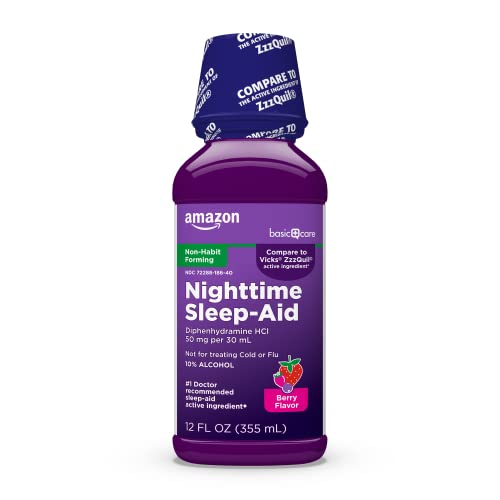
Amazon Basic Care Night Time Sleep Aid Liquid works best for adults and children 12 years and older seeking quick relief from occasional sleeplessness without swallowing pills. I find it helpful because it contains 50 mg of diphenhydramine HCl per 30 mL, the top doctor-recommended sleep aid ingredient, similar to what’s in Vicks ZzzQuil. The mixed berry flavor makes it easier to take, and since it’s gluten-free, it suits those with sensitivities. I appreciate the included dosing cup for accuracy, though it does contain 10% alcohol. It’s meant for short-term use and not for colds or flu.
Best For: Adults and children 12 years and older seeking a fast-acting, liquid sleep aid for occasional sleeplessness who prefer not to take pills.
Pros:
- Contains 50 mg of diphenhydramine HCl per 30 mL, the top doctor-recommended sleep aid ingredient
- Liquid form with mixed berry flavor makes it easy to take and suitable for those who dislike pills
- Gluten-free and includes a dosing cup for accurate measurement
Cons:
- Contains 10% alcohol, which may be a concern for some users
- Not intended for long-term use or for treating colds or flu
- May cause next-day drowsiness or grogginess in some individuals
Factors to Consider When Choosing a Sleep Aid for Insomnia
You’ll want to check the active ingredient type first, since some help you fall asleep fast while others keep you asleep longer. Think about dosage and strength, formulation and absorption, and whether the product carries any risk of dependency-especially if you’re using it more than a few nights a week. Trusted brands with clear labeling and quality testing can give you peace of mind when comparing options.
Active Ingredient Type
While some sleep aids rely on strong medications to induce drowsiness, others use natural compounds that gently support your body’s sleep processes, so it helps to understand what each active ingredient does. Doxylamine succinate and diphenhydramine HCl block brain histamine receptors, helping you fall asleep faster-diphenhydramine is even the top doctor-recommended OTC ingredient for occasional sleeplessness. Melatonin, a hormone that regulates your sleep-wake cycle, works well in low doses (0.5–5 mg), though some use 10 mg for stronger support. If you prefer non-habit-forming options, look for natural ingredients like valerian root, L-theanine, GABA, or magnesium, which encourage relaxation by supporting GABA activity. Some products combine melatonin with herbs and amino acids to target both sleep onset and quality through complementary effects.
Dosage And Strength
How do you find the right balance in sleep aid strength for your needs? Start by matching dosage to your specific sleep issues. Melatonin comes in doses from 1 mg to 10 mg-lower amounts often work just as well as higher ones, especially if you’re trying to reset your sleep cycle. If you’re dealing with delayed sleep onset, a stronger dose might help, but it’s not always better. Antihistamines like doxylamine succinate at 25 mg have been proven to cut sleep latency and boost total sleep by nearly a third. Liquid forms let you fine-tune your dose, giving you more control and consistency. Some pills use time-release tech to keep levels steady through the night. Choosing the right strength means considering your symptoms, body response, and how fast you want results. Start low, observe effects, and adjust carefully.
Formulation And Absorption
Since absorption speed and delivery method can influence how quickly and effectively a sleep aid works, it’s worth considering how different formulations behave in your body. Liquid sleep aids and liquid-filled softgels often absorb faster than tablets, helping you fall asleep quicker due to better bioavailability. If staying asleep is your challenge, time-release tablets release ingredients slowly, matching your body’s sleep cycle through the night. Can’t swallow pills? Meltaway tablets dissolve in your mouth without water, offering a convenient alternative. Topical roll-ons with carriers like MCT oil may deliver active ingredients through the skin, though absorption can vary. Each form has trade-offs in onset time and ease of use. Choosing the right one depends on your needs-fast relief, all-night support, or ease of intake. It’s smart to try different types to see what fits your routine.
Safety And Habit Risk
Choosing the right formulation affects not only how fast a sleep aid works but also how safely it fits into your routine over time. You can usually take antihistamines like doxylamine or diphenhydramine without high risk of dependence if you follow the label directions. Studies show most people don’t develop withdrawal or tolerance during short-term use. Still, long-term use might reduce effectiveness, even if dependency stays low. Melatonin mimics your body’s natural rhythm and doesn’t change brain chemistry in ways that lead to addiction. You’re unlikely to become dependent on it. Herbal blends with valerian root, chamomile, or L-theanine offer relaxation without habit-forming effects for most users. These natural ingredients support calm without strong sedation. While no option is risk-free, picking one labeled non-habit forming helps lower long-term concerns. Always check usage guidelines and stick to short courses unless advised otherwise.
Brand Trust And Quality
When looking at sleep aids, you’ll want to focus on brands that follow strict quality standards, as this directly affects how reliable and safe the product is. Choose ones made in facilities that adhere to current Good Manufacturing Practices (cGMP), ensuring each batch is consistent, pure, and properly controlled. You’re better off with products verified by third-party testing, since it confirms what’s on the label is actually in the bottle-and that harmful contaminants aren’t present. Opt for formulas without artificial colors, flavors, preservatives, or extra fillers, which can trigger unwanted reactions. Always check that the label clearly lists every ingredient and its exact amount, so you know exactly what you’re taking. Stick with brands that prioritize transparency and safety, especially if you plan to use sleep aids regularly. These choices support smarter, more informed decisions for managing your sleep troubles.
Natural Versus Synthetic
While natural sleep aids rely on plant-based ingredients like valerian root, chamomile, or melatonin to gently encourage relaxation, synthetic options use FDA-approved compounds such as doxylamine succinate or diphenhydramine HCl that block histamine receptors for faster sedation. You’ll likely notice synthetic aids work more quickly-some studies show users fall asleep up to 33% faster than with placebo. But they may cause next-day grogginess or mild side effects. Natural blends often take longer to build effectiveness but are usually non-habit-forming and easier to taper off. They might include extras like GABA or 5-HTP to support brain chemistry gently. Synthetic versions tend to be single-ingredient and strictly tested, which adds predictability. Your choice depends on how fast you need relief, your sensitivity to side effects, and whether long-term use matters. Both types have solid options-try one consistently for a few weeks to judge results.
Usage Guidelines And Warnings
If you’re thinking about trying a sleep aid, start by sticking to the dosage instructions on the label-taking more than directed won’t help you sleep better and could increase your chances of feeling drowsy, dizzy, or foggy the next day. Always talk to your doctor first if you’re pregnant, nursing, on other meds, or have health issues like liver disease, glaucoma, or breathing problems. Avoid alcohol-it can boost sedation and raise the risk of side effects, especially with antihistamines. Never drive or use heavy machinery after taking a sleep aid; many ingredients impair reaction time and focus for up to 8 hours. Use sleep aids only as directed, usually no more than 7 to 10 nights in a row, to avoid tolerance, dependence, or rebound insomnia. Following these steps helps you stay safe while getting the rest you need.
Frequently Asked Questions
Can Sleep Aids Be Addictive if Used Long-Term?
Yes, some sleep aids can be addictive if you use them long-term, especially prescription meds like benzodiazepines or over-the-counter ones with antihistamines. Your body might start relying on them to fall asleep. Natural supplements such as melatonin or magnesium usually carry lower risks. It’s smart to talk with your doctor, try non-drug methods first, and limit use to short periods unless told otherwise.
Are Natural Sleep Aids Safer Than Prescription Medications?
You might think natural sleep aids are safer, but they’re not always risk-free. While options like melatonin or valerian root tend to have milder side effects, they’re less regulated and can interact with other medications. Prescription meds offer stronger, proven results but come with dependency risks and more side effects. You’ll need to weigh effectiveness, your health history, and how long you plan to use them before choosing what works best for your sleep routine.
How Quickly Do Over-The-Counter Sleep Aids Start Working?
You’ll usually feel OTC sleep aids kick in within 20 to 30 minutes, depending on the formula and whether you’ve eaten. Diphenhydramine works fast but may leave you groggy. Doxylamine is stronger and lasts longer. Always check dosage labels-taking more won’t help you fall asleep faster and could cause side effects. Give it a few nights to assess results, and don’t rely on it long-term without talking to your doctor.
Can I Take Sleep Aids With Alcohol?
You shouldn’t mix sleep aids with alcohol-it’s unsafe and increases drowsiness, dizziness, and trouble breathing. Alcohol interferes with how the medication works, reducing effectiveness and raising overdose risk. Even over-the-counter options like diphenhydramine can become dangerous when combined. If you drink regularly, talk to your doctor before trying any sleep aid. Always read labels, follow dosing instructions, and give yourself time to rest in a safe environment.
Do Sleep Aids Affect Morning Alertness the Next Day?
Yes, some sleep aids can leave you feeling groggy or less alert in the morning. You’ll notice this more with medications that stay in your system longer, like certain prescription pills or antihistamines. Short-acting options, such as melatonin or newer prescription drugs like suvorexant, usually clear faster and may reduce next-day drowsiness. Try starting with the lowest effective dose and monitor how you feel when you wake.