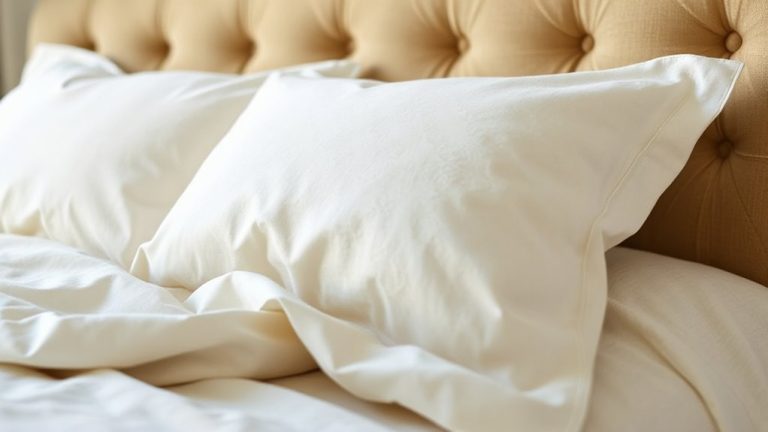
Adding a Bed Scarf Over Layered Sheets for a Touch of Elegance
You add a bed scarf over layered sheets to anchor them and reduce shifting at night, while bringing subtle elegance to your bed. A lightweight cotton or linen scarf in a color that matches your walls or pillows creates cohesion without clutter. Drape it diagonally at the foot for soft symmetry or tuck it across the center for a clean look. It layers well with throws and pillows, adding texture without overheating. Try different styles to see what supports both comfort and your room’s balance.
Notable Insights
- A bed scarf adds elegant visual balance by layering across the foot or center of the bed without overwhelming the design.
- Choose breathable fabrics like cotton or linen to enhance comfort and prevent overheating over layered sheets.
- Drape the scarf diagonally or centered, tucking it neatly to anchor sheets and reduce nighttime shifting.
- Match the scarf’s color or pattern to pillows, walls, or rugs to create a cohesive, harmonious bedroom aesthetic.
- Rotate and gently wash the scarf weekly to maintain its appearance and softness for lasting elegance.
What Is a Bed Scarf (And Why You Need One)
A bed scarf-sometimes called a bed runner or top blanket-is a narrow fabric layer placed crosswise at the foot or middle of the bed, and it’s more functional than it might first appear. You can use it to anchor layered sheets, reducing shifting during sleep, which may help if you’re sensitive to texture changes at night. Historically, the bed scarf history traces back to 19th-century Europe, where it served both warmth and modesty when beds were on display. Over time, its role evolved, but it’s never lost its decorative purpose-adding visual balance without overwhelming the space. Lighter than a duvet, it gives just enough weight to soothe restless legs, potentially easing mild insomnia symptoms. Well-constructed scarves use tightly woven edges to resist fraying. Some come with trial periods, letting you test comfort. It’s a subtle aid, not a cure, but when woven into routine, it might support better sleep conditions.
Pick a Bed Scarf Fabric & Color That Fits Your Room
You’ve already seen how a bed scarf can help keep layered sheets in place and add a touch of weight that might calm restless legs. Now, fabric choice matters-select breathable materials like cotton or linen if you tend to overheat, or a soft blend for durability and gentle texture. These fabrics support comfort without trapping excess heat, which may help maintain steady sleep cycles. Consider color harmony with your bedroom’s palette to create a cohesive, soothing environment; soft neutrals often promote relaxation, while deeper tones add warmth without visual clutter. Match the scarf to your bedding or walls for subtle balance. A well-chosen fabric and shade don’t just look pleasing-they contribute to a sleep-friendly space by reducing visual distraction and enhancing comfort. Trial different options to see what supports your rest best.
Drape Your Bed Scarf Like a Pro: 3 Easy Styles
With a bed scarf already chosen for breathability and tone, focus now on how it’s draped-this small detail affects both look and function. Start with the Simple Cross: lay the scarf diagonally across the foot of the bed, letting fabric draping create soft symmetry. It’s easy to adjust and minimizes excess bed scarf folds. Try the Center Tuck for a neater look-place the scarf horizontally across the center third of the bed, then tuck ends neatly beneath the comforter. This style stays secure and reduces nighttime shifting. For drama without fuss, choose the Asymmetric Drape: shift the scarf off-center, allowing one corner to fall longer. This works well with lightweight fabrics that maintain graceful fabric draping. Each method offers comfort and ease, with minimal disturbance during sleep. Test styles over a few nights; your sleep pattern may favor one drape over another. Bed scarf folds should lie smooth to prevent bunching-check after washing.
Make It Match: Style With Your Existing Decor
Think of your bed scarf as a bridge between comfort and decor-its color, pattern, and fabric weight should complement your room’s existing palette and texture scheme. You want color harmony, so pick a scarf that echoes one of your pillow, curtain, or rug tones. This creates a seamless look that feels intentional and calm. If you like pattern mixing, go for a scarf with a subtle geometric or floral-something that contrasts yet doesn’t clash. A striped scarf works well in a room with solid bedding, while a damask design can elevate neutral tones. Choose natural fabrics like cotton or linen for breathability and softness, especially if you tend to overheat. Lightweight weaves adapt well to seasonal changes and layering. Test drape and hue in natural light to see how it truly fits your space. The right match enhances your room’s flow and supports a restful environment.
Pair With Throws and Pillows for Instant Layers
A well-layered bed starts with balance-adding throws and pillows alongside your bed scarf creates depth without overwhelming the senses. You can enhance visual interest by using texture contrast, like pairing a smooth cotton bed scarf with a chunky knit throw or velvet pillows. This variation in feel and appearance adds dimension while supporting a restful look. Try color blocking to define sections of your bed’s design: place boldly colored pillows at the forefront against a neutral scarf and tone-on-tone linens. This approach gives structure and harmony. Choose breathable pillow fillings and machine-washable throws for practical comfort. Layering shouldn’t interfere with sleep quality-keep materials soft and lightweight to avoid overheating. Test different layouts to see what feels calming to you. These small changes offer noticeable results in both style and function, helping you create a sleep space that supports relaxation.
Keep It Looking Luxe: Simple Care Tips
You’ve arranged the layers just right-throws draped loosely and pillows stacked for comfort-so now keep that polished look lasting longer with straightforward care. Regular bed maintenance, like rotating the scarf weekly, prevents uneven wear and keeps it looking fresh. Wash it according to the label: most materials benefit from gentle cycles and mild detergent. Air-drying or using low heat helps preserve fabric longevity, especially for delicate fibers like cotton blends or silk. If you notice pilling or fading, it’s a sign to reassess washing frequency or method. A well-cared-for bed scarf not only enhances your space but also supports a calming sleep environment. Since quality sleep depends on comfort and consistency, choosing easy-care fabrics makes nightly routines simpler. Always check warranty details-some premium scarves offer replacements if shrinkage or damage occurs. With modest effort, your bed stays luxe, layered, and ready for rest.
On a final note
You’ve seen how a bed scarf adds subtle elegance when layered over sheets. Choose a fabric and color that complements your decor, then drape it simply at the foot or center of the bed. Pair with matching throws and pillows for cohesion. Most scarfs are easy to care for-check labels for washing details. Many come with trial periods or warranties, so test how it fits your space. It’s a small change with soft impact, blending form and function where comfort meets design.