The Role of Internal Clock Speed in Advanced Sleep Phase Disorder
Your internal clock runs faster than 24 hours in advanced sleep phase disorder, making you feel sleepy early-often by 7 or 8 p.m.-and wake up too soon, around 3 or 4 a.m. This isn’t poor habits or lack of willpower; it’s a biological shift driven by genetics and melatonin timing. Light therapy in the evening and melatonin taken in the late afternoon can help reset your rhythm. Consistency matters, and tracking your patterns gives clearer clues about what adjustments work best. There’s more to how treatment options align with your biology.
Notable Insights
- Advanced sleep phase disorder involves a faster-than-normal internal clock, shifting sleep times earlier each day.
- The circadian rhythm in ASPD runs shorter than 24 hours, causing early evening sleepiness and early morning waking.
- Genetic mutations in genes like PER2 and CK1δ accelerate the body’s internal clock, leading to advanced sleep phases.
- Early melatonin release, driven by a sped-up clock, triggers sleepiness before typical evening hours.
- Circadian misalignment in ASPD is biological, not behavioral, and requires timed light and melatonin to correct.
What Is Advanced Sleep Phase Disorder?
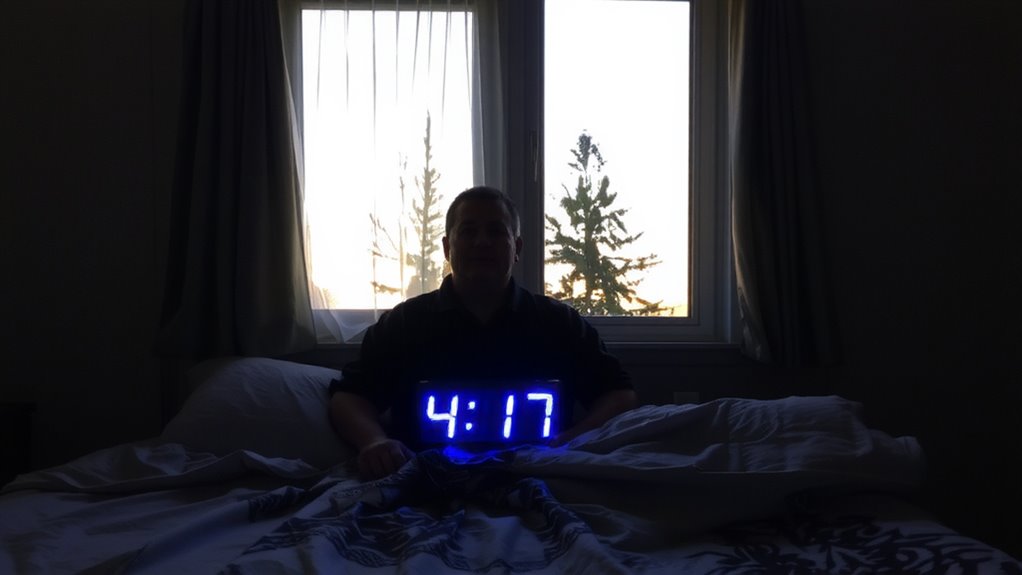
What if you felt sleepy before most dinner parties even begin? That’s life with advanced sleep phase disorder (ASPD), where your internal clock shifts earlier. You might feel tired by 7 or 8 p.m. and wake up at 3 or 4 a.m., unable to stay asleep. It’s not laziness or poor sleep habits-it’s a real circadian rhythm condition. While your lifestyle choices don’t cause ASPD, they can affect how well you cope. Bright evening light, for example, may help delay your sleep cycle slightly. Doctors often recommend light therapy boxes or timed melatonin after evaluating your symptoms. These tools don’t cure ASPD but can adjust timing enough to improve daily function. Diagnosis usually involves a sleep diary or actigraphy over one to two weeks. Treatment focuses on managing symptoms, not forcing a “normal” schedule. It’s about finding what works for your body and routine.
Why An Early Sleep-Wake Cycle Isn’t Just Habit

You might have heard well-meaning advice like “just stay up later” or “push through until a normal bedtime,” but consistently going to sleep and waking up early isn’t simply a matter of routine or discipline. This pattern isn’t due to social conditioning or a lifestyle preference-it’s rooted in your biology. Your internal clock runs on its own rhythm, and for some, that means feeling sleepy by 8 p.m. and waking at 4 a.m., no matter the effort to adjust. Trying to override it with willpower alone often leads to frustration and poor sleep quality. Unlike habits you can reshape, this shift reflects a physiological difference not fixed by environment or choice. Recognizing this helps you make informed decisions about managing sleep, choosing appropriate treatments, and seeking accurate diagnoses instead of assuming it’s just a personal quirk.
How A Fast Circadian Clock Shifts Sleep Times
Even if you stick to a strict bedtime, a faster-than-average circadian clock can pull your sleep schedule earlier each night, making you feel tired well before most people wind down. This shift, known as circadian drift, happens when your body’s internal clock runs ahead of the 24-hour day. Your melatonin timing also shifts forward, triggering sleepiness earlier in the evening. Over time, this can lock you into a routine where falling asleep at a conventional hour feels impossible. Adjusting this pattern means understanding your natural rhythm and considering light therapy or scheduled meals to retrain your clock. Below is a simple guide to common signs and effects:
| Symptom | Impact |
|---|---|
| Early fatigue | Social plans become hard |
| Circadian drift | Sleep times shift nightly |
| Early melatonin timing | Sleep onset before 8 PM |
| Morning alertness | Wake before sunrise |
| Evening drowsiness | Hard to stay awake at dinner |
The Genetics Behind Early-Rising Tendencies
A growing body of research points to genetics as a key factor in early-rising tendencies, with specific gene variants influencing your natural sleep-wake cycle. You may carry genetic mutations in circadian genes like PER2 or CK1δ, which speed up your internal clock and lead to earlier sleep and wake times. These changes are inherited, meaning your early-rising pattern might run in your family. Variants in circadian genes alter how your body responds to light and time cues, shifting your rhythm without you noticing. While not all early risers have Advanced Sleep Phase Disorder (ASPD), those with the condition often show these same genetic markers. Understanding your genetics can help clarify whether your sleep pattern is lifestyle-based or biologically driven. If you suspect a genetic link, a sleep specialist might recommend a genetic test or sleep study. This info can guide your choices about light therapy, melatonin timing, or sleep aids, helping you align daily routines with your body’s natural tendencies while maintaining sleep health.
Common Daily Challenges Of Living With ASPD
Why do some people struggle to stay awake during evening plans or family dinners? It’s because your internal clock runs faster than the 24-hour day, making you feel tired long before others. You might fall asleep by 7 or 8 p.m., only to wake up at 3 a.m., unable to go back to sleep. This shift often leads to morning fatigue, even after several hours of rest. As nights go, missing out becomes common, leading to social isolation. You may skip gatherings, feeling too exhausted to participate, which over time affects relationships and mood. Work or school in late hours can be tough, while early shifts feel more natural. Light exposure in the evening may help delay sleep onset slightly. Some try melatonin supplements under guidance. Adjustable routines and planned activities can ease the impact. It’s about managing timing, not fixing sleep itself.
How Doctors Diagnose Circadian Misalignment
You’ve likely noticed your sleep patterns don’t line up with everyone else’s, and that’s more than just a personal quirk-it could point to a deeper imbalance in your internal rhythm. To confirm circadian misalignment, doctors often track your sleep logs and use actigraphy, a device that measures movement and light exposure over several days. They may also test melatonin timing through saliva or blood samples collected at specific times to pinpoint when your body starts releasing this sleep-related hormone. Because light exposure heavily influences your internal clock, clinicians assess your daily light patterns, especially morning and evening light. These tools help distinguish advanced sleep phase disorder from other conditions. Accurate diagnosis relies on consistent data, so you’ll need to follow testing protocols closely. This process guarantees treatment plans are based on clear evidence of your unique circadian timing, not assumptions.
Treatments To Delay Sleep And Wake Times
How can you shift your sleep and wake times later when your body insists on an earlier rhythm? Light therapy in the evening can help delay your internal clock. Using a bright light box for 30 minutes in the early night signals your brain to stay alert, pushing your cycle back. Timing matters-exposure too early won’t work, and too late might disrupt sleep. Melatonin timing is just as essential. Taking melatonin several hours before your current sleep onset time-say, at 4 or 5 p.m.-can encourage a later bedtime. Immediate-release formulations work best for this phase-delay strategy. You’ll need consistency over weeks, tracking sleep logs to monitor progress. Some find combining light therapy with melatonin timing improves results. Devices and supplements vary, so check trial periods or warranties if purchasing equipment. Work with your doctor to adjust doses and schedules safely.
On a final note
You might wake and sleep early because your internal clock runs faster than 24 hours, not just due to habit. This shift, linked to genetics, can disrupt daily life. Doctors diagnose it using sleep logs and melatonin timing. Treatments like timed light exposure or melatonin supplements help delay your cycle. Though results vary, consistent use often improves alignment. Discuss trial periods and dosing with your provider to find what works best for your schedule and needs.