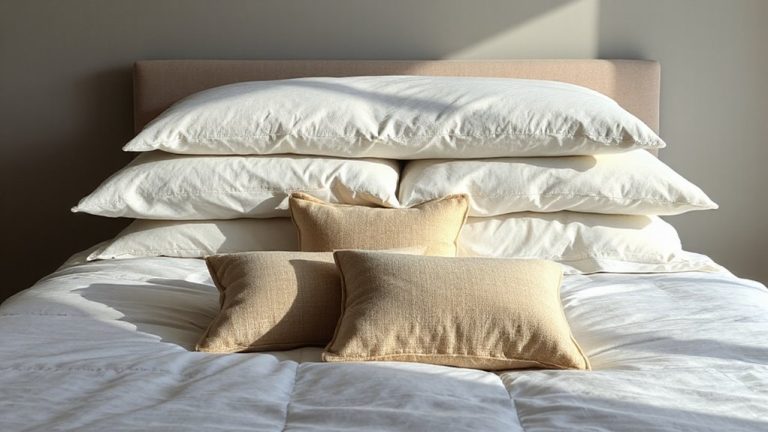
Extending Pillow Lifespan: Proper Fluffing and Maintenance Techniques
Fluff your pillow daily to restore loft and support, using methods that match the fill-gentle pressing for memory foam, vigorous fluffing for down, light shaking for polyester. Use a breathable pillow protector to block sweat and allergens, reducing cleanings. Spot clean memory foam or latex; machine-wash fiberfill if labeled. Air it out after cleaning and store in a cool, dry place. Replace every 1–2 years, or when it holds a crease. You’ll find clearer advice on keeping your pillow fresh and supportive longer.
Notable Insights
- Daily fluffing restores loft and evenly distributes filling to maintain support and comfort.
- Use material-appropriate techniques: gentle pressing for memory foam, aggressive fluffing for down.
- A pillow protector blocks moisture, allergens, and dirt, extending lifespan and improving hygiene.
- Clean pillows correctly-spot clean memory foam, machine wash fiberfill, and dry clean when needed.
- Replace pillows every 1–2 years or when they develop creases, lumps, or lose resilience.
Fluff Your Pillows Daily for Better Support
You’ll often find that giving your pillows a good fluff each morning helps maintain their shape and support over time. This simple act restores loft and evenly distributes filling, which directly impacts pillow comfort throughout the night. Making fluffing part of your daily routine takes little effort but can slow compaction, especially in down, fiber, and hybrid models. Consistent aeration reduces moisture buildup, helping materials rebound more fully. Over weeks, this routine improves sleep surface resilience, potentially easing neck and shoulder strain. While it won’t prevent long-term wear, it extends performance between replacements. Most manufacturers don’t cover flattening under warranties, so upkeep becomes key. Think of fluffing as low-effort maintenance that supports spinal alignment and breathability. You’re not just tidying up-you’re actively preserving function. When combined with proper washing and protectors, daily fluffing is a practical step toward consistent sleep quality, helping you delay decisions about sleep aids or replacements. For example, the Best Costco Pillows often feature high-loft fills that respond well to regular fluffing.
Match Your Fluffing Method to Pillow Type
Different pillow materials respond best to specific fluffing techniques, so adjusting your routine based on construction can make a noticeable difference in longevity and comfort. For memory foam pillows, avoid folding or vigorous fluffing-gentle pressing restores shape without harming material resilience. These pillows resist pillow compression over time but need time to rebound, so let them rest between uses. Down and feather pillows thrive on aggressive fluffing and tumbling, which restores loft and counters compression. Their material resilience is high, but only with regular, proper care. Polyester-filled pillows respond well to light punching and shaking, though they flatten faster due to lower resilience. Latex pillows require minimal fluffing; a quick reshape suffices, thanks to their strong resistance to permanent compression. Matching your method helps maintain support and alignment, contributing to better sleep hygiene and reducing discomfort that might worsen sleep issues. Placing a waterproof bed pad beneath your pillow can protect it from moisture damage and extend its lifespan.
Use Pillow Protectors to Block Sweat and Dust
A good night’s sleep often depends on the small choices you make during the day, like slipping a pillow protector over your pillow-it’s a simple step that does more than just keep things clean. Pillow protection helps block sweat, dust, and allergens from soaking into the fabric, which can extend the life of your pillow substantially. Most protectors are made with tightly woven, breathable materials that allow airflow while still shielding against moisture and particles. You’ll notice the hygiene benefits over time, especially if you have sensitive skin or respiratory concerns. They’re easy to wash and often quieter than expected, with many options featuring soft, barely-there textures. Some even come with warranties or trial periods, so you can test comfort without risk. Using a protector doesn’t replace cleaning, but it reduces how often you need to, making maintenance easier. It’s a low-effort way to keep your sleep environment fresher longer. For similar benefits in mattress care, consider using cotton mattress protectors, which offer natural breathability and effective barrier protection.
Clean Different Pillow Types the Right Way
Now that your pillow has a protector shielding it from sweat and dust, it’s just as important to clean the pillow itself the right way-because not all pillows can handle the same routine. Memory foam and latex pillows usually can’t be machine washed; instead, spot clean with mild soap and allow them to dry completely to prevent mold. For down or synthetic fiberfill pillows, check the label-many can be machine washed gently, but some require dry cleaning to preserve their loft and structure. Always address stains quickly using a targeted stain removal method to avoid spreading or setting the mark. Dry cleaning may be best for delicate fabrics or specialty fill, though it’s pricier. Washing at home saves money but risks damage if done incorrectly. When unsure, refer to manufacturer care instructions or trial-approved methods to balance cleanliness and durability.
Air Out Pillows After Cleaning
Once you’ve cleaned your pillow, letting it air out completely is key to maintaining its quality and comfort. Spread it flat in a well-ventilated area, ideally outdoors where sunlight exposure can help neutralize lingering bacteria and refresh the fill. Just don’t leave it out too long-direct sun for more than a few hours can weaken fibers over time. Rotate the pillow every few hours to guarantee even drying and moisture prevention. If outdoor space isn’t an option, use a dry indoor room with a fan or dehumidifier nearby. Make sure the pillow feels completely dry to the touch, especially in the center, since trapped moisture can lead to mildew or odor. This simple airing step protects the pillow’s structure, supporting better sleep hygiene and performance night after night. It’s a small effort that helps preserve loft and support, making your care routine more effective.
Recognize When Your Pillow Needs Replacing
How do you know when it’s time to let go of your current pillow? Look for clear signs like a worn filling that no longer springs back after folding. If your pillow keeps its crease or feels flat, it’s likely lost its support. You might also notice a lumpy texture, which means the internal material has shifted or broken down. This can create uneven pressure on your neck and head, possibly affecting sleep quality. Pillows that cause morning stiffness or discomfort may no longer suit your sleep position. Most pillows last 1–2 years, depending on use and material. Memory foam degrades slowly, while down can collapse faster. Check manufacturer guidelines and trial periods if available. Replacing your pillow at the right time helps maintain proper spinal alignment and supports long-term comfort. A fresh pillow can improve sleep without drastic changes.
Extend Pillow Life With Simple Habits
A well-maintained pillow stays supportive longer, and simple daily habits can stretch its life without costing you much. Fluffing your pillow each morning restores its shape and helps maintain even filling distribution. Pair this with proper sleep posture-aligning your head and neck with your spine-to reduce strain and uneven wear. Using a pillowcase and a removable cover adds protection from oils and allergens, preserving material integrity. When not in use, guarantee proper pillow storage: keep it in a cool, dry place, ideally in a breathable cotton bag to prevent moisture buildup. Avoid compressing it long-term, as this breaks down fibers faster. Most pillows perform best for 1–2 years with care, though trial periods from brands let you test support and comfort. Checking construction and warranty details helps you choose durable options. These habits support consistent performance and better sleep over time.
On a final note
You can extend your pillow’s life by fluffing daily and using protectors to reduce wear. Match care methods to the pillow’s material-foam, down, or synthetic-since each cleans and performs differently. Regular airing prevents moisture buildup, while proper support helps maintain comfort and alignment. Over time, even well-maintained pillows lose resilience. Watching for flatness or lumps helps you decide when to replace one, ensuring consistent sleep quality without unnecessary cost.