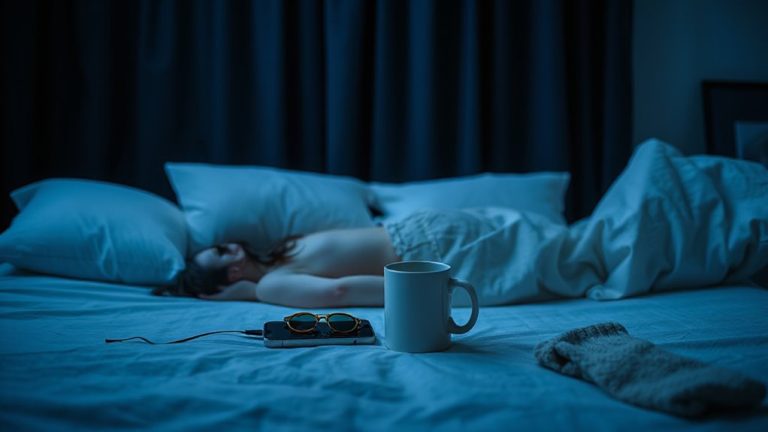
Strategies for Reducing Insomnia Severity Using Behavioral Interventions
You can reduce insomnia by sticking to a consistent sleep schedule, even on weekends, to steady your body’s clock. Set up a wind-down routine with dim lights and relaxed activities like reading. Cut out screens an hour before bed to protect your melatonin. Make your bedroom dark, quiet, and cool with blackout curtains and white noise if needed. Limit time in bed to strengthen sleep drive, and reframe anxious thoughts about sleep-you’ll discover how small shifts add up over time.
Notable Insights
- Maintain a consistent sleep schedule by going to bed and waking up at the same time daily, including weekends.
- Create a wind-down routine 30–60 minutes before bed featuring dim lighting, relaxation techniques, and calming activities.
- Optimize the sleep environment by using blackout curtains, white noise machines, and reducing light, noise, and heat.
- Implement a digital detox by avoiding screens for at least one hour before bed to minimize blue light exposure.
- Apply cognitive behavioral techniques such as cognitive restructuring and sleep restriction to address unhelpful sleep thoughts and increase sleep efficiency.
Why You Can’t Sleep: And What to Do?
Why do some nights feel impossible, when sleep slips away no matter how tired you are? The issue often lies in your sleep environment or lack of mental relaxation. A room that’s too bright, noisy, or warm can prevent the body from settling, while an uncomfortable mattress or pillow disrupts comfort. Even small distractions, like blinking lights or distant sounds, add up. At the same time, racing thoughts or unresolved stress interfere with mental relaxation, making it hard to shift into rest. You can improve this by adjusting lighting, using blackout curtains, or trying white noise machines. Simple breathing techniques or guided imagery support mental relaxation. Consider experimenting-track changes over a few nights. Many products offer trial periods, so test what works. Small tweaks to your sleep environment and mental relaxation routine can make a real difference over time. For enhanced light blocking, consider choosing curtains with a best blackout curtains design that includes multiple layers and tightly woven fabric.
Stick to a Sleep Schedule That Works
Even if life feels unpredictable, keeping a consistent sleep schedule can stabilize your body’s internal clock and improve sleep quality over time. Going to bed and waking up at the same time every day-even on weekends-supports your circadian rhythm, helping you fall asleep and wake more easily. This consistency is a core part of good sleep hygiene. Your body learns to expect sleep at certain times, making it easier to wind down naturally. Shift work or social obligations might make this hard, but small adjustments can still help. Try shifting your schedule in 15-minute increments until you find a realistic routine. Track how changes affect your energy and mood over a week. Over time, this regular pattern improves sleep efficiency without medication. It’s a simple, evidence-based strategy that builds a strong foundation for managing insomnia.
Create a Wind-Down Routine That Signals Sleep
How do you let your body know it’s time to sleep? You do that by building a consistent wind-down routine packed with clear sleep cues. Doing the same calming activities nightly-like dimming lights, sipping herbal tea, or reading a book-trains your brain to link those actions with sleep. These signals help shift your mind from alertness to rest. Include relaxation techniques such as deep breathing, gentle stretching, or progressive muscle relaxation to ease physical tension and quiet mental chatter. Start your routine about 30 to 60 minutes before bed so your body has time to respond. Over time, this consistency strengthens your sleep-wake cycle. If one method doesn’t work well, try another-what matters is regular use and personal comfort. It’s not about perfection; it’s about creating a repeatable, soothing shift that supports better sleep onset. A regular better sleep routine can significantly improve overall sleep quality and reduce nighttime awakenings.
Ditch Screens 1 Hour Before Bed
As the evening winds down, your screen habits can either help or hinder your ability to fall asleep, so setting boundaries around device use matters. Blue light exposure from phones, tablets, and TVs suppresses melatonin, the hormone that signals sleep. By stepping away from screens one hour before bed, you reduce this interference and support your body’s natural rhythm. This window is your ideal digital detox timing-just enough time to shift from alertness to relaxation. You don’t have to quit cold turkey; try dimming screen brightness or using night mode as a temporary step. But for lasting change, replace scrolling with low-stimulus activities like reading or light stretching. Consistency strengthens the mental link between bedtime and sleep readiness. Over time, this small shift can reduce insomnia severity without medication. Test it for a week and track how easily you fall asleep.
Make Your Bedroom a Sleep Sanctuary
You’ve already taken a step toward better sleep by reducing screen time at night, and now you can build on that progress by shaping the space where you rest. Make your bedroom a sleep sanctuary with strong light control-blackout curtains or a sleep mask help block disruptions, especially in early morning hours. For noise management, consider white noise machines, earplugs, or apps that filter inconsistent sounds like traffic or snoring. These tools don’t cure insomnia but can reduce sleep disturbances over time. Choose breathable bedding and keep the room cool, ideally between 60–67°F. Remove work materials, fitness gear, or bright electronics that signal alertness. The goal isn’t perfection but consistent conditions that support rest. Test options for a few nights to see what improves your sleep continuity. Small changes in environment can shift your sleep patterns when used reliably. Upgrading to high-quality best blackout curtains can significantly enhance light blockage and improve sleep quality.
Retrain Your Brain to Fall Asleep Faster
If your mind stays active when it’s time to sleep, you can take steps to retrain it for faster sleep onset. Cognitive restructuring helps you identify and change thoughts that keep you awake, like “I’ll never fall asleep.” By replacing them with calmer, more realistic ones, your brain starts to relax at bedtime. Sleep restriction might sound tough, but it works by limiting time in bed to just the hours you actually sleep. This builds sleep pressure and strengthens the link between bed and sleeping. Over time, you’ll likely fall asleep faster. Don’t expect instant results-these methods take consistency. Combining both approaches often works better than either alone. They’re evidence-based, don’t require medication, and help address the habits that worsen insomnia. Be patient, follow the steps, and stick to the schedule. Your brain can learn new patterns.
Track, Tweak, and Improve Your Sleep
What if the key to better sleep lies in the details you’re not noticing? Tracking your patterns with a sleep diary helps reveal those clues. Write down when you go to bed, wake up, and any nighttime disruptions. Note how you feel during the day and what relaxation techniques you used, like deep breathing or progressive muscle relaxation. Over time, trends emerge-maybe caffeine affects you more than expected, or your sleep improves when you stick to a consistent bedtime. Use this data to tweak your routine. Small changes, like adjusting light exposure or winding down earlier, can boost sleep quality. If problems persist, review your sleep diary with a professional. This approach doesn’t rely on sleep aids but builds lasting habits. You’re not guessing-you’re improving based on evidence, one night at a time.
On a final note
You can improve sleep by sticking to a consistent schedule and building a calming pre-bed routine. Limit screens, optimize your bedroom for comfort, and train your mind to associate bed with sleep. Track patterns to spot triggers and guide changes. Behavioral strategies often work as well as sleep aids over time-without the side effects. Try these steps first, give them 4–6 weeks, and see what works best for you.