Light Therapy for Jet Lag: 10,000-Lux Lamp Timing Guide
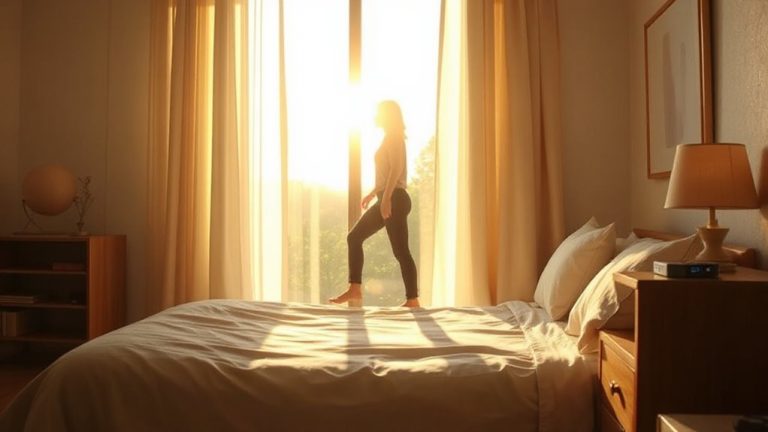
You can reset your body’s clock after jet lag using bright, blue-enriched light therapy that mimics morning sunlight. Use a 10,000-lux lamp within 30 minutes of waking, especially when traveling east, to advance your rhythm. Time exposure carefully-morning light helps you wake earlier, while avoiding evening light prevents delays. Choose a portable, rechargeable lamp with UV protection and a solid warranty so it’s safe and travel-ready. Consistency matters most for results. More helpful guidance follows.
Notable Insights
- Use bright, blue-enriched light therapy at 10,000 lux to mimic morning sunlight and reset your circadian rhythm after flying.
- Time exposure based on travel direction: morning light for eastward flights, delayed light for westward adjustments.
- Begin light therapy shortly after waking, ideally within 30 minutes, for 20–30 minutes daily.
- Choose a portable, lightweight light therapy lamp with 10,000 lux output and UV protection for travel use.
- Maintain consistent daily wake times and light exposure to stabilize your internal clock and reduce jet lag.
Use Light Therapy to Beat Jet Lag Fast
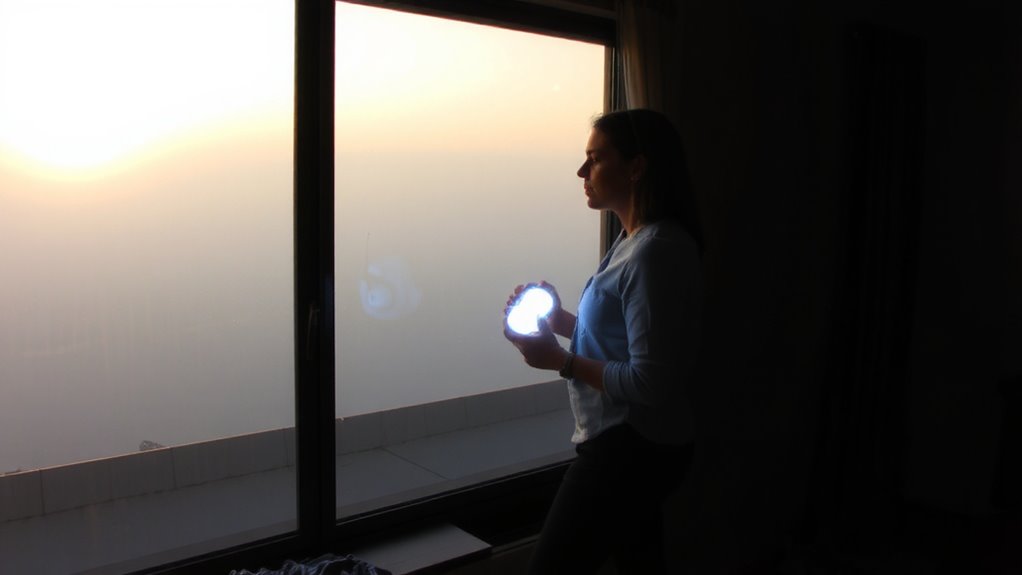
Why does stepping off a plane leave you feeling out of sync? Your body’s internal clock relies on cues like light intensity and color temperature to regulate sleep. When you travel across time zones, those cues shift, confusing your rhythm. Light therapy helps reset your clock fast by exposing you to bright, blue-enriched light that mimics morning sunlight. Devices designed for this use specific color temperature-around 6,500K-and high light intensity, usually 10,000 lux, to signal wakefulness. You’ll want to use the lamp for 20–30 minutes shortly after waking, depending on your device’s specs. Most units are portable, with warranties ranging from one to three years. Check if the model has adjustable brightness or timers, which help tailor your session. It’s non-invasive, doesn’t require pills, and works whether you have mild fatigue or a diagnosed sleep issue. Try it for consistent, science-backed results.
Time Your Light Exposure for East or West Flights
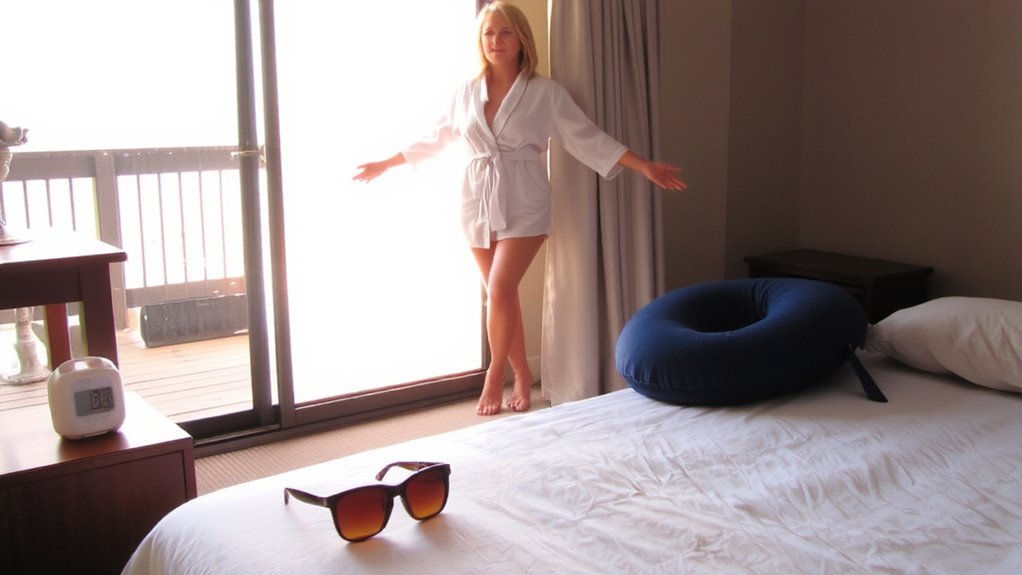
When you’re traveling east, your body tends to lose hours, making it harder to fall asleep and wake up earlier than usual, so using bright light therapy soon after sunrise-or simulated sunrise-can help shift your internal clock forward. Seek morning sunlight or use a light box within an hour of waking to reinforce this shift. Your brain responds to light by suppressing melatonin, helping you feel alert when you need to. When flying west, you gain hours, so avoid bright light in the evening darkness to prevent delaying sleep further. Instead, expose yourself to morning sunlight and limit evening light exposure to help your body adjust faster. Timing matters-early light advances your clock, while late light delays it. With consistent cues, morning sunlight and controlled evening darkness help align your rhythm with local time, easing fatigue and improving sleep timing without medication. For optimal results, consider using one of the top-rated light therapy lamps designed to deliver clinically effective illumination.
Choose a Travel-Sized Light Therapy Lamp
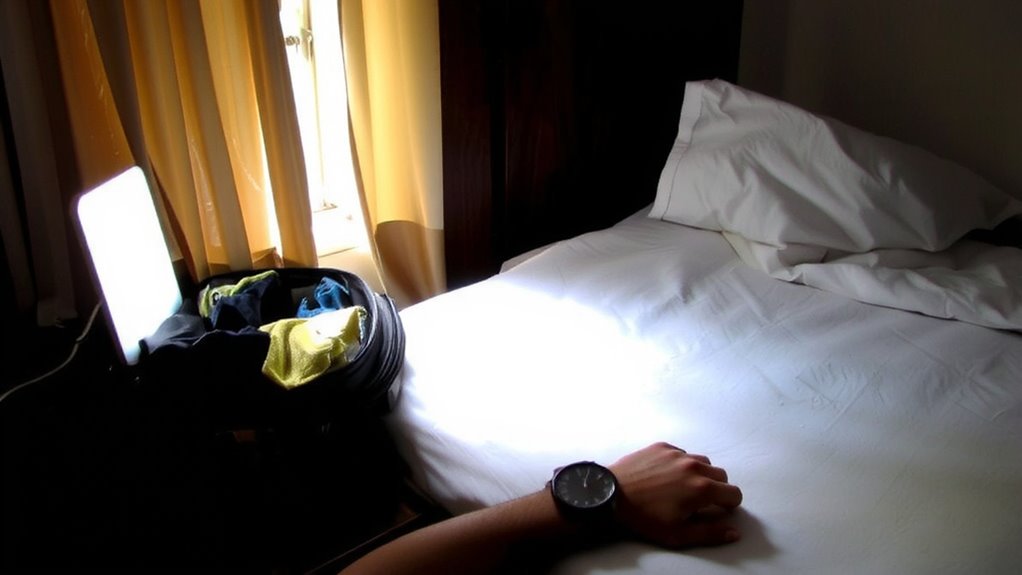
A compact, well-designed light therapy lamp can make all the difference in managing jet lag on the go. Look for one with a portable design so it slips easily into your carry-on without adding bulk. Many models weigh less than a pound and fold flat, making them ideal for tight spaces. Battery compatibility is key-choose a lamp that runs on rechargeable batteries or USB power so you can use it anywhere, even without an outlet. This flexibility guarantees consistent light exposure during layovers or early mornings. Check the light output, aiming for at least 10,000 lux at a comfortable distance. Durable materials and a protective cover help it withstand travel. Some brands offer trial periods or warranties, letting you test the lamp on shorter trips first. These features combine practicality with reliability, supporting your rhythm reset without hassle. For optimal results, consider one of the best sleep therapy lamps recommended for consistent circadian support.
Follow a Step-by-Step Light Schedule
If you’re crossing multiple time zones, syncing your body to the local schedule starts with a clear light plan. Begin adjusting your light exposure a few days before travel to ease circadian alignment. When you arrive, use your light therapy lamp within 30 minutes of waking, especially if natural morning exposure isn’t available. Aim for 20–30 minutes of consistent brightness, ideally between 2,500 and 10,000 lux, depending on device specifications. Morning exposure helps signal your internal clock that the day has started, gradually shifting your sleep-wake cycle. Stick to the same wake time daily, even on weekends, to maintain rhythm. Follow the manufacturer’s guidelines for distance and usage, and check if your device offers a trial period or warranty for long-term confidence. This structured approach supports better sleep timing without relying on sleep aids. For optimal results, choose a Best Sleep Therapy Light that matches your schedule and sensitivity.
Avoid These Common Light Therapy Mistakes
Why does your light therapy routine sometimes leave you feeling off track? It might be due to common mistakes like inconsistent timing or overexposure risks. Using your light box at random times each day disrupts your circadian rhythm instead of stabilizing it. Try to sit under the device at the same time daily-ideally within an hour of waking-to build a reliable signal for your body. Overexposure risks include headaches, eye strain, or insomnia, especially if you use the light for longer than recommended. Most units are designed for 20–30 minutes at a distance of 16–24 inches. Stick to the manufacturer’s guidelines and choose a light box that filters UV rays to protect your eyes. Starting with shorter sessions can help you assess tolerance. Consistency and proper use improve effectiveness, supporting better sleep timing without relying on sleep aids.
On a final note
You can use light therapy to reset your body’s clock quickly after flying. Time your exposure based on whether you’re traveling east or west, and pick a portable lamp that fits your travel needs. Follow a clear schedule, avoiding evening light if adjusting eastward. Skip common errors like inconsistent timing. Most devices offer warranties, so test one with a trial period to see how well it works for your sleep routine.