Creating A Soothing Environment For Children With Special Needs Through Personalized Sleep Hygiene Practices
You can create a soothing sleep space by first identifying your child’s sensory preferences, then adjusting light, sound, fabric, and routine accordingly. Use dim, warm lighting and blackout curtains to support melatonin. Try white noise or fans to buffer disruptive sounds, and test weighted blankets or sensory-friendly bedding with care. Pair consistent bedtime sequences with visual schedules. Consider how texture, temperature, and timing affect sleep-small changes can make a big difference over time, especially when tracked and adjusted. There’s more to explore on solving specific sleep challenges.
Notable Insights
- Assess each child’s sensory profile to identify specific sensitivities affecting sleep and tailor the environment accordingly.
- Design a calming sleep space with dim, warm lighting, blackout curtains, and minimal visual clutter.
- Use sensory tools like weighted blankets, white noise machines, and soft, hypoallergenic bedding to support comfort and regulation.
- Establish a consistent, predictable bedtime routine using visual schedules and timed transitions to reinforce sleep readiness.
- Combine calming practices like gentle stretching and mindfulness with long-term sleep hygiene to reduce anxiety and improve sleep quality.
Understand Your Child’s Sensory Needs
Your child’s unique sensory profile shapes how they experience the world, and recognizing these needs is key to building a restful environment. A thorough needs assessment helps identify sensitivities to light, sound, touch, or movement that may disrupt sleep. Start with sensory mapping-track responses across times of day, settings, and activities to spot patterns. This data guides choices in bedding, room layout, and sleep aids. For instance, if your child resists certain fabrics, consider seamless, soft-weighted blankets with removable covers for easy washing. Look for products offering trial periods, so you can test comfort and effectiveness. Some include warranties covering stitching or material wear. Performance varies, so review construction details like fill distribution or noise levels in white noise machines. Matching tools to sensory mappings increases the odds of success. Use this insight to adjust the sleep space gradually, based on clear observations, not assumptions.
Match Bedtime Routines to Sensory Profiles
Many children with special needs respond best to bedtime routines tailored to their specific sensory profiles, so matching activities to individual sensitivities can make a meaningful difference in sleep quality. Consider how sensory input affects your child and adjust routines accordingly. For those seeking deep pressure input, weighted blankets can offer calming comfort by distributing even pressure across the body. If auditory sensitivities exist, white noise may help by masking sudden environmental sounds that disrupt sleep onset. Trial different options systematically, noting changes in sleep duration and ease of falling asleep.
| Sensory Need | Recommended Tool | Key Feature |
|---|---|---|
| Tactile seeking | Weighted blankets | 10% body weight, soft fabric |
| Sound sensitivity | White noise machine | Adjustable volume, timer |
| Visual sensitivity | Sleep mask | Light-blocking, adjustable strap |
| Movement seeking | Rocking chair (parent use) | Gentle motion, quiet mechanism |
| General anxiety | Weighted blanket + white noise | Combined calming input |
Use Calm, Dim Lights at Night
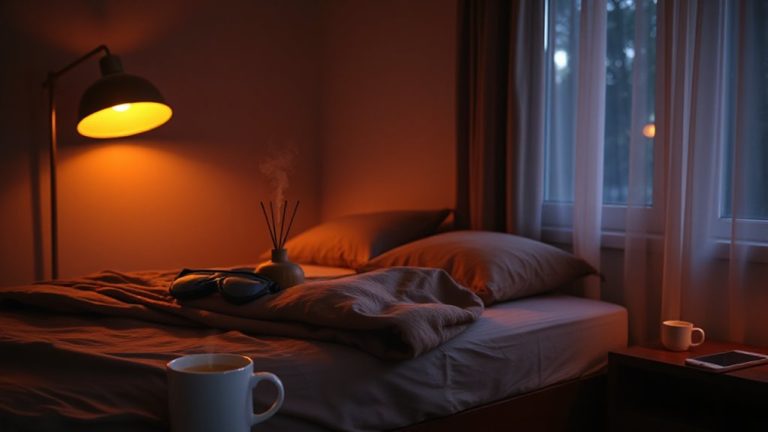
Since bright or harsh lighting can interfere with melatonin production and disrupt sleep patterns, using calm, dim lights at night helps create a restful environment for children with special needs. You’ll want to choose night lighting with a warm color temperature-around 2700K to 3000K-as it supports relaxation and signals the body that it’s time to wind down. Avoid cool, blue-toned lights, which can mimic daylight and delay sleep onset. Dimmable LED options let you adjust brightness based on your child’s sensitivity. Look for fixtures with soft diffusers to prevent glare, and place them low to the ground to reduce shadows. Many products offer timers or motion sensors, helping maintain consistency. When testing night lighting, observe how your child responds over several nights. A well-chosen setup improves sleep onset and reduces nighttime wakefulness, supporting healthier sleep hygiene without overstimulation. For enhanced benefits, consider selecting a night light specifically designed to promote melatonin production, such as those recommended in the best night lights for better sleep.
Block or Buffer Overstimulating Sounds
When loud or sudden noises disrupt sleep, it’s worth reflecting on how sound barriers or buffers can help maintain a steady, calming environment for children with special needs. Using white noise or sound masking devices helps cover disruptive background sounds, making it easier to fall and stay asleep. These tools work by adding consistent, gentle background audio that reduces the contrast between sudden noises and silence. Best noise masking solutions for kids can make a significant difference in creating a sleep-friendly atmosphere tailored to individual sensitivities. Below are options to reflect on:
| Type | Features | Notes |
|---|---|---|
| White Noise Machine | Adjustable volume, portable | Often includes timer, durable for nightly use |
| Sound Machine App | Free or low-cost, uses tablet/phone | Requires charging, less consistent output |
| Fan with Sound Masking | Dual function (airflow + noise) | No extra device needed, limited sound control |
Test different options for a few nights and observe your child’s response. Look for models with warranties or trial periods.
Incorporate Sensory-Calming Activities Before Bed
What if the key to better sleep lies in the moments before bedtime? You can help ease your child into rest by incorporating sensory-calming activities that signal the body it’s time to wind down. Start with gentle stretching to release muscle tension and improve circulation, making it easier to settle. Follow with guided meditation tailored for children, using calming voice cues and simple breathing exercises to quiet an overactive mind. These practices work well when done consistently, about 20–30 minutes before lights out. Many guided meditation apps offer free trials, so you can test a few to find the right fit. Choose sessions with soft narration and minimal background sound. Since every child responds differently, monitor changes in sleep onset and nighttime wakefulness over a few weeks. This helps you assess what’s working without relying on sleep aids too soon. For deeper rest, consider exploring the best sleep meditation guides recommended for improving sleep quality through structured mindfulness practices.
Choose Sensory-Friendly Bedding and Pajamas
Comfort matters most when selecting bedding and pajamas for children with special needs, especially those sensitive to touch or texture. You’ll want to prioritize soft, seamless fabrics that align with your child’s texture preference-smooth bamboo or brushed cotton often work well. Pay close attention to fabric weight; lighter materials suit warm sleepers, while slightly heavier, breathable weaves provide gentle pressure for those seeking comfort. Look for tagless labels, flat seams, and non-irritating dyes to reduce discomfort. Many sensory-friendly options come with moisture-wicking properties and stretch for ease of movement. Try sampling different materials to see what your child responds to best-some prefer snug fits, others looser cuts. Opt for brands offering trial periods or warranties, so you can switch if needed. This hands-on approach helps you find what supports rest without sensory overload.
Fix Common Sleep Problems for Sensitive Kids
Why do some nights feel harder than others when your child is sensitive to sounds, lights, or routines? Small changes can intensify sleep anxiety, making rest hard to achieve. You might notice patterns like trouble falling asleep or frequent nighttime waking. To help, first assess consistency in bedtime routines and the sleep environment-both affect sleep hygiene. Melatonin supplements are often used to support sleep onset, especially when natural production is delayed. They’re available in liquid, gummies, or tablets, with dosages typically starting low and adjusting based on response. While many families report improved sleep onset, results vary, and long-term effects aren’t fully known. Always consult a healthcare provider before starting melatonin supplements. For lasting improvement, combine supplements with behavioral strategies like calming pre-sleep rituals and gradual exposure to reduce sleep anxiety. This dual approach often offers the best balance of immediate relief and sustainable progress.
On a final note
You know your child’s needs best, so use this guide to shape a bedtime routine that works. Try adjustments slowly-dim lights, soft fabrics, quiet sounds-and see what improves sleep. Track changes and talk to a doctor if problems continue. Many sleep aids and tools come with trials or warranties, letting you test them risk-free. Pick what fits your child’s sensory profile and home life.