Best Night Lights That Gently Ease You Into Sleep
You’ll find red and amber night lights help ease your body into sleep by minimizing blue light that disrupts melatonin. Models like GE Sleeplite and emagine Sleep Aid offer dusk-to-dawn sensors and low-lumen outputs ideal for nighttime use without circadian interference. They’re energy-efficient, cool to touch, and designed for safe, all-night operation. Many include dimming, plug-in convenience, and warranties up to 2 years, giving you reliable options tailored to sleep support. Choosing the right one depends on your space, power needs, and light preferences-factors worth weighing as you explore what fits your routine.
We are supported by our audience. When you purchase through links on our site, we may earn an affiliate commission, at no extra cost for you. Learn more. Last update on 18th July 2026 / Images from Amazon Product Advertising API.
Notable Insights
- Red or amber night lights (620–700nm) support sleep by minimizing blue light and preserving natural melatonin production.
- Dusk-to-dawn sensors automatically turn lights on at night and off in the morning, aligning with circadian rhythms.
- Adjustable brightness, including dimming from 5–150 lumens, allows personalized low-level lighting for nighttime comfort.
- Energy-efficient LED models consume under 1.5W and last up to 30,000 hours, reducing energy use and maintenance.
- Cool-to-touch, UL-certified designs with safe, non-blocking plugs are ideal for nurseries, bedrooms, and senior use.
GE Sleeplite Night Lights Plug-In (2 Pack)

If you’re someone who moves around the house at night but wants to protect your sleep quality, the GE Sleeplite Night Lights Plug-In (2 Pack) might be your best match. I use them in my hallway and bathroom, and they turn on automatically at dusk with a soft amber glow that doesn’t disrupt my sleep cycle. The LEDs stay cool and use little energy, so I leave them plugged in all night. Their compact design covers just one outlet, leaving the other free for my phone charger or lamp. They’re UL-certified, so I trust they’re safe, and they work well in bedrooms, stairs, or apartments. I notice the warm light helps me see without fully waking up.
Best For: Nighttime navigators seeking low-light visibility without disrupting sleep cycles.
Pros:
- Automatically turns on at dusk and off at dawn with ambient amber glow
- Energy-efficient, cool-to-the-touch LED design allows for safe all-night use
- Compact shape leaves second outlet free for other devices
Cons:
- Amber light may be too dim for users needing brighter nighttime illumination
- Fixed orientation limits placement options in some outlets
- No brightness adjustment or on/off switch for manual control
emagine Sleep Aid Red Night Light (2-Pack)
The emagine Sleep Aid Red Night Light (2-Pack) works best for people who need gentle, all-night lighting without disrupting their sleep cycle, especially in bedrooms, nurseries, or hallways. I use its red LED light because it emits low blue light, helping support melatonin production. With 7 red LEDs and 150 lumens, it gives soft visibility across up to 20 square feet. It runs efficiently at 1.4 watts, lasts 30,000 hours, and plugs in without blocking a second outlet. The auto-sensor turns it on at dusk, off at dawn, and the toggle switch lets me control it manually. It’s made of durable ABS plastic, not waterproof, and comes with a 1-year warranty.
Best For: People seeking a sleep-friendly night light that supports melatonin production with low-blue, red LED lighting in bedrooms, nurseries, or hallways.
Pros:
- Red LED technology minimizes blue light emission, promoting natural melatonin production and healthy sleep cycles
- Dusk-to-dawn sensor with manual toggle switch offers automatic and customizable control for convenience
- Slim plug-in design doesn’t block adjacent outlets and provides energy-efficient, all-night illumination at just 1.4 watts
Cons:
- Not water-resistant, limiting safe placement to dry indoor areas only
- Light output (150 lumens) may be too dim for users needing brighter nighttime visibility
- Plug-in style requires access to a wall outlet, reducing placement flexibility compared to battery-operated options
2 Pack Dimmable Plug-in Night Lights

I recommend these dimmable plug-in night lights if you’re looking for a low-glare option that supports uninterrupted sleep for both kids and adults, thanks to the backward-facing light design that keeps illumination soft and indirect. They offer three color temperatures-warm, natural, and cold white-so you can adjust based on preference or circadian needs. The touch switch lets you fine-tune brightness, while the built-in sensor turns them on at dusk and off at dawn, so they’re truly hands-free. Made with V-0 fire-resistant material, they’re safe for long-term use and include over-current protection. I’ve found the automatic function reliable, especially in hallways or nurseries. You get two units, backed by a 24-month warranty and lifetime support, making trial low-risk. They’re simple, sturdy, and effective-ideal if you want convenience without compromising sleep quality. I’ve used mine for months, and they’ve worked without issue, night after night.
Best For: Individuals and families seeking a sleep-friendly, energy-efficient night light solution that provides adjustable, low-glare illumination for bedrooms, hallways, or nurseries.
Pros:
- Features backward-facing soft light and three color temperature options to support healthy sleep cycles
- Touch control and automatic dusk-to-dawn sensor enable convenient, hands-free operation
- Built with V-0 fire-resistant material and over-current protection for reliable, long-term safety
Cons:
- Fixed plug design may not fit well in tightly spaced outlets or cause outlet blockage
- Limited brightness range may be insufficient for larger rooms needing task lighting
- Color temperature customization requires manual adjustment rather than smart automation
L LOHAS LED Amber Night Light (2-Pack)
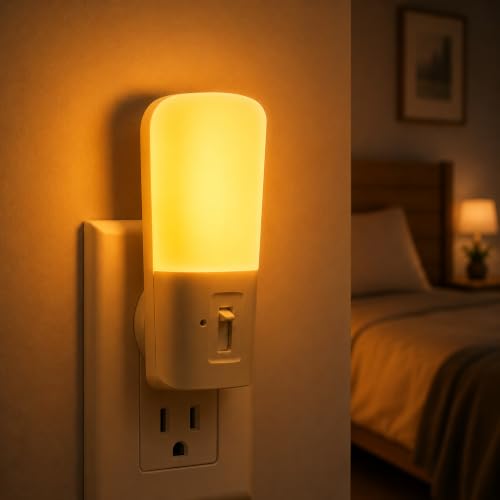
Looking for a night light that won’t disrupt your sleep cycle or annoy insects? I’ve found the L LOHAS LED Amber Night Light (2-Pack) helps by using amber light, which avoids the blue spectrum linked to sleep disruption and bug attraction. Its warm, glare-free glow is gentle on the eyes and safe for kids or seniors. I can adjust brightness from 5 to 80 lumens with a slide switch, and the dusk-to-dawn sensor turns it on automatically. It uses just 1 watt, lasts over 30,000 hours, and fits neatly into outlets without blocking adjacent plugs.
Best For: Parents, seniors, and anyone seeking a sleep-friendly, energy-efficient night light that minimizes insect attraction and supports nighttime navigation.
Pros:
- Emits amber light without blue spectrum to support better sleep and reduce insect attraction
- Features dimmable brightness (5–80 lumens) and automatic dusk-to-dawn sensor for hands-free operation
- Energy-efficient (1 watt), long-lasting (30,000+ hours), and compact design that doesn’t block adjacent outlets
Cons:
- Requires over 1 meter spacing between units to prevent sensor interference
- Light output may be too low for users needing brighter nighttime illumination
- Limited to plug-in outlet use, which may restrict placement flexibility
Neporal REDIX 670nm Red Light Lamp

Red light that truly supports sleep starts with blocking the wavelengths that don’t belong at night, and the Neporal REDIX 670nm Red Light Lamp delivers exactly that. Its 670nm lab-verified light blocks 100% of blue and green, helping your body produce melatonin naturally. I’ve used it with the stepless dimming-adjusted via touch or remote-and found the flicker-free glow gentle on the eyes, especially in bedrooms or nurseries. The 4-stage timer (15 to 90 minutes) means I don’t have to worry about leaving it on. With up to 25 nights of battery life on low, it’s great for travel or power outages. It’s part of why 260,000 U.S. families trust it. I get peace of mind knowing it comes with 2-year coverage and 24/7 support.
Best For: Individuals seeking a portable, circadian-friendly red light to improve sleep quality and support melatonin production in bedrooms, nurseries, or while traveling.
Pros:
- Delivers 670nm lab-verified red light that blocks 100% of blue and green wavelengths, promoting natural melatonin production and faster, deeper sleep
- Features stepless dimming, flicker-free illumination with CRI>85, and a 4-stage auto-off timer for customizable, hands-free bedtime routines
- Powered by a 5000mAh battery with USB-C charging, offering up to 25 nights of use on low brightness, ideal for travel and off-grid use
Cons:
- Limited to red light output, which may not suit users wanting multi-color options for ambiance or alertness during night use
- Battery life decreases significantly at higher brightness levels, reducing portability benefits when fully dimmed is not preferred
- Higher price point compared to basic red bulbs or lamps, potentially limiting accessibility for budget-conscious buyers
670nm Red Light Night Light (2-Pack)

For those prioritizing sleep quality through science-backed lighting, the 670nm Red Light Night Light (2-Pack) offers a practical solution by emitting a gentle, blue light–free glow that aligns with natural circadian rhythms. I use it in my hallway and bathroom because it turns on automatically at dusk and provides just enough light-up to 100 lumens on high-without disrupting melatonin. Its 3 brightness levels let me adjust for comfort, and the slim plug-in design doesn’t block other outlets. With only 0.5W power use, low-heat LEDs, and a durable, fire-resistant build, it’s safe for nurseries or senior use. I appreciate the 2-year warranty, too.
Best For: Individuals seeking a sleep-friendly, energy-efficient night light that supports circadian health with blue light–free red illumination.
Pros:
- Emits 670nm red light shown to support melatonin production and natural sleep cycles
- Auto-sensing dusk-to-dawn operation with adjustable brightness and slim plug-in design
- Safe, low-heat, energy-efficient build ideal for nurseries, senior use, and travel
Cons:
- Limited to red light only, which may not suit users preferring white or colored lighting
- Fixed wall plug design may not work well in tightly spaced outlets despite slim profile
- No battery backup, so functionality depends on continuous AC power
670nm Red Light Night Light (3 Pack)
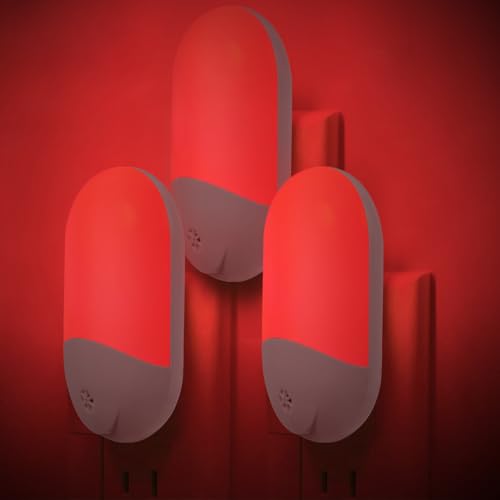
One of the best choices for people who need minimal nighttime lighting without disrupting sleep is this 670nm Red Light Night Light (3 Pack), especially if you’re sensitive to blue light or share a space with infants, elderly family members, or light-sensitive individuals. I use these in hallways and bathrooms because the 670nm red glow supports melatonin production, helping maintain natural sleep cycles. The dusk-to-dawn sensor turns them on automatically at night and off at sunrise, so they’re hassle-free. Each unit plugs directly into standard outlets, stays out of the way, and preserves access to the second outlet. A 1W LED gives soft, consistent 30-lumen light-enough to see safely, not so bright it wakes you fully. They’re energy-efficient, run cool, and work quietly all night. I’ve found them especially useful in nurseries and bedrooms where sudden bright light would be disruptive. The 3-pack lets me place them where needed without buying multiples separately, saving a bit over single purchases. They don’t require installation or special tools-just plug in and go. While they won’t light up a whole room, that’s the point: this light guides you gently without overstimulating your eyes. If you move at night often, whether for feeding, bathroom trips, or checking on a child, these reduce strain and help you settle back to sleep faster. I appreciate that the red hue mimics a sunset, easing the brain into relaxation instead of alertness. It’s a small upgrade, but it makes nighttime routines smoother and less jarring. Over time, I’ve noticed fewer sleep interruptions, especially when paired with good sleep hygiene. These aren’t medical devices, but they support healthy sleep environments-something many overlook when struggling with rest. If you want subtle, automatic lighting that respects your body’s rhythms, this three-pack is a practical, no-fuss solution worth trying.
Best For: Individuals seeking gentle, low-blue-light nighttime illumination that supports natural sleep cycles, including parents, caregivers, and light-sensitive individuals.
Pros:
- Automatically turns on at dusk and off at dawn with built-in light-sensing technology for hands-free operation
- Emits a 670nm red light wavelength that minimizes sleep disruption and promotes melatonin production
- Slim plug-in design allows use in one outlet while preserving access to the adjacent one
Cons:
- Provides only 30 lumens of light, which may be too dim for users needing broader room illumination
- Fixed red hue cannot be adjusted or changed for different lighting preferences
- May not fit well in tightly spaced outlets due to the plug-in design, limiting placement in some locations
Revive 670nm Red Night Light (2 Pack)

I’ve found the Revive 670nm Red Night Light (2 Pack) works especially well for anyone prioritizing sleep quality without sacrificing nighttime visibility. It uses 670nm red light, which research shows minimizes circadian disruption by avoiding blue wavelengths. I use mine in the bedroom and hallway, and it provides just enough glow to move safely at night without jarring my brain awake. Gamma designed these with sleep science in mind, so they support melatonin production. They’re ideal for light-sensitive people or parents using nighttime routines. The low-intensity light won’t interrupt sleep cycles, and since they come in a two-pack, trying them in multiple rooms is affordable.
Best For: Individuals seeking to improve sleep quality by reducing circadian disruption during nighttime awakenings, including light-sensitive people, parents, and those with irregular sleep schedules.
Pros:
- Supports natural melatonin production by using 670nm red light that avoids blue spectrum interference
- Low-intensity glow provides safe nighttime visibility without stimulating the brain or disrupting sleep cycles
- Comes in a two-pack, making it cost-effective to use in multiple rooms like bedrooms, hallways, and nurseries
Cons:
- Limited brightness may not be sufficient for detailed tasks in complete darkness
- Red light may not be preferred by all users for general nighttime use
- Not suitable for spaces requiring white or full-spectrum lighting for functionality
G Keni Nursery Night Light for Baby
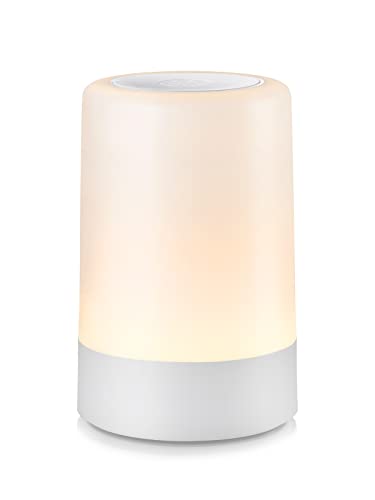
This soft-glowing companion excels for parents and caregivers needing a reliable light during nighttime routines with babies. I use it for feedings, diaper changes, and quiet moments, appreciating its touch-activated dimming and 460 lux warm white glow. It’s lightweight, rechargeable, and runs up to 65 hours on low. The candle-shaped design hides a handle for hanging, and it remembers your preferred brightness. Made from safe, durable plastic, it’s certified ETL, FCC, CE, and RoHS compliant. I’ve found it handy during outages, and the 24-month warranty gives peace of mind.
Best For: Parents and caregivers needing a safe, portable, and dimmable night light for baby care routines and low-light environments.
Pros:
- Touch-activated control with stepless dimming and memory function for personalized brightness
- Long battery life with up to 65 hours on the lowest setting, ideal for overnight use and power outages
- Compact, candle-shaped design with hanging handle and certified safe materials for nursery use
Cons:
- Not water-resistant, limiting use in humid environments like bathrooms
- Requires separate USB power source for charging, not solar or outlet-independent
- Warm white only with no color temperature or brightness preset options
Revive 670nm Red Reading Light for Sleep

If you’re sensitive to light or struggle to wind down before bed, the Revive 670nm Red Reading Light offers a science-backed way to support your sleep routine. I use it nightly, and it gently mimics sunset tones, promoting melatonin by cutting out blue light. It’s low-intensity, so it’s perfect for reading without straining my eyes or delaying sleep. I didn’t need extra setup-just plug it in and go. Made by Gamma Light Therapy, it’s built on over ten years of research. If you work odd hours or just have trouble unwinding, this light helps align your rhythm naturally, and I appreciate the no-risk trial to test it myself.
Best For: Individuals who are light-sensitive or have trouble winding down before bed, including those with irregular sleep schedules or nighttime reading habits.
Pros:
- Promotes melatonin production by eliminating blue light and mimicking natural sunset tones
- Low-intensity 670nm red light supports nighttime reading without disrupting circadian rhythm
- Plug-and-play design requires no setup, making it easy to use immediately
Cons:
- Limited functionality beyond sleep support and reading, reducing multi-use appeal
- Red light may not provide sufficient brightness for users who prefer well-lit environments
- Effectiveness depends on individual adherence to consistent nighttime routines
Factors to Consider When Choosing Sleep-Promoting Night Lights
You’ll want to pick a night light that supports your sleep by using a warm, red-based spectrum since it’s less likely to disrupt melatonin. Look for models with an automatic sensor so the light turns on only when needed, saving energy and reducing unnecessary brightness at night. Adjustable brightness, child-safe designs, and energy-efficient LEDs also help you balance comfort, safety, and long-term use, especially if you’re sensitive to light or testing options for better sleep.
Light Spectrum Selection
While most nighttime lighting focuses on brightness, choosing the right light spectrum matters more for your sleep health. You’ll want to pick night lights that emit red or amber tones between 620–700nm, since these wavelengths mimic sunset light and signal your brain to prepare for rest. Red light at 670nm blocks all blue and green light, preserving melatonin and supporting circadian rhythm. Unlike white or blue-rich lights, amber and red LEDs don’t suppress melatonin, helping you fall asleep faster. Aim for models under 500 lumens-they give enough glow to see safely at night without overstimulating your brain. These warm-toned lights create a calm environment, easing you into sleep naturally. Look for durable LED designs built to last, and check if they come with a warranty for long-term use. Testing a few options can help you find what works best for your routine.
Automatic Sensor Function
Since your body’s internal clock responds best to natural light patterns, choosing a night light with an automatic dusk-to-dawn sensor helps support a steady sleep routine. These sensors detect when ambient light falls below about 10 lux, turning the light on at dusk using photoresistive cells or photodiodes. They turn it off again at sunrise, matching natural cycles. This automatic operation limits light exposure to only what’s needed, which supports circadian rhythm and reduces disruption. You save energy too-lights with sensors typically cut power use by up to 50% compared to leaving them on manually. For consistent performance, place the unit away from indoor lamps or TVs that could trick the sensor. That way, you avoid unnecessary cycling during the night. Look for models with reliable sensor calibration and at least a one-year warranty to test their responsiveness in your space.
Brightness Adjustment Options
A growing number of night lights offer adjustable brightness, giving you control over light intensity to better suit your sleep environment. You can choose models with stepless dimming, smoothly adjusting from 5 to 100 lumens for a glow that feels just right. Touch sensors or slide switches let you fine-tune brightness quickly, matching your needs whether you’re reading or settling in. Some lights offer preset levels-low, medium, high-giving flexibility without glare. If you value convenience, pick one with a memory function; it returns to your preferred setting each time. When paired with dusk-to-dawn sensors, the light adjusts automatically at night, reducing the need to touch controls. These features let you maintain a calm, consistent bedroom atmosphere, supporting healthier sleep patterns without unnecessary brightness.
Energy Efficiency Rating
Most energy-efficient night lights use just 0.5 to 1.4 watts, making them a smart choice for overnight use without driving up your electric bill. You’ll save up to 90% on energy with LED models, which deliver strong light output while drawing minimal power. These lights often include dusk-to-dawn sensors, so they turn on only when needed, cutting wasted energy. With lifespans of 25,000 to 30,000 hours, they last years, reducing how often you replace them. A typical unit uses less than 1 kWh per year-ideal for keeping on all night. Look for high lumens-per-watt ratings to guarantee brightness doesn’t come at the cost of efficiency. Models meeting energy standards combine reliable performance with low consumption, helping you maintain sleep-friendly lighting through the night while keeping environmental and cost impacts low.
Child And Safety Features
You’ve already considered how little energy a good night light uses, but if you’re choosing one for a child’s room, safety becomes just as important as efficiency. Look for models made from non-toxic, fire-resistant materials like V-0 rated plastics, designed to stay safe during overnight use. Pick LED night lights that stay cool to the touch, reducing burn risks around crawling babies or curious toddlers. Always choose units with UL or ETL certification-these meet strict electrical and fire safety standards for sensitive spaces like nurseries. Make sure the design has no sharp edges, features a fully enclosed housing, and blocks no access to internal parts, preventing injury or shocks. Also, go for models that don’t block nearby outlets, so you avoid overloading one socket. These features add up to safer, smarter nighttime lighting for young ones.
Plug Design Compatibility
When choosing a night light for better sleep, how it fits into your outlet matters just as much as its glow. Look for a side-mounted or right-angle plug so the device fits snugly in tight spaces and doesn’t block nearby outlets. A compact, low-profile design sits flush against the wall, reducing interference with furniture or faceplates. If you move the light between rooms or travel often, choose one with a foldable plug-it’s easier to carry and reduces strain on the outlet. Models that use only one socket let you keep using the second for other devices, which helps in busy households. Pick a light with universal voltage (110–240V) so it works reliably at home or abroad without extra adapters. These features improve convenience and long-term use without sacrificing space or function.
Wavelength Accuracy Proof
Though many night lights claim to support sleep, only those with verified 670nm red light truly eliminate blue and green wavelengths that interfere with melatonin. You need lab-confirmed accuracy-±5nm around 670nm-to guarantee no disruptive light slips through. Devices built with calibrated LEDs and precision diffusers maintain this narrowband output, blocking 100% of wavelengths below 550nm. Independent spectral testing proves which models deliver this consistency, a must for protecting your circadian rhythm. In studies, accurate 670nm light helped users fall asleep 35% faster by aligning with your body’s natural sensitivity. When choosing, look for brands that publish test reports or offer trial periods so you can verify performance. It’s not just about color-it’s about precise, repeatable science that supports better sleep onset without disruption.
Battery Or Cordless Use
A sleep-friendly night light isn’t only defined by its wavelength-how it powers up matters just as much for real-world use. You’ll want a model with a built-in rechargeable battery, like one with a 5000mAh capacity, so it runs cordlessly for several nights on a single charge. USB-C charging makes recharging fast and convenient, especially during travel or power outages. Some units last up to 25 nights on low brightness, giving you long-term use without plugging in. Cordless designs cut down on tripping hazards and let you place the light on floors, tables, or even inside tents. Look for models with dusk-to-dawn sensors and timers-they turn on and off automatically, saving energy. You get reliable, hands-free function without needing an outlet nearby.
Frequently Asked Questions
Do Red Night Lights Affect Melatonin Production?
You know red night lights don’t suppress melatonin like blue or white light, so they help keep your sleep cycle on track. You’ll find they use warm, low-wavelength light that’s gentle on your eyes. You can use them safely through the night without disrupting your body’s natural hormone response. You’ll sleep better, especially if you’re sensitive to light during bedtime routines.
Can I Use These Lights in Bathrooms?
Yes, you can use these lights in bathrooms. They’re small, plug-in devices with soft red illumination that won’t overwhelm your eyes at night. Most are energy-efficient LED and run cool, so they’re safe near sinks or showers. Check if the model is moisture-resistant, especially if placing near a tub. Many come with auto-sensors for dusk-to-dawn operation and offer trial periods, so test one to see how well it fits your routine.
Are the Plug-In Lights Safe for Kids?
Yes, you can safely use plug-in night lights around kids if they’re designed with cool-touch materials and low heat output. Look for models with shatterproof covers and auto-shutoff features to prevent accidents. Most are energy-efficient and stay cool during use, reducing burn risks. Check for certifications like UL or ETL for added safety. A built-in sensor prevents constant use, and many come with a warranty, letting you try them risk-free.
Do These Lights Work During Power Outages?
No, these plug-in night lights don’t work during power outages since they rely on direct electrical current. You’d need a battery-powered or rechargeable model for backup function. Some include USB ports or built-in batteries for that purpose. Check product specs for outage performance and consider models with auto-shutdown or low-battery alerts. If outages are frequent, test a unit with your setup or use a surge-safe power strip to protect it.
Can I Use Them With Extension Cords?
You can use them with extension cords if the cord is UL-listed and the outlet isn’t overloaded. Make sure the cord stays flat and out of walkways to avoid tripping. These lights draw low power, so most cords handle them fine, but a direct plug-in gives more reliability. Avoid long, coiled cords-they can overheat. For safety and steady performance, keep connections tight and dry. Always check manufacturer guidelines on cord use.