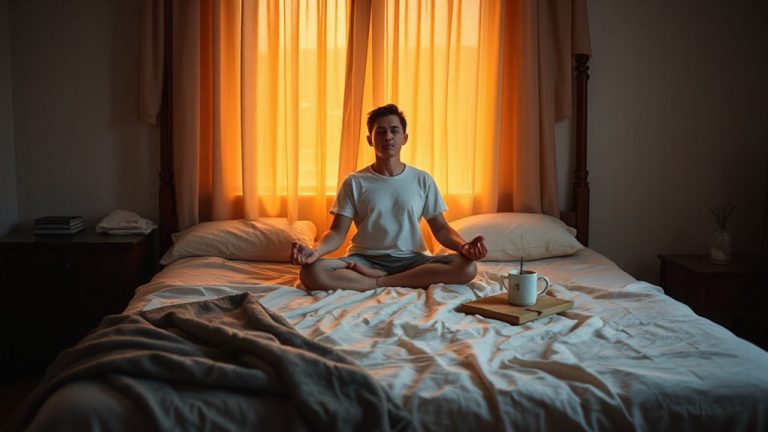
The Role of White Noise Machines in Masking Distractions and Improving Sleep Efficiency
You can use a white noise machine to mask distractions like traffic or sudden household sounds, helping you stay asleep longer. It works by blending all audible frequencies into a steady hum that reduces the impact of noise spikes. Machines with adjustable volume, timers, and multiple sound types-like pink or brown noise-let you customize the experience. Placement, room size, and speaker quality affect performance. Many models offer trial periods or warranties, so you can test effectiveness without risk-options that support smarter choices based on your sleep environment.
Notable Insights
- White noise machines mask disruptive sounds by emitting a consistent blend of frequencies, reducing sudden auditory distractions.
- They improve sleep efficiency by stabilizing brain activity and minimizing arousal from environmental noise.
- Pink and brown noise options provide softer, deeper tones that may better suit light sleepers or specific preferences.
- Effective use depends on proper placement, volume adjustment, and matching machine output to room size.
- While not a cure for insomnia, they are beneficial in noisy settings when used alongside other sleep hygiene practices.
What Is White Noise and Can It Help You Sleep?
Have you ever wondered what exactly white noise is and how it might affect your sleep? White noise is a consistent sound that blends all audible frequencies, helping your brain waves settle into a steady rhythm. It doesn’t directly change your sleep cycles, but it can make them more stable by reducing abrupt shifts caused by sudden noises. When your brain waves aren’t disrupted, you’re more likely to stay in deeper sleep stages longer. This is especially useful if you’re sensitive to sounds or live in a noisy environment. While white noise isn’t a cure for sleep disorders, it’s a practical sleep aid worth trying. Many machines offer timers, volume controls, and warranty options. Consider a short trial to see how your sleep responds. It’s a low-risk way to test if consistent background sound supports your nightly rest. Best models on the market are highlighted in reviews of the best white noise machines.
How White Noise Machines Block Disruptive Sounds
While disruptive noises like traffic, loud neighbors, or sudden household sounds can pull you out of restful sleep, white noise machines work by filling the air with a steady, even sound that masks those interruptions. This process, known as sound masking, doesn’t eliminate noise but makes it less noticeable by covering it with consistent audio. Most machines use frequency filtering to spread sound evenly across audible ranges, so sharp spikes in noise don’t stand out. That steady output creates a sonic buffer, helping your brain stay relaxed. Models vary in speaker quality and filtering precision, affecting how well they handle low rumbles or high-pitched sounds. Many come with adjustable volume and timer settings, plus at least a one-year warranty. Trying one for a few nights can show if sound masking improves your sleep continuity, especially in noisy environments. Just place it a few feet from your bed and test different levels to find what works. For those considering a purchase, top models are highlighted in the best white noise machines roundup.
White Noise vs. Pink vs. Brown: Which Is Best for Sleep?
What kind of noise actually helps you sleep better-white, pink, or brown? It depends on your preference and how sound frequency affects you. White noise blends all frequencies at equal intensity, creating a steady hum that masks sudden sounds, which can improve sleep quality. Pink noise lowers higher frequencies, giving a softer, even tone-like steady rain-that some find more natural. Brown noise goes further, emphasizing low frequencies with a deep rumble, like distant thunder, which may soothe deeper sleepers. Each type can support better sleep by reducing nighttime disruptions, but their effect varies. Some studies suggest pink noise may help stabilize sleep patterns, especially for light sleepers or those with mild sleep issues. Since everyone responds differently, trying each type-many machines offer all three-helps you decide what works. Look for machines with adjustable settings and a warranty, so you can test sound frequency options safely and find the best fit for your sleep quality. For convenient, customizable sound masking throughout your home, consider smart devices with app control and smart noise masking devices.
When to Use a White Noise Machine (And When to Skip It)
Could your sleep environment be working against you? If outside noise regularly disrupts your sleep, a white noise machine might offer real benefits by masking those distractions. You’ll likely notice improved sleep efficiency, especially in noisy neighborhoods or shared living spaces. But consider the risks-constant use might lead to dependency, or the sound could bother a partner. For some, alternatives like earplugs, sound-conditioning apps, or fans work just as well. It really comes down to personal preferences and your specific sleep challenges. If you have a sleep disorder like insomnia, consult a professional before relying solely on sound aids. Always test devices with a trial period, if available, and look for models with warranty coverage. Performance varies, so weigh features like volume control and sound variety when deciding.
Pick the Best White Noise Machine by Room and Needs
How do you find the right white noise machine when your room setup and sleep needs vary so much? Start by matching the device to your room size-small rooms often need compact models with lower volume range, while large or open spaces benefit from machines with broader sound dispersion and stronger output. Next, consider the noise type: some prefer steady white noise, while others find pink or brown noise more soothing for deeper sleep. Evaluate build quality, like durable casing and intuitive controls, especially if you travel often. Many top models offer timer settings, adjustable EQ, and multiple sound options for flexibility. Check if the brand provides a trial period or warranty-this lets you test effectiveness without risk. Matching your specific environment and preferences helps guarantee better consistency and comfort night after night.
Does Science Support White Noise for Better Sleep?
You’ve likely considered the size of your room and your personal sound preferences when choosing a white noise machine, but now it’s worth looking at whether the science backs up the benefits. Research shows white noise can influence neurological effects by stabilizing brain activity during sleep shifts. Studies suggest consistent background sound helps reduce nighttime awakenings, especially in noisy environments. This stability supports more consistent sleep architecture, meaning deeper, more restorative stages last longer. Effects vary by individual, though-people with insomnia or light sleepers may benefit most. Some machines offer adjustable frequencies, letting you tailor sound profiles to your needs. Look for models with clinical testing, clear trial periods, and reliable performance across settings. While not a universal fix, evidence supports white noise as a helpful tool in improving sleep efficiency for many.
White Noise Hacks for Deeper, Uninterrupted Sleep
Why do some people sleep more soundly with white noise while others notice little change? The key often lies in proper sound masking and personal sleep environment needs. You can improve sleep optimization by placing your white noise machine at least three feet from your head to avoid overexposure while ensuring even sound distribution. Choose devices with adjustable frequencies-some offer pink or brown noise, which may feel softer than standard white noise. Models with timers let you run them all night or just during light sleep stages. Look for units with simple controls and reliable construction; many come with warranties of one to two years. If you’re sensitive to nighttime disruptions-like traffic or snoring-consistent sound masking can reduce awakenings. Try different settings over a week to see what supports deeper rest. Not every device works for every sleeper, so consider trial periods when available.
On a final note
You can use a white noise machine to mask sudden or disruptive sounds, potentially improving sleep continuity. These devices work by filling the room with steady, even sound, reducing auditory shifts that might wake you. Models vary in volume range, portability, and sound types-some offer pink or brown noise, which may feel softer than traditional white noise. Look for adjustable settings, a timer, and room-sized output. Test units with sleep trial periods or warranties to find what suits your environment and sleep pattern without long-term commitment.