Evaluating Mattress Options Based on Spinal Alignment and Support for Healthy Sleeping Patterns
You need a mattress that keeps your spine neutral to avoid nerve compression and restless sleep. Memory foam contours well, while hybrids add support and airflow. Side sleepers do best with medium-soft firmness, back sleepers with medium-firm, and stomach sleepers with firmer surfaces. Look for balanced pressure relief and durable materials. Models with sleep trials and warranties let you test support over time-smart choices reveal themselves with real use.
Notable Insights
- Proper spinal alignment during sleep prevents nerve compression and reduces chronic aches and discomfort.
- Memory foam mattresses contour to the body, supporting natural spinal curves and minimizing motion transfer.
- Hybrid mattresses combine foam and coils for balanced support, pressure relief, and improved airflow.
- Ideal mattress firmness varies by sleep position: side (4–6), back (6–7), and stomach (7–8) on the firmness scale.
- Adjustable air chambers or customizable layers allow personalized spinal support and better sleep quality.
How Poor Spinal Alignment Ruins Your Sleep
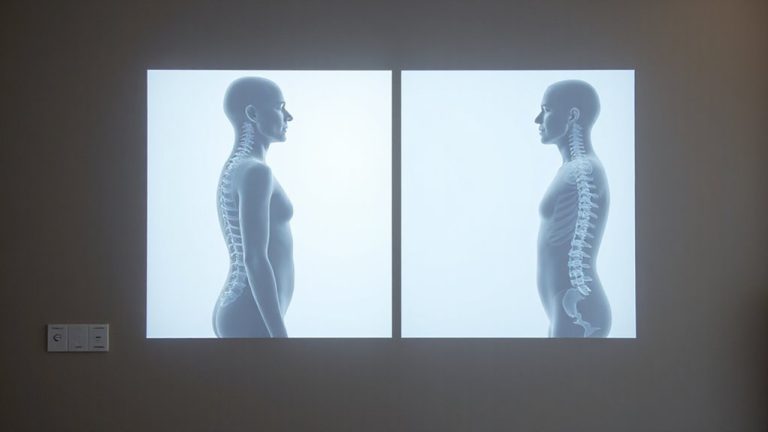
While you might not notice it at first, poor spinal alignment can quietly disrupt your sleep over time, leaving you tired and stiff when you wake up. Your body posture during rest plays a big role in how well your spine stays supported through the night. When your spine isn’t properly aligned, it can lead to unnecessary nerve compression, which may cause tingling, discomfort, or even chronic aches over time. This strain often goes unnoticed until symptoms build up, interfering with sleep quality and daily energy levels. You’re more likely to toss and turn, reducing deep, restorative sleep cycles. Choosing a sleep surface that maintains natural spinal curves helps reduce these risks. Supportive options often come with detailed construction data, trial periods, and warranties so you can test alignment benefits safely. Looking at these features carefully lets you make informed choices that suit your body’s needs. For portable support that promotes proper alignment, consider inflatable sleeping pads with adjustable air chambers designed to contour to your body’s unique shape.
Best Mattress Types for Spinal Alignment Support
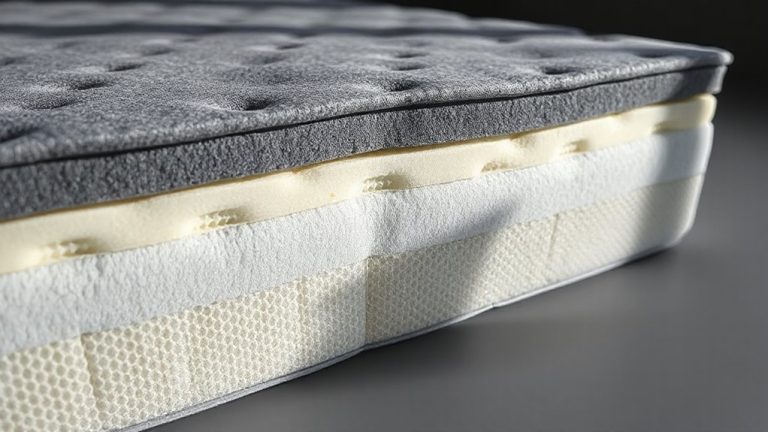
You’ve felt the toll of restless nights and morning stiffness, and now it’s time to focus on solutions that keep your spine properly supported while you sleep. Memory foam benefits include contouring closely to your body, helping maintain neutral spinal alignment by cradling pressure points and reducing motion transfer. This material responds well to body heat, adjusting slightly during the night for consistent support. Hybrid mattress trials show these options combine memory foam’s conforming feel with innerspring coils for added stability and airflow. The mix offers balanced support, especially if you shift positions often. Many hybrids come with adjustable firmness layers, letting you customize support over time. Look for models with at least a 10-year warranty and sleep trials lasting 100 nights or more. Testing them at home helps you judge spinal support accurately, without pressure to decide too soon. Best Orthopaedic Mattresses provide targeted support for chronic back pain sufferers seeking restorative sleep through proper spinal alignment. orthopaedic mattresses
Best Firmness for Side, Back, and Stomach Sleepers
A medium to medium-soft mattress, typically rated between 4 and 6 on the firmness scale, often works best for side sleepers because it cushions the hips and shoulders while keeping the spine aligned. Your sleep position heavily influences how pressure points are relieved, so choosing the right firmness matters. Back sleepers usually benefit from a medium-firm feel (around 6 to 7), offering balanced support that maintains spinal alignment without sinking too deeply. If you’re a stomach sleeper, a firmer mattress (7 to 8) helps prevent hip sinkage that can misalign your spine. Too soft a surface increases pressure points; too firm may create discomfort. Matching firmness to your sleep position supports healthier rest and reduces the risk of waking stiff or sore. Many brands offer sleep trials and warranties, letting you test firmness risk-free. Best Mattresses for Side and Stomach Sleepers provide targeted support to maintain proper spinal alignment for these positions.
What Makes a Mattress Actually Support Your Spine?
Choosing the right firmness based on your sleep position is just the starting point when it comes to spinal support. What truly matters is how the mattress aligns your spine through proper material composition and pressure distribution. You need a structure that supports your body’s natural curves without sinking too much at the hips or shoulders. Foam layers contour closely, improving pressure distribution, while innerspring or hybrid cores offer firmer support to prevent excessive sinkage. Your weight and preferred sleep position interact with these materials differently, so consider how each layer responds to pressure. A well-built mattress balances softness and resilience, keeping your spine neutral. Look for models with trial periods and strong warranties so you can test these features long-term. It’s not just about comfort-it’s about consistent spinal alignment night after night.
Top Mattresses for Spinal Alignment and Pain Relief
Support matters most when it comes to waking up pain-free, and the best mattresses for spinal alignment combine targeted pressure relief with balanced support. You’ll find memory foam models excel at contouring to your body, keeping your spine neutral. Many top options include a gel infusion to dissipate heat, so you stay comfortable all night. Look for mattresses with a buffer layer that softens the firm base, easing pressure on hips and shoulders without sagging. Hybrid designs pair memory foam with coils for added support and airflow. Most brands offer 100-night sleep trials and 10-year warranties, giving you time to evaluate pain relief and comfort. Firmer feels often suit back and stomach sleepers, while side sleepers may prefer medium-soft options. Check return policies and trial length before buying-this guarantees you’re not stuck with a poor fit.
On a final note
You now know how spinal alignment affects your sleep, and which mattresses support it best. Memory foam cradles pressure points, while latex offers responsive support; innerspring adds firmness. Side sleepers often need softer surfaces, back and stomach sleepers benefit from medium to firm feels. Look for zoned support, durable construction, and breathable materials. A solid warranty and sleep trial let you test comfort risk-free. Choose based on your position, body type, and long-term needs.