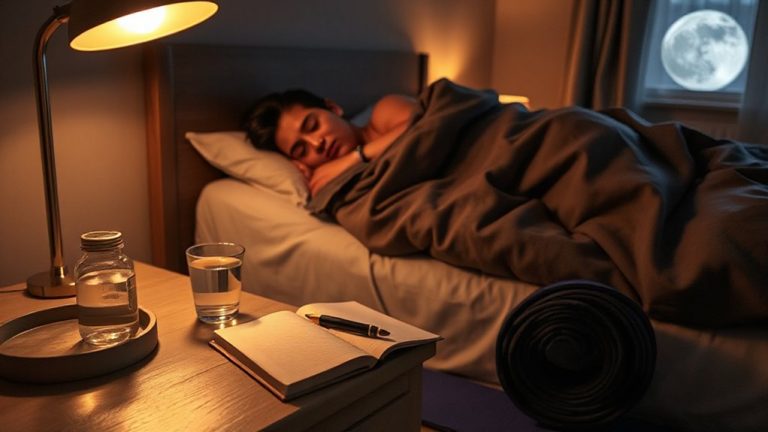
Sleep Hygiene for Athletes: Tips to Enhance Performance With Better Rest
You treat training with precision, so treat sleep the same. Set a fixed bedtime and wake time, even on weekends, to steady your rhythm and boost recovery. Keep your bedroom cool, dark, and quiet, and use it only for sleep. Avoid screens an hour before bed to protect melatonin. Wind down with light stretches or reading. Eat balanced meals, earlier in the day, and choose light, sleep-friendly snacks if needed. Consistency builds results you can feel, and there’s more to fine-tune.
Notable Insights
- Treat sleep as seriously as training to maximize athletic performance and recovery.
- Stick to a consistent sleep schedule, including weekends, to stabilize circadian rhythm.
- Optimize your bedroom for sleep with cool temperatures, darkness, and minimal noise.
- Avoid screens for at least 60 minutes before bed to support natural melatonin release.
- Time meals strategically, avoiding heavy food at night and choosing sleep-promoting snacks.
Treat Sleep Like Training
Recovery isn’t just what happens during workouts-it starts the moment you turn off the lights. You train hard, so treat sleep with the same discipline. Sleep consistency isn’t optional; it’s foundational. Just like lifting or cardio, your body adapts best when rest follows a predictable rhythm. A steady recovery mindset means valuing sleep as performance fuel, not downtime. Track how consistent bed and wake times affect energy and focus-small shifts can reveal patterns linked to performance dips or gains. When evaluating sleep aids, check ingredients, trial periods, and medical backing-some promise quick fixes but lack long-term benefits. Watch for signs of sleep disorders like unrefreshing rest or chronic snoring; they may need professional assessment. Prioritizing sleep structure helps recovery work quietly, efficiently, every night. Your nervous system rebuilds, hormones rebalance, and muscles repair-all because you scheduled rest like a rep. For accurate insights without ongoing costs, consider sleep trackers with no subscription required.
Set a Non-Negotiable Sleep Schedule
You treat your training schedule with respect, so why let sleep slide? Just like reps or drills, your recovery hinges on a consistent bedtime and a disciplined morning routine. Your body thrives on predictability, and sleep timing affects hormone balance, muscle repair, and focus. Treating sleep as non-negotiable means setting a fixed schedule-yes, even on weekends.
| Factor | Benefit |
|---|---|
| Consistent Bedtime | Stabilizes circadian rhythm, improves sleep onset |
| Morning Routine | Signals wakefulness, enhances daytime alertness |
| Fixed Wake Time | Builds sleep drive, supports consistent bedtime |
Sticking to a timetable trains your body’s internal clock. It may take a few days to adjust, but the payoff-deeper rest, sharper performance-is worth it. Try it for two weeks and track changes in energy and recovery.
Make Your Bedroom a Sleep Zone
Even if your schedule is locked in, your environment can still work against restful sleep. Making your bedroom a dedicated sleep zone helps signal your body it’s time to wind down. Aim for a cool atmosphere-most people sleep better in rooms between 60–67°F-so adjust your thermostat or use breathable bedding. Noise control is just as important; even low sounds can disrupt sleep cycles. Consider using a white noise machine, earplugs, or sound-blocking curtains to reduce disturbances. Choose blackout curtains to keep light out, and reserve your bed only for sleep, not work or lounging. These features support consistent rest, which is essential for recovery and performance. When testing solutions, look for options with trial periods or warranties so you can find what works best for you over time. Small changes to your sleep environment can make a measurable difference. Side sleepers may also benefit from choosing a pillow with proper loft and firmness, such as those designed for best pillows for side sleepers.
Ditch Screens 60 Minutes Before Bed
A good night’s sleep often starts with what you stop doing an hour before bed-staring at screens. Blue light exposure from phones, tablets, and computers can interfere with melatonin production, making it harder to fall asleep. You don’t need to cut out devices completely-just commit to a nightly digital detox. This shift supports better circadian timing, especially important for athletic recovery and mental sharpness. Consider these screen alternatives to ease the change:
| Activity | Benefit |
|---|---|
| Reading a book | Reduces mental stimulation |
| Light stretching | Promotes muscle relaxation |
| Journaling | Clears racing thoughts |
| Listening to music | Calms the nervous system |
This small change improves sleep quality by limiting disruptions. Over time, consistency helps regulate sleep patterns, potentially reducing reliance on sleep aids. It’s a practical, evidence-backed step that fits easily into most routines.
Unplug With a Real Wind-Down Routine
When done right, winding down isn’t just about skipping screens-it’s about replacing stimulation with intentional calm. Your body needs time to shift from high-performance mode to rest, and a structured routine makes that shift smoother. Start with a digital detox at least 60 minutes before bed: turn off phones, tablets, and computers to reduce blue light exposure. Replace screen time with relaxation techniques like deep breathing, light stretching, or reading a physical book. These habits signal your brain that it’s time to slow down. Choose activities you find genuinely calming, so the routine feels sustainable. Consistency matters-practicing the same steps nightly strengthens your body’s sleep-wake rhythm. Over time, this real wind-down routine can improve sleep quality without relying on sleep aids. It’s a simple, effective way to support recovery and long-term performance.
Eat Right to Sleep Right
You’ve unplugged your devices and settled into a calming routine, but what you eat plays just as big a role in how well you sleep. Balanced nutrition supports stable energy and restful recovery-your body needs adequate protein, complex carbs, and healthy fats throughout the day. Avoid heavy meals close to bedtime, as they can disrupt sleep; instead, aim for light, easily digestible snacks if you’re hungry at night. Meal timing matters: eating your largest meal earlier helps digestion finish before sleep. Try a small snack with tryptophan or magnesium, like banana with almond butter, to gently promote drowsiness. Skipping meals or relying on processed foods may impair sleep quality over time. Staying hydrated during the day helps, but reduce fluids an hour before bed to avoid disruptions. These habits support better rest without supplements, though some might find specific sleep aids useful under guidance. For those considering supplementation, choosing high-quality best melatonin supplements can make a meaningful difference in sleep onset and overall rest quality.
On a final note
You treat training with discipline, so give sleep the same respect. Set a consistent bedtime, make your room dark and cool, and avoid screens before sleep. Unwind with calming habits, and time meals to help, not hurt, rest. If sleep problems continue, check with a professional before trying aids. Many options have trade-offs-know the facts, test changes, and track results. Better sleep supports better performance.