Why Using a Body Pillow Supports Pelvic Alignment and Reduces Sciatic Nerve Irritation
When you lie down, spinal pressure can worsen sciatic nerve irritation, but using a body pillow helps maintain neutral spine and pelvic alignment. It supports your head, back, hips, and legs evenly, preventing unwanted twisting or sinking. By keeping your spine stacked and pelvis balanced, it reduces strain on discs and soft tissues. A pillow between your knees also stops hip rotation that pulls your lower back out of alignment. You’ll likely notice less pain and more consistent comfort night after night-and discover how small changes in support can lead to deeper, more restorative sleep over time.
Notable Insights
- A body pillow aligns the spine from head to hips, reducing pelvic tilt that aggravates sciatica.
- It maintains neutral pelvic positioning by supporting both legs and reducing spinal asymmetry.
- Full-body support prevents the top leg from dropping, which can strain the lower back and sciatic nerve.
- Proper alignment from head to pelvis decreases pressure on intervertebral discs and nerve pathways.
- Consistent use promotes balanced muscle relaxation and reduces nocturnal nerve irritation.
What Is Sciatica: and Why Sleep Makes It Worse?

Why does sciatic pain seem to flare up most at night? When you lie down, changes in spinal pressure can worsen nerve inflammation, irritating the sciatic nerve. Your body’s stillness during sleep may also trigger muscle spasms that wouldn’t occur when moving. These spasms often tighten around the lower back and hips, increasing discomfort. Sciatica itself stems from compression or irritation of the sciatic nerve, commonly due to disc issues or tight muscles. At night, without distractions, pain signals become more noticeable, making rest difficult. You might unknowingly adopt positions that strain your pelvis and spine. This misalignment can heighten both nerve inflammation and muscle spasms. A supportive sleep surface helps, but proper alignment is key. Consider how your current setup affects your body’s symmetry. Adjustments in posture and support-like adding contoured padding-may reduce strain over time, improving sleep quality without immediate fixes. Choosing the right pillow can make a significant difference, especially one designed for sciatica relief, such as a best pillow for sciatica.
Side Sleeping for Sciatica: The Best Position for Relief

Sleeping on your side can reduce pressure on the sciatic nerve, especially when you align your spine with proper support. This sleep posture helps minimize nerve compression and may provide relief during rest. For best results, keep your spine neutral by placing a pillow between your knees. This small adjustment supports pelvic alignment and reduces strain along the lower back and hips.
| Sleep Feature | Benefit for Sciatica |
|---|---|
| Side position | Decreases nerve compression |
| Knee support | Maintains pelvis alignment |
| Spine curve | Matches natural alignment |
| Pillow use | Enhances sleep posture stability |
Choosing the right setup improves comfort and supports long-term symptom management. Proper positioning doesn’t require special equipment-just thoughtful adjustment. Try different pillow thicknesses to find what keeps your hips level and reduces tension. Small changes in sleep posture can make a meaningful difference in how you feel upon waking. A supportive body pillow for sciatica can further stabilize your posture throughout the night.
How a Body Pillow Aligns Your Spine and Reduces Nerve Pressure
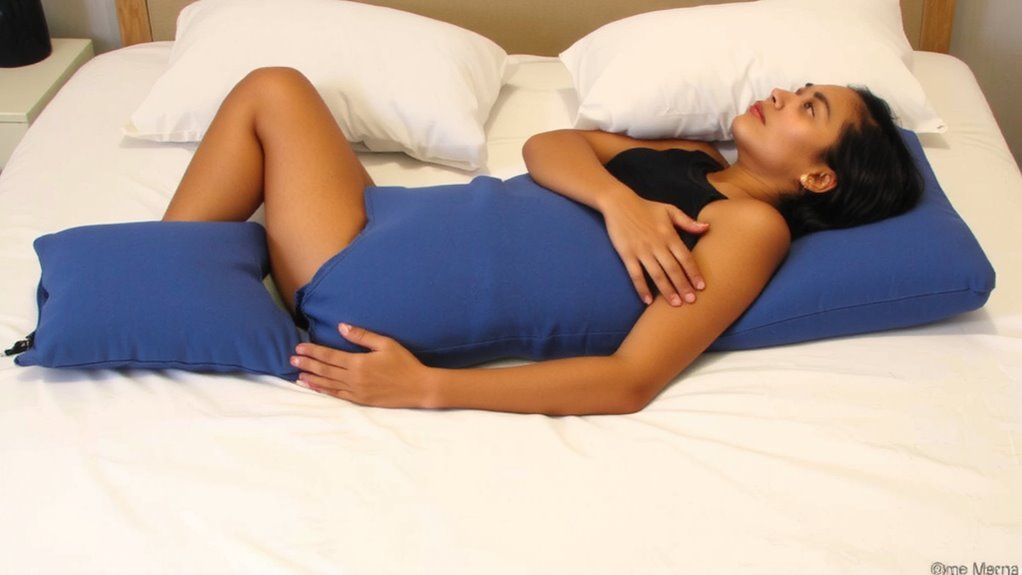
While a standard pillow between the knees can help, a body pillow offers more complete support by aligning your entire spine from head to hip. When you hug it, your shoulders stay open, and your pelvis doesn’t tilt downward, which promotes spinal symmetry throughout the night. This full-body support keeps your vertebrae stacked naturally, reducing strain on discs and soft tissues. As your posture improves, nerve decompression occurs, easing pressure on the sciatic nerve caused by misalignment. Many body pillows have contoured or ergonomic designs that adapt to your shape, enhancing comfort without excess firmness. Look for models with removable, washable covers and a medium-firm fill for long-term use. Most come with trial periods, so test one for at least a few weeks. It’s not a fix-all, but for side sleepers, it can make a real difference in rest quality and nerve comfort. A highly recommended option for achieving this level of support is the Best U-Shaped Body Pillows, designed specifically to cradle the body and maintain proper alignment.
Put a Pillow Between Your Knees: Why It Stops Sciatic Pain
If you’re a side sleeper dealing with sciatic discomfort, placing a pillow between your knees can make a meaningful difference by keeping your hips aligned and reducing strain on the lower back. The right knee support prevents your top leg from pulling your spine out of balance, which in turn improves pressure distribution across your pelvis and reduces nerve irritation. A firm yet compressible pillow works best-it maintains space between your knees without pushing your legs too far apart. Look for contoured or wedge-shaped designs that stay in place through the night. Some offer breathable fabrics or removable covers for easy care. Though not a cure, this simple change often helps ease nightly discomfort. Try it for a few nights to see if your pain lessens. Many brands even offer trial periods, so testing one risk-free makes sense.
Choose a Body Pillow That Stabilizes Hips and Lowers Back Strain
A well-designed body pillow can make a noticeable difference in how aligned your hips and spine stay throughout the night, especially if you’re prone to lower back strain. Look for one that offers firm yet conforming material to promote proper hip stabilization and back support. A pillow that’s too soft won’t hold your hips in place, while one that’s too firm might disrupt your natural curve. Full-length body pillows often work best-they support the entire length of your body, keeping your pelvis from rotating. Memory foam provides good structural support, but some prefer dual-density fills for a balance of comfort and stability. Consider removable covers for easy washing and check if the brand offers a trial period. Testing confirms the pillow truly reduces strain over time, helping you make a choice that supports healthier sleep without pressure points.
How Proper Alignment Overnight Heals Sciatic Nerve Irritation
Why do so many wake up with less sciatic pain after just a few nights of using the right body pillow? Because proper spinal alignment overnight reduces pressure on the sciatic nerve, giving your body a chance to heal. When your pelvis stays balanced and your hips remain supported, muscle relaxation occurs more deeply during sleep. This relaxed state improves circulation, which supports nerve regeneration over time. You’re not just resting-you’re actively creating conditions that help repair irritated tissues. Consistent alignment prevents the spine from twisting or sinking, which can worsen symptoms. Look for a body pillow with firm, resilient filling that maintains its shape throughout the night. Try models offering a trial period, so you can test support and comfort. With the right fit, your sleep position works with your body, not against it, allowing healing to begin where it matters most-during rest.
Why a Body Pillow Is Worth It for Long-Term Back Health
Though you might think of a body pillow as just a comfort item, it actually plays a key role in maintaining long-term back health by supporting proper spinal alignment night after night. When you hug or tuck it between your knees, it provides consistent spinal support, reducing strain on your lower back and hips. This encourages long term comfort by preventing the twisting and shifting that can misalign your spine over time. Many body pillows use memory foam or hybrid fills that balance softness and support, keeping your posture stable through the night. Models with removable, washable covers add convenience, while some brands offer trial periods so you can test firmness and length. Choosing the right size-whether full-length or contour-shaped-helps match your sleep position. With time, the right pillow doesn’t just improve sleep quality-it actively supports lasting spinal health.
On a final note
You’ll sleep better when your spine stays aligned, and a body pillow helps by supporting your hips and keeping your pelvis level. Placing it between your knees reduces pressure on the sciatic nerve, easing nighttime pain. Look for one with firm, responsive foam that maintains shape over time. Many offer trial periods, so you can test comfort risk-free. It’s a practical step toward healthier sleep posture and long-term back support.