Sleeping With One Leg Bent for Sciatica: Does It Help?
Sleeping with one leg bent helps ease sciatica by aligning your spine and reducing pressure on the nerve. When you bend one knee, it relaxes your lower back and opens space in the spine, which can lessen irritation. Try lying on your back or side with a pillow under your bent knee or between both knees for support. A medium-firm, supportive mattress and proper pillows enhance comfort and alignment. You might find this position reduces nighttime pain more effectively than flat sleep setups. There’s more to discover about optimizing your sleep environment for lasting relief.
Notable Insights
- Bending one leg reduces pressure on the sciatic nerve by improving spinal alignment during sleep.
- This position opens space in the lower spine, decreasing nerve irritation and promoting comfort.
- It encourages relaxation of tight glutes and hamstrings, which can aggravate sciatica when tense.
- Placing a pillow under the bent knee or between legs enhances spinal support and balance.
- Maintaining neutral spine alignment with one leg bent helps minimize nighttime pain perception.
Why Sciatica Hurts More at Night

Why does your sciatica seem to flare up the moment you lie down? Your body’s natural circadian rhythm slows movement and reduces distractions, making pain signals more noticeable. At night, hormonal fluctuations-like dropping cortisol levels-lessen the body’s ability to suppress inflammation, which can increase pressure on the sciatic nerve. Without daytime diversions, your brain focuses more on discomfort, amplifying the sensation. These biological shifts don’t mean your injury worsens at night, but rather your perception does. Choosing supportive mattresses or cushions may help manage pressure, while maintaining consistent sleep schedules supports circadian rhythm stability. Some find relief with over-the-counter anti-inflammatories taken in the evening, though consulting a doctor guarantees safe use. Sleep aids or white noise machines might improve rest quality by limiting disruptions. Trial periods on products allow evaluation of real-world performance without long-term commitment. A well-designed pillow can significantly reduce sciatic nerve compression, especially when tailored to support proper spinal alignment during sleep, making best pillows for sciatica a valuable consideration for nighttime pain management.
Try This Sleep Position for Sciatica Relief

How can you find a comfortable position when sciatica makes lying down painful? Start by adjusting your sleep posture to support natural nerve alignment. Lie on your back with one leg extended and the other bent at the knee, foot flat on the bed. This position reduces tension along the sciatic nerve pathway. Keep your spine neutral-use a pillow under the bent knee for added support if needed. The goal is balanced pressure, not complete elimination of discomfort, which can take time. Try this setup for several nights to assess improvement. A supportive mattress and breathable bedding enhance results. It’s not a guaranteed fix, but many report better rest with this alignment. Adjust slightly based on your comfort. Track changes in pain levels to decide if this sleep posture works for you. For added comfort, consider sleeping with a body pillow for sciatica to maintain proper spinal alignment throughout the night.
How Bending One Leg Eases Nerve Pressure
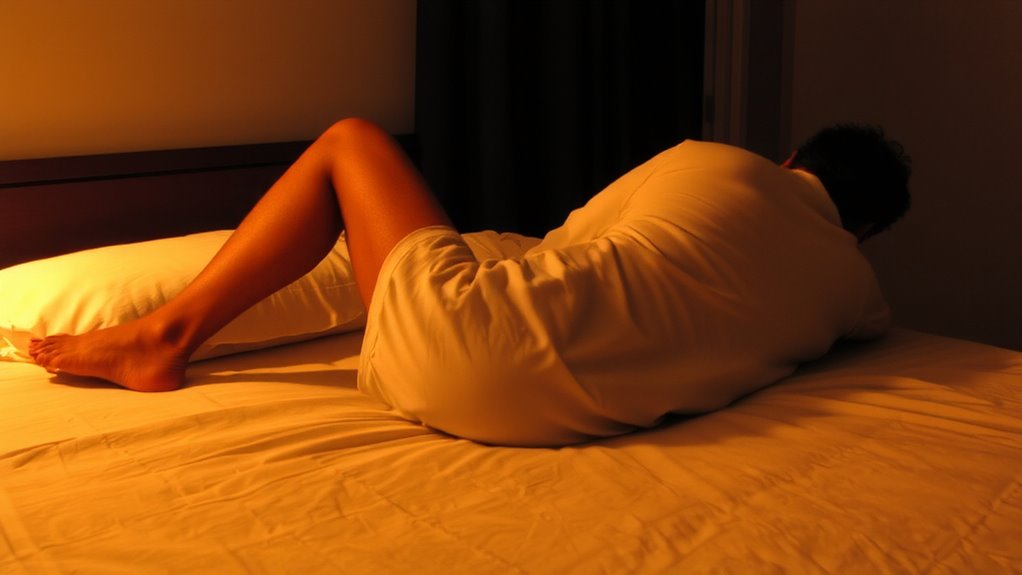
A subtle shift in leg position can make a meaningful difference when sciatica tightens its grip at night. Bending one leg while lying on your side helps improve nerve alignment and encourages muscle relaxation, reducing pressure on the sciatic nerve. This slight adjustment opens space in the lower spine, letting nerves move freely with less irritation. You don’t need special equipment-just a pillow between your knees for support can enhance the effect.
| Benefit | How It Helps | What to Try |
|---|---|---|
| Nerve alignment | Reduces pinching in the lower back | Keep hips stacked, bend top leg |
| Muscle relaxation | Loosens tight glutes and hamstrings | Use a pillow for knee support |
| Even weight distribution | Lessens spinal compression | Adjust pillow thickness as needed |
| Improved sleep posture | Supports natural spine curve | Test for comfort over several nights |
Avoid These Common Sleeping Mistakes
You might not realize how small habits in bed are making your sciatica worse at night. A poor sleep environment can increase pressure on the sciatic nerve, especially if your mattress quality doesn’t support spinal alignment. Sleeping flat on your back with both legs straight may strain your lower back, negating the relief the bent-leg position offers. Avoid overly soft or sagging mattresses-they don’t stabilize your spine and hips. Instead, choose a medium-firm option tested for support and comfort over time. A cooling mattress can also help regulate body temperature throughout the night, enhancing sleep quality for those with chronic pain. Consider models rated among the top cooling mattresses for optimal comfort and support. Don’t ignore how pillow placement affects posture, even if you’re not ready to address pillows yet. Guarantee your sleeping area is quiet, cool, and dark, limiting disruptions. Trial periods on new mattresses let you test long-term comfort. Consider warranty length and construction materials when comparing models. Small adjustments to your sleep setup can make a meaningful difference in nighttime symptom relief.
Best Pillows for the Bent-Leg Position
Now that you’ve considered how your mattress and sleep habits affect sciatica, it’s time to focus on support where it really counts-the legs and lower back. A pillow for your bent leg can make a big difference. Look for one with memory foam, since it molds to your shape and maintains support through the night. A contour design helps cradle the space between your legs and aligns your hips and spine. These pillows often stay in place and resist flattening. Some brands offer cooling gels in the memory foam, which can help if you tend to overheat. Check for removable, washable covers for easy care. Many come with trial periods, so you can test comfort without risk. Choose a size that matches your height and sleeping position. A well-chosen pillow supports natural alignment and reduces pressure on the sciatic nerve.
When to See a Doctor for Nighttime Sciatica
Why does your leg pain linger at night, even with the right pillow and sleep setup? If your nighttime pain persists or worsens over several weeks, it might be time to seek a medical evaluation. You should consider seeing a doctor when you notice numbness, tingling, or weakness spreading down your leg, especially if it affects your ability to walk or move comfortably. Nighttime pain that disrupts sleep regularly-despite trying position changes, supportive pillows, or over-the-counter remedies-can signal underlying nerve compression needing professional attention. A doctor can assess whether your sciatica stems from a disc issue, spinal stenosis, or another condition. They might recommend imaging tests, physical therapy, or targeted treatments. Early medical evaluation helps prevent long-term discomfort and guides you toward effective, personalized relief strategies. Don’t wait if symptoms interfere with daily life.
On a final note
You might find relief by sleeping with one leg bent, as it reduces tension on the sciatic nerve and supports spinal alignment. Use a pillow between your knees to maintain the position comfortably through the night. This setup eases pressure without restricting movement. Try it for several nights to see if pain improves. If symptoms persist or worsen, consult a doctor to explore other treatments or rule out serious conditions.