Using Metacognitive Awareness to Address Sleep Monitoring Habits
You’re likely increasing sleep anxiety by over-monitoring your rest, since constantly checking data keeps your mind active when it should wind down. Using metacognitive awareness helps you notice these patterns without reacting. You can then shift focus from scores to how you feel-energy, mood, focus-through consistent bedtimes, dim lights, and device-free mornings. Many trackers offer trial periods, so test whether they help or harm. There’s more to gain by trusting your body’s signals over numbers.
Notable Insights
- Recognize that sleep tracking often amplifies anxiety by shifting focus from how you feel to numerical data.
- Use metacognitive awareness to observe compulsive thoughts about sleep metrics without reacting to them.
- Understand that natural sleep varies nightly, and tracker data does not define true rest quality.
- Challenge the belief that sleep must be optimized, accepting that uncertainty is part of the process.
- Redirect attention from post-sleep score checking to daytime energy, mood, and functional well-being.
Why Overthinking Your Sleep Backfires
Why do you lie awake worrying about falling asleep, only to feel more alert? That loop is classic sleep anxiety-your mind races about not sleeping, which fuels mental fatigue and keeps you awake. When you overanalyze your ability to rest, you trigger arousal, making it harder to shift into sleep naturally. This pattern isn’t just frustrating; it disrupts your body’s sleep-wake cycle over time. Instead of fixating on perfect sleep, consider shifting focus to consistent wind-down routines and relaxation techniques. Tools like breathing exercises or cognitive strategies can reduce intrusive thoughts. Some explore sleep aids, but check with a professional first-many options work short-term yet don’t address root causes. Performance varies by person, so trial periods and medical guidance matter. Addressing overthinking helps you make informed choices without worsening mental fatigue or reinforcing sleep anxiety.
Why Your Sleep Tracker Might Be Ruining Your Rest
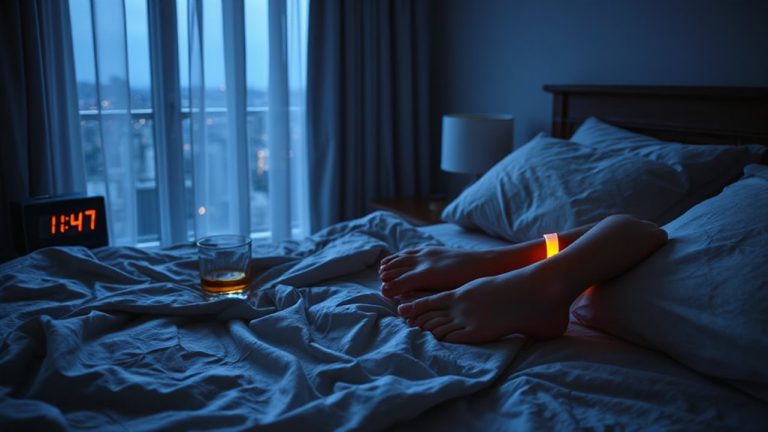
Could your nightly routine of checking sleep data be doing more harm than good? Many people develop sleep anxiety from obsessing over metrics like REM cycles or wake time, even when they feel rested. This data fixation can distort your perception of sleep quality, making you question natural variations in rest. Instead of trusting how you feel, you might start chasing perfect scores, leading to frustration or dependency on devices. Sleep trackers aren’t medical tools-they estimate patterns using motion and heart rate, but they can’t diagnose disorders. Relying too much on their feedback may worsen rest by increasing nighttime stress. Consider using trackers occasionally, not nightly. If sleep problems persist, consult a professional rather than adjusting habits based solely on app data. Balancing tech use with self-awareness supports healthier, more informed choices.
Are You Addicted to Your Sleep Data?
Isn’t it curious how often you check your phone each morning-for weather, messages, or that sleep score glowing at the top of your screen? You might not realize how quickly this habit fuels sleep anxiety, especially when low scores trigger stress before your day even starts. Over time, this data dependency can distort your natural sense of rest, making you doubt how you feel based on numbers alone. Relying heavily on metrics may lead you to overlook actual signs of restfulness or fatigue. While sleep trackers offer insights, their accuracy varies by device model, sensor placement, and algorithm design. Some include trial periods or warranties, allowing you to test usefulness without long-term commitment. Consider how often you let data override your body’s signals. Recognizing this pattern is a practical step toward balanced use and better-informed decisions about sleep aids or behavior changes.
How to Break the Obsession With Sleep Data
How often do you reach for your phone before even getting out of bed, drawn to that nightly sleep score like it’s a verdict? That habit can fuel anxiety, not insight. To break the obsession, start with a digital detox-leave your tracker off or out of reach for a few mornings each week. You’ll notice how often you rely on data instead of how you actually feel. Practice mindful acceptance by acknowledging sleep fluctuations without judgment. Sleep isn’t a perfect score; it’s a natural process with variation. Try focusing on energy, mood, and focus during the day instead of overnight metrics. If you use sleep aids or suspect a disorder, consult a professional-data can support, not replace, clinical evaluation. Short-term tracking may help identify patterns, but long-term dependence can distort perception. Let go of the numbers, tune into your body, and use tools wisely-only when they help, not when they control.
How to Use Sleep Data Without Stress
While tracking your sleep can offer useful insights, it’s important to keep the data in perspective so it doesn’t become a source of stress. You don’t need perfect numbers to know if you’re well-rested-how you feel during the day matters most. Use the data to spot patterns, not to obsess over slight variations. Focus instead on consistent sleep hygiene, like going to bed at the same time and limiting screen use before bed. Pair this with relaxation techniques such as deep breathing or progressive muscle relaxation to support natural sleep. Remember, the goal isn’t flawless data but restful nights. Occasional disruptions are normal. If problems persist, consider speaking with a healthcare provider to discuss underlying sleep disorders. Sleep aids or tools may help, but they work best alongside healthy habits, not in place of them.
Replace Tracking With These Real Sleep Habits
What if the best way to improve your sleep doesn’t come from a screen or a device at all? You might find more rest through simple, consistent sleep rituals than endless tracking. Instead of relying on data, build bedtime routines that signal your body it’s time to wind down-like dimming lights, reading, or gentle stretching. These habits shape your sleep environment and mindset without pressure. Unlike sleep aids, which can vary in effectiveness, strong routines support natural cycles. Consider how wearable trackers affect your anxiety; if they cause stress, replacing them with mindful practices could help. You don’t need a perfect night-just steady patterns. Trial a tech-free routine for two weeks and note changes in how easily you fall asleep or feel in the morning. Most people see improvements without complex tools. Real sleep support often comes not from monitoring, but from the quiet consistency of what you do each night. Choose warm, soft lighting such as best color light bulbs to enhance relaxation in your bedroom.
On a final note
You might rely on sleep data to feel in control, but constant monitoring can heighten anxiety and disrupt rest. Instead of fixating on numbers, focus on consistent bedtimes, relaxing routines, and daylight exposure. If sleep problems persist, consult a professional to explore underlying causes. Sleep aids or trackers can help short-term, but they’re not replacements for healthy habits or medical care. Choose tools with clear trial periods and proven accuracy to test what truly works for you.