How to Use Temperature Regulation in the Bedroom to Enhance Deep Sleep and Muscle Repair
Set your bedroom to 60–67°F to support deep sleep and muscle repair, as cooler temps match your body’s natural cooldown. Use breathable cotton or linen bedding and moisture-wicking sleepwear to maintain comfort. A cool shower 60–90 minutes before bed helps lower core temperature, easing you into rest. Smart thermostats or climate-controlled pads offer precise control, with some models providing usage insights via apps. Many quality bedding options include trial periods, so you can test what works best for you.
Notable Insights
- Maintain bedroom temperature between 60–67°F (15.5–19.5°C) to support deep sleep and natural body cooling.
- Keep humidity levels between 40–60% to enhance respiratory comfort and reduce nighttime awakenings.
- Use breathable, moisture-wicking bedding and sleepwear made from natural fibers like cotton or bamboo.
- Take a cool shower 60–90 minutes before bed to lower core temperature and promote melatonin release.
- Utilize smart thermostats or cooling mattress pads to regulate sleep environment and align with circadian rhythms.
Set the Best Sleep Temperature for Deep Recovery
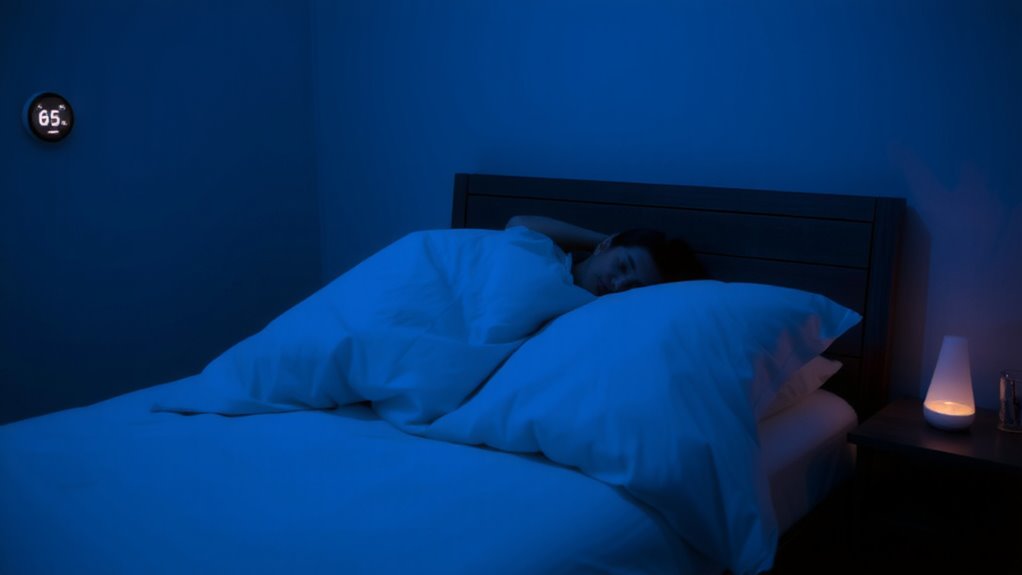
The ideal sleep temperature for deep recovery usually falls between 60 and 67 degrees Fahrenheit, a range supported by research showing it helps your body cool down naturally, a process critical for entering restorative sleep stages. You’ll want to aim for this sweet spot, especially if you struggle with falling or staying asleep. Pairing this range with ideal humidity-around 40–60%-can improve respiratory comfort and reduce nighttime awakenings. Achieving consistent body cooling isn’t just about the thermostat; breathable bedding and moisture-wicking pajamas contribute, too. Consider a fan, cool mist humidifier, or temperature-regulating mattress pad as practical aids. These tools offer adjustable settings and often come with warranties, letting you test what works without risk. While individual needs vary, starting within this range supports sound sleep decisions-especially when addressing common sleep disorders. Small, evidence-backed adjustments make a measurable difference. For quiet airflow that maintains this optimal environment, consider a best tower fan for quiet sleep comfort.
Why Cool Bedrooms Boost Muscle Repair and Sleep Quality
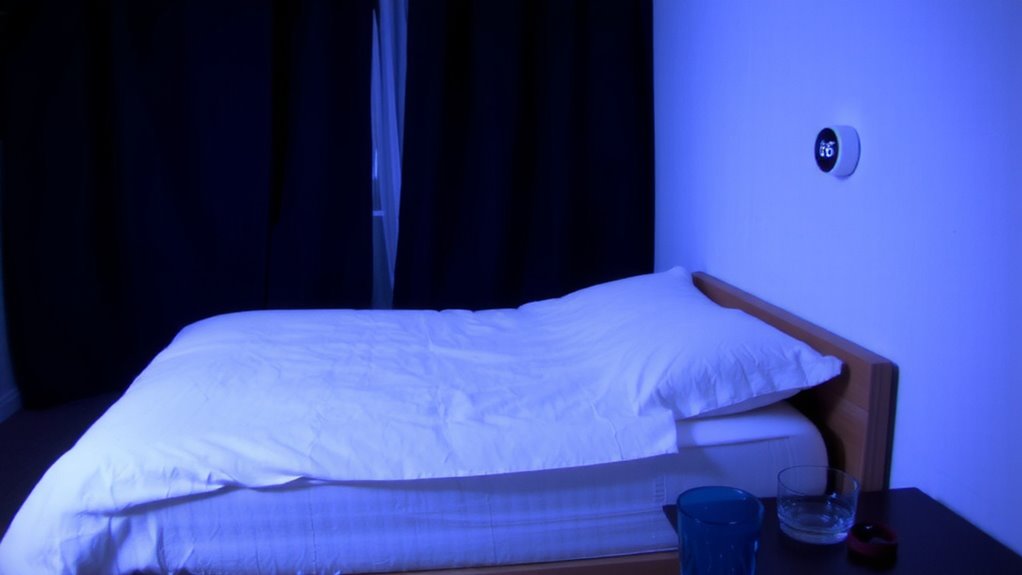
When your body drops its core temperature during sleep, it triggers a cascade of restorative processes that support both deeper sleep and more efficient muscle repair. A cooler bedroom helps maintain this ideal state, improving sleep efficiency by reducing nighttime awakenings and supporting longer periods of deep, restorative sleep. During these deep stages, your body releases growth hormone, which aids in muscle recovery after exercise or strain. Cool environments also reduce inflammation and speed up tissue repair, meaning you wake up feeling more refreshed and less sore. You don’t need extreme cold-just a steady 60–67°F (15.5–19.5°C). This range aligns with your body’s natural thermal rhythm, promoting smoother shifts between sleep cycles. For those using sleep aids or managing mild sleep disorders, temperature control offers a non-pharmacological way to enhance results. It’s a simple, evidence-based adjustment with noticeable benefits for recovery and rest. Pairing this practice with effective non-melatonin sleep aids can further support restful sleep without relying on hormonal supplements.
Choose Breathable Bedding for Cooler, Better Sleep
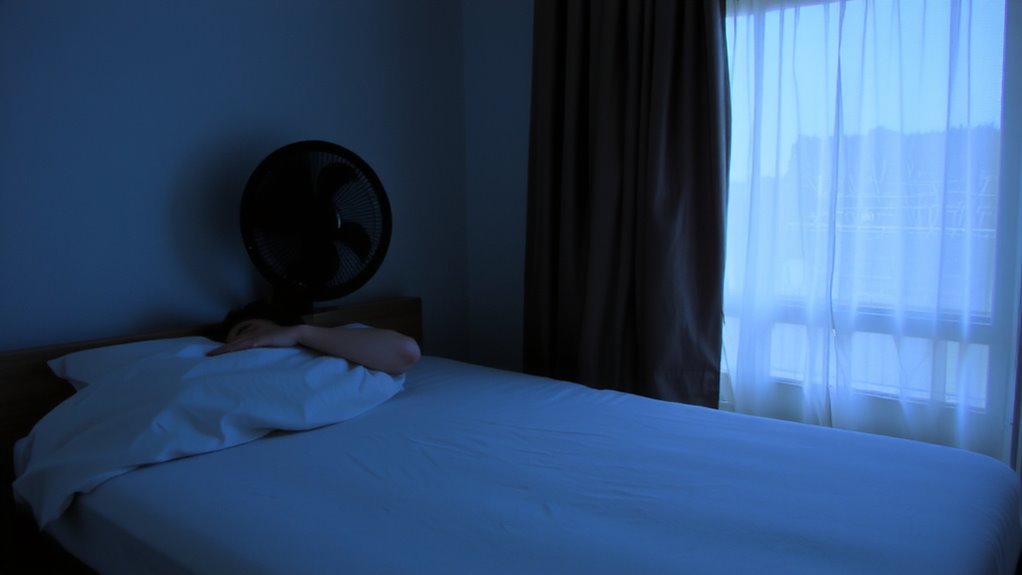
Many sleepers overlook how much their sheets and blankets impact nighttime temperature, but choosing breathable bedding can make a real difference in staying cool and sleeping soundly. Opt for materials made from natural fibers like cotton, linen, or bamboo, which allow air to circulate and help regulate your body heat. These fabrics are naturally moisture wicking, meaning they pull sweat away from your skin, keeping you dry and comfortable all night. Moisture wicking is especially helpful if you tend to sleep hot or wake up sweaty. Lightweight weaves, such as percale or jersey, enhance breathability without sacrificing softness. Some brands offer trial periods or warranties, so you can test comfort before fully committing. Swapping to breathable bedding is a simple step toward cooler, more restful sleep. For targeted solutions, consider the best breathable blankets based on performance and user feedback. When shopping, check product details for fiber content and weave type-small details that affect performance.
Take a Cool Shower Before Bed to Trigger Sleep
You might already be managing your sleep environment with breathable bedding, but adjusting your body temperature directly can further improve rest. Taking a cool shower about 60 to 90 minutes before bed supports natural body cooling, which helps signal sleep onset. This drop in core temperature aligns with your circadian rhythm, enhancing melatonin release and preparing your body for deeper sleep. Unlike hot showers, which can raise internal heat, a cooler one promotes thermal balance without shocking your system. Aim for water between 60–70°F (15–21°C) and limit time to 5–10 minutes. This simple habit requires no special equipment but fits easily into most routines. For those with mild sleep onset issues, it’s a non-invasive method that supports rest without relying on sleep aids.
Use Smart Tech to Control Bedroom Temperature
A smart thermostat or climate-controlled mattress pad can make a noticeable difference in maintaining the ideal sleep environment throughout the night. Smart thermostats let you set schedules, so your bedroom cools down just before bedtime and stays steady. Some models learn your habits and adjust automatically using climate tracking, improving comfort over time. Temperature-sensitive mattress pads work directly with your body, adding another layer of control. These devices often connect to apps, giving you data on sleep patterns and room conditions. Most come with trial periods and warranties, so testing them carries little risk. While setup varies, many integrate easily with existing systems. They’re especially helpful if you struggle with restless sleep or night sweats. Using smart tech doesn’t guarantee deeper sleep, but it provides precise control and useful feedback. If temperature disrupts your rest, these tools offer practical ways to monitor and adjust your environment.
Adjust Your Bedroom Temperature for Winter and Summer
Why does your bedroom feel too hot in summer or too cold in winter, even when you’ve set the thermostat? Outside temperatures and your room’s design affect how well heat stays in or escapes. In winter, poor winter insulation lets warmth slip away, making your body work harder to stay warm, which can disrupt deep sleep. Boosting insulation with heavy curtains or draft stoppers helps maintain a steady, cool-warm balance ideal for muscle repair. During summer, lack of summer ventilation traps hot air, raising your core temperature. Opening windows at night, using ceiling fans, or installing breathable bedding supports airflow. You don’t need extreme cold-just enough cooling to match your body’s natural drop in temperature. Adjusting seasonally supports consistent sleep cycles. Test small changes, like layering sheets in winter or removing them in summer, to find what works for your comfort and recovery needs.
Stop Night Sweats and Overheating With These Fixes
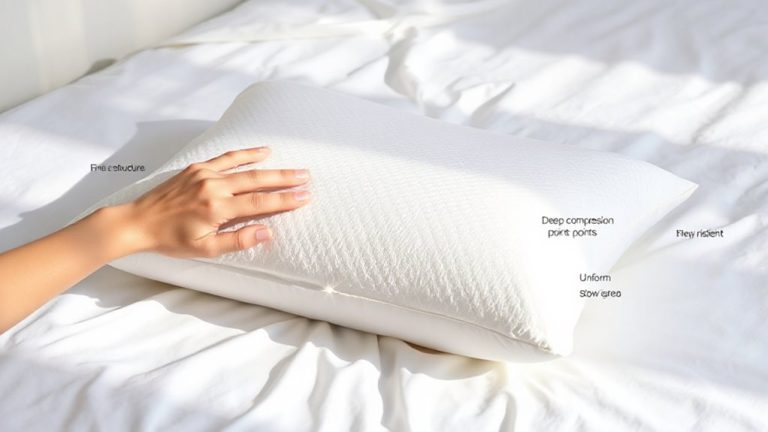
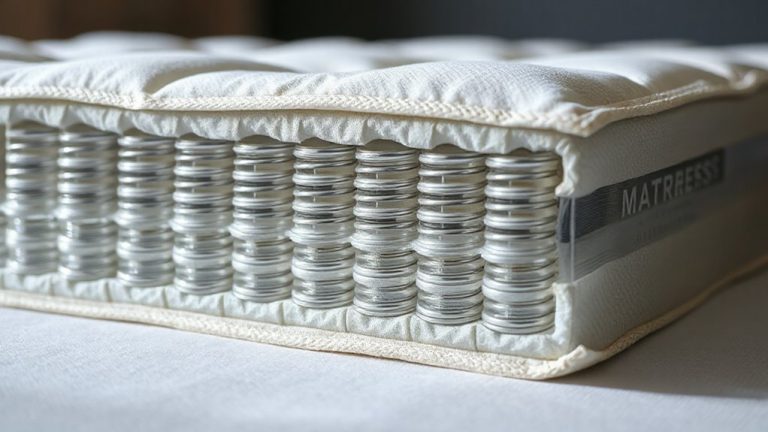
What if the real culprit behind your restless nights isn’t stress or screen time, but your body fighting to cool down? Night sweats and overheating disrupt deep sleep and limit muscle repair. To reduce heat retention, switch to breathable bedding like cotton or moisture-wicking fabrics. They help move sweat away and improve airflow. Your mattress might also trap heat-consider ones with gel infusions or open-cell foam for better temperature management. Control bedroom humidity levels between 30% and 50% using a dehumidifier or AC unit; proper humidity control prevents muggy air that worsens night sweats. Try a cooling pillow or a bedside fan for extra relief. Some sleep trackers now monitor skin temperature, helping you adjust conditions. Many cooling products come with trial periods, so test them risk-free. Small changes in heat and moisture management can meaningfully improve sleep quality over time.
On a final note
You’ll sleep deeper and recover better when your bedroom stays cool, ideally between 60–67°F. A lower temperature supports muscle repair and steady sleep cycles. Use breathable bedding, take a cool shower before bed, and adjust settings seasonally. Smart thermostats help maintain consistency. If you overheat, try moisture-wicking fabrics or a fan. Test small changes first-most fixes are low-cost and reversible, letting you find what works without long commitments or risk.