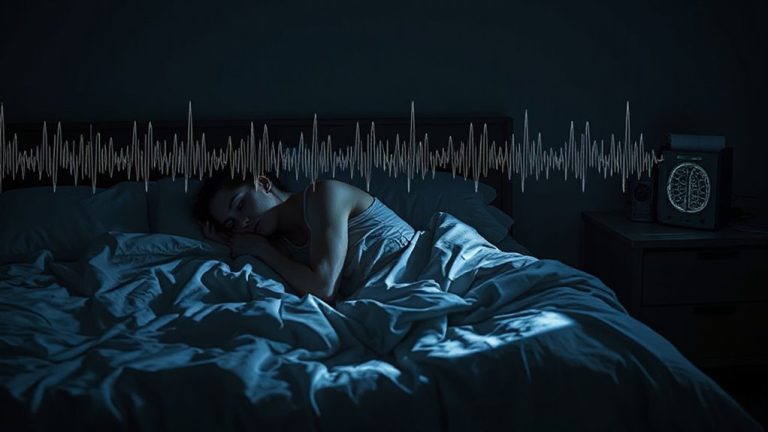
Assessing Sleep Talking Episodes as Potential Signs of Parasomnia-Linked Muscular Hyperactivity
You might talk in your sleep from time to time, and that’s usually harmless. But if it happens often, comes with movements, or includes clear dream speech, it could signal a parasomnia with abnormal muscle activity. Jaw or facial twitching during episodes may reflect deeper neurological activation. Conditions like sleepwalking or REM behavior disorder often show similar patterns. A sleep study can detect muscle hyperactivity and clarify the cause. You’ll want to track triggers like stress or poor sleep. There’s more to uncover about your nightly patterns.
Notable Insights
- Sleep talking can indicate parasomnia when associated with abnormal muscle activity during partial arousals from deep sleep.
- Frequent or intense sleep talking may reflect underlying parasomnias like sleepwalking or REM sleep behavior disorder.
- Muscle twitching in the jaw, lips, or tongue during episodes suggests localized motor activation linked to parasomnia.
- Polysomnography with electromyography can detect parasomnia-related muscular hyperactivity during sleep talking episodes.
- Concomitant behaviors like sleep eating or vocal mimicry may signal complex parasomnias requiring clinical evaluation.
What Is Sleep Talking: and When Should You Be Concerned?
Ever woken up wondering if you said something in your sleep? Sleep talking, or somniloquy, happens when you speak during sleep without realizing it. It can occur in any sleep stage, with dream content sometimes influencing what you say. Your voice volume might range from a whisper to loud speech, affecting how noticeable it is. Most episodes are brief and harmless, often triggered by stress, fatigue, or fever. Sleep talking usually isn’t a concern unless it disrupts your sleep or your partner’s. If frequent, it may relate to other sleep issues, though not always serious. Consider tracking episodes, sleep patterns, and potential triggers. Simple fixes like better sleep hygiene or stress management often help. For persistent cases, consult a specialist to assess underlying causes. Recording audio during sleep can provide useful details about voice volume and speech frequency.
Could Sleep Talking Signal a Parasomnia Disorder?
Sleep talking usually passes without harm, but in some cases, it can be a sign of a broader parasomnia disorder. If you frequently talk in your sleep, especially with detailed dream enunciation or unusual vocal mimicry, it may point to underlying sleep disruptions. These episodes often occur during partial arousals from deep sleep and can link to other parasomnias like sleepwalking or REM sleep behavior disorder. You’re more likely to see patterns if episodes happen regularly or involve emotional content, aggressive tone, or confused speech. While isolated incidents rarely need treatment, consistent symptoms warrant evaluation. Consider tracking episodes or recording sleep to share with a specialist. Polysomnography can help confirm if muscular hyperactivity or other parasomnia features are present, guiding whether lifestyle changes, sleep aids, or medical follow-up are best.
Facial and Jaw Muscle Activity During Sleep Talking
While you might not realize it, the words you speak during sleep often rely on coordinated facial and jaw muscle activity, even if the speech is mumbled or brief. Muscle twitching in these areas can accompany speech, suggesting localized motor engagement. This activity isn’t random-it stems from brief bursts of neural activation in brain regions tied to speech and motor control, which can occur even while you’re deeply asleep. These neural signals trigger your jaw, lips, and tongue to move, sometimes producing intelligible words or sounds. Researchers observe this activity using electromyography, detecting small but consistent changes. Understanding this helps clarify whether sleep talking is isolated or part of broader muscular hyperactivity. Monitoring such patterns can guide decisions about sleep evaluation or potential use of diagnostic tools. It doesn’t always point to disorder, but it’s worth noting if episodes are frequent or intense.
Common Conditions Behind Sleep Talking and Movement
Facial and jaw movements during sleep talking often signal more than just isolated muscle activity-they can be clues to underlying conditions that affect your sleep quality. You might be experiencing parasomnias, which include disorders like sleep eating, where you prepare and consume food while still asleep, often with no memory afterward. These episodes usually happen during partial arousals from deep sleep and can involve complex motor behaviors. Nocturnal seizures are another possible cause, producing rhythmic muscle movements or vocalizations during sleep that mimic or accompany talking. Unlike typical dreams, these events arise from abnormal electrical activity in the brain. Conditions like these disrupt sleep continuity and may increase injury risk. While occasional sleep talking is common, frequent movement or complex behaviors during sleep suggest an underlying issue. Identifying patterns helps determine whether lifestyle changes, monitoring, or further evaluation is needed to support better rest and long-term sleep health.
When Should You See a Doctor for Sleep Talking?
If you’re noticing that your sleep talking happens often or comes with unusual movements, it might be time to contemplate a visit to the doctor. Frequent episodes, especially when tied to daytime fatigue, could point to an underlying sleep disorder. You may not realize how disrupted your rest is until it affects your energy, focus, or mood during the day. Emotional triggers like stress or anxiety can worsen episodes, making them more intense or frequent. While occasional sleep talking is normal, persistent patterns warrant evaluation. A doctor can help determine whether parasomnia or another condition is contributing. Tracking your sleep habits, noting any movements or vocalizations, and identifying possible triggers can support a more accurate assessment. Early consultation helps rule out complications and guides you toward better sleep health without unnecessary worry.
Diagnosing and Treating Sleep Talking Disorders
How do doctors figure out what’s really going on when sleep talking becomes more than just the occasional midnight mumble? They start by reviewing your sleep history and may suggest a sleep study to check for parasomnia-linked muscular hyperactivity or other disorders. You’ll often be asked about stress triggers, since anxiety and emotional strain can worsen episodes. Improving sleep hygiene-like sticking to a regular bedtime, reducing screen time before bed, and creating a calm sleep environment-usually helps. Doctors don’t typically treat sleep talking directly unless it disrupts your rest or signals a deeper issue. In some cases, counseling or relaxation techniques are recommended if stress triggers are present. Medication is rare and only considered for severe parasomnias. A trial of consistent sleep hygiene adjustments is usually the first, most effective step.
On a final note
You might talk in your sleep without serious issues, but frequent episodes could signal underlying parasomnias linked to muscle activity. If sleep talking pairs with jaw clenching, confusion, or fatigue, consider a sleep study to assess for disorders like REM sleep behavior or sleep apnea. Treatments range from stress reduction to mouthguards or CPAP, depending on cause. Most cases need no intervention, but evaluation helps rule out risks and guides safer, more restful nights.