How Innerspring Mattress Covers Affect Moisture Wicking
Your innerspring mattress cover affects how well moisture wicks away from your body, since breathable fabrics like cotton or bamboo blends help move sweat and heat out of the bed. Tightly woven synthetics may trap moisture, while looser knits or mesh zones boost airflow. Moisture-wicking covers with treated fibers dry faster and resist odors. If you wake up damp or notice stiffness in the fabric, it’s likely not working well. Many quality covers come with trial periods, so you can test performance-find out what features might work best for your sleep.
Notable Insights
- Innerspring mattress covers with breathable fabrics enhance moisture wicking by allowing sweat to evaporate efficiently.
- Covers using natural fibers like cotton or bamboo improve breathability and moisture absorption compared to synthetic materials.
- Poorly designed covers with tight weaves can trap heat and moisture, reducing wicking performance on innerspring mattresses.
- Moisture-wicking technology in covers, such as treated fibers or 3D knits, helps move sweat away from the body.
- Over time, inadequate moisture management in covers can lead to dampness, odors, and mold in the innerspring unit.
Why Mattress Covers Matter for Staying Dry
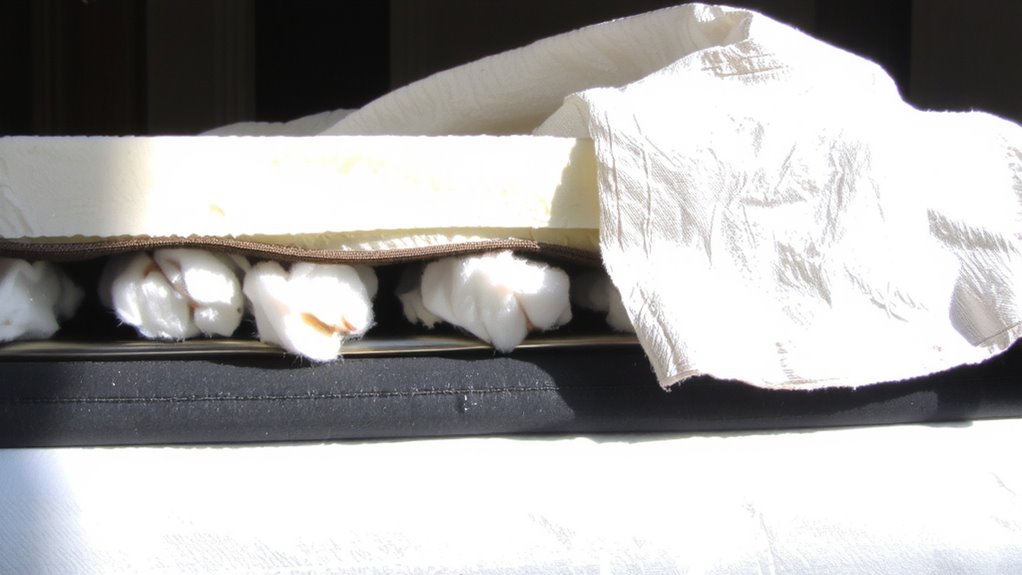
Even though your mattress might seem like a static part of your bedroom, what happens on its surface each night can greatly affect your comfort and sleep quality-especially when it comes to moisture buildup. You release sweat while you sleep, and without proper protection, that moisture sinks in, fostering bacteria and odors. A good mattress cover helps by managing heat retention and wicking moisture away. Breathable fabrics reduce overheating, which is essential if you tend to sleep hot or have night sweats. Fabric durability guarantees the cover holds up over time, maintaining its wicking ability after repeated use. Covers made with reinforced, high-quality fibers resist pilling and tearing, offering longer performance. Many come with trial periods and warranties, so you can test comfort and effectiveness. Choosing a cover that balances breathability, heat retention control, and fabric durability supports better sleep hygiene and overall mattress longevity.
How Mattress Covers Help You Stay Dry
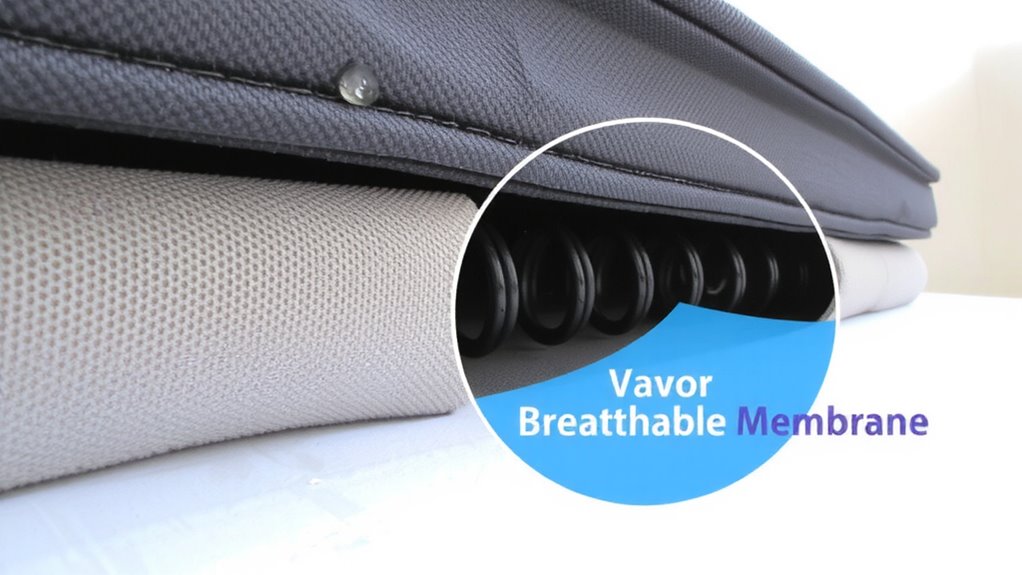
You already know a good mattress cover protects against spills and wear, but it also plays a key role in keeping you dry through the night. Modern covers use cooling technology to move heat and moisture away from your body. How well they do this depends on fabric thickness and construction. Thinner fabrics often breathe better, but may lack durability. Thicker ones can feel plush but might trap heat if not designed well. Many innerspring covers now include moisture-wicking fibers that pull sweat away before it builds up.
| Feature | Benefit |
|---|---|
| Cooling technology | Reduces heat retention |
| Moisture-wicking fabric | Helps manage sweat |
| Thin fabric | Enhances airflow |
| Medium fabric thickness | Balances comfort and breathability |
| Treated fibers | Boosts drying performance |
Breathability of Common Innerspring Cover Fabrics
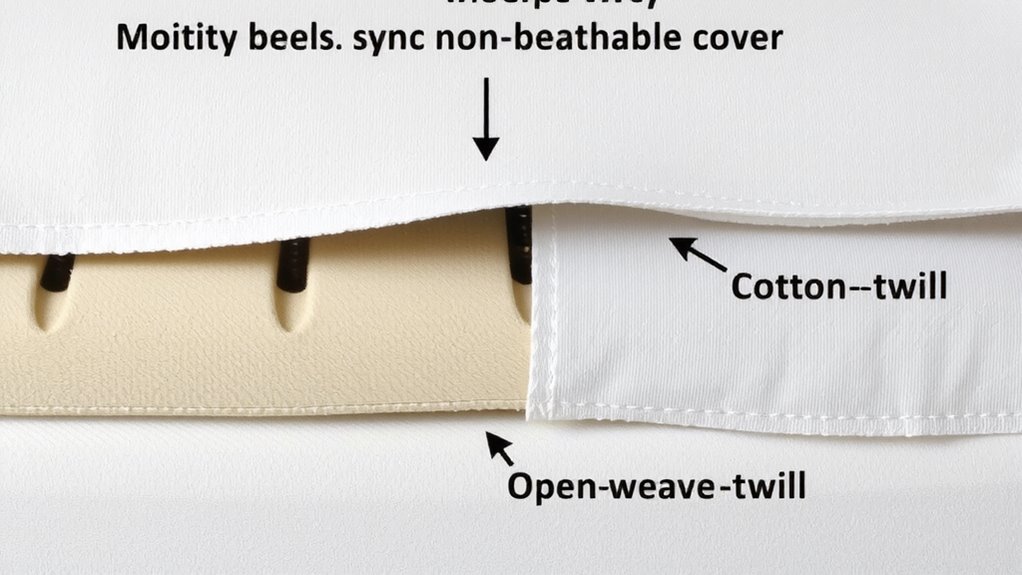
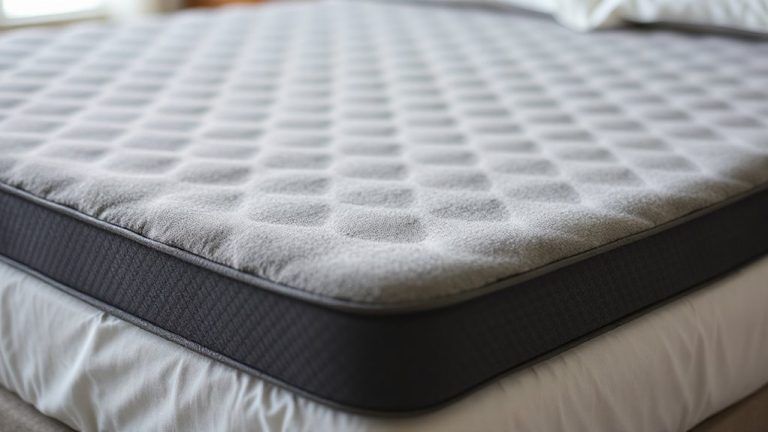
Comfort starts with airflow, and the fabric cover on your innerspring mattress plays a bigger role than you might think. You’ll often find cotton blends used because they offer softness and modest breathability. These blends mix natural fibers with synthetics to balance durability and comfort. The way fabric weaves are constructed also impacts how well air moves through the cover. Looser weaves, like knits or mesh panels, allow more circulation, helping heat escape while tighter weaves may trap warmth. Some covers use breathable zones sewn into areas where your body generates more heat. While not all covers highlight their weave type, checking product specs can reveal whether airflow features are built in. Many brands include trial periods, so you can test how the fabric feels over time. Look for details on construction and materials when comparing options.
Synthetic vs. Natural: Which Wicks Sweat Better?
How well a mattress cover handles sweat can make a real difference in how cool and dry you feel through the night. When comparing synthetic and natural fibers, the fiber composition plays a key role in moisture wicking. Natural fibers like cotton or bamboo tend to absorb moisture better and allow more breathability, helping regulate temperature. Synthetics, such as polyester, often trap heat unless specially engineered. A lower thread count in natural fabrics can improve airflow, while high thread count synthetics might reduce wicking. Still, some modern blends combine the durability of synthetics with improved moisture management. It’s worth checking whether the cover is removable or washable, as maintenance affects long-term performance. Look for trial periods or warranties that let you test comfort over time. Choosing the right balance of fiber composition and thread count supports better sleep hygiene, especially if night sweats or overheating are concerns.
Signs Your Mattress Cover Isn’t Wicking Moisture
Why does your mattress feel damp when you wake up? It could mean your cover isn’t wicking moisture like it should. If you notice a musty smell or see dark spots, that’s a sign of mold growth, especially near seams or corners. Moisture trapped in the fabric encourages this, which isn’t just unpleasant-it could worsen allergies or disrupt sleep quality. Another clue is fabric stiffness; over time, repeated exposure to sweat without proper evaporation can make the material feel stiff or rough. You might also wake up overheated or sticky, even in cool rooms. These issues suggest the cover isn’t allowing enough breathability. While innerspring coils help with airflow, a poorly performing cover can still hinder moisture management. Check if your mattress offers a trial period, so you can test comfort and moisture control. Look for warranties covering material breakdown linked to humidity damage.
Smart Fabrics That Boost Airflow
Ever wonder what makes some mattress covers feel cooler through the night? Smart fabrics play a big role by boosting airflow and managing heat. These textiles often use phase change materials to absorb excess warmth when your body heats up and release it when you cool down. Integrated moisture sensors track humidity levels near your skin, adjusting breathability in real time. That means better airflow where you need it most. Many models also include washable, hypoallergenic covers designed for long-term comfort. Below is a comparison of key smart fabric features.
| Feature | Function | Benefit |
|---|---|---|
| Phase change materials | Regulate temperature | Stabilize sleep microclimate |
| Moisture sensors | Detect sweat | Prompt airflow adjustments |
| 3D knit structure | Elevate fabric from surface | Enhance air circulation |
| Antimicrobial finish | Resist odor-causing microbes | Extend freshness |
| Stretch recovery | Maintain fabric fit | Sustain performance over time |
Look for trial periods and warranties that let you test these features risk-free.
Features of a Moisture-Wicking Mattress Cover
Where does moisture go when you sleep? It gets pulled away from your body by a moisture-wicking mattress cover designed to keep your innerspring mattress dry. You’ll stay cooler thanks to smart fabric layers that support temperature regulation by moving sweat to the surface where it can evaporate. These covers often use breathable knits or mesh panels to boost airflow and prevent stuffiness. Many also include treatments or natural fibers that offer odor control, reducing bacteria that cause smells over time. Look for covers with hypoallergenic properties if you have sensitivities. Zipped encasements are easy to remove and wash, maintaining performance. Most quality options come with a trial period or warranty, so you can test comfort and durability. Choose one that balances breathability, protection, and ease of care to support better sleep without overheating. For added protection against allergens, consider covers with best hypoallergenic mattress covers features.
On a final note
You’ll sleep cooler when your innerspring mattress cover wicks moisture effectively. Look for breathable, natural fabrics like cotton or Tencel, which move sweat away better than most synthetics. A well-constructed cover with moisture-wicking properties improves airflow and comfort, especially if you tend to overheat. Check for removable, washable designs and consider trial periods or warranties to test performance. These features help you make informed choices without risk.