The Role of Heart Rate Variability Training in Improving Sleep Onset
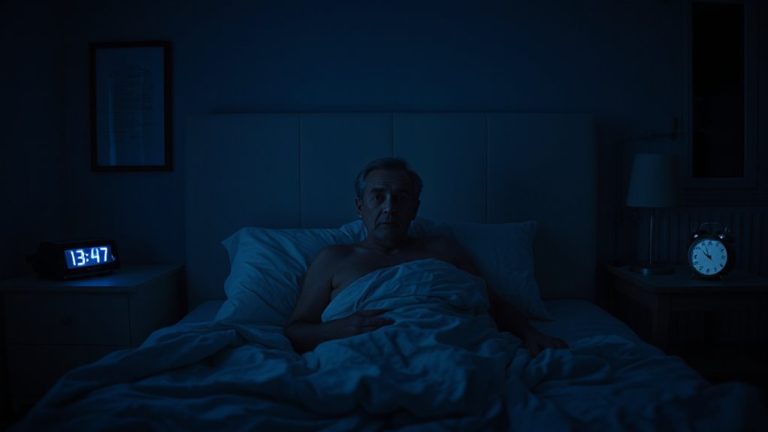
You can fall asleep faster by training your heart rate variability (HRV) to signal relaxation. Stress lowers HRV, making it harder to wind down, but paced breathing at 5–6 breaths per minute boosts it gently. Wearable biofeedback devices track progress and help adjust your routine using real-time data, often with 1–2 year warranties for reliable use. Adding mindfulness before bed further supports your body’s shift into rest mode. A short, consistent pre-sleep HRV routine could improve how quickly and smoothly you move into sleep.
Notable Insights
- Heart rate variability (HRV) reflects nervous system balance, with higher HRV linked to improved sleep onset and recovery.
- Chronic stress lowers HRV and elevates cortisol, making it harder to fall asleep and stay asleep.
- Paced breathing at 5–6 breaths per minute enhances HRV by activating the parasympathetic nervous system before bed.
- Biofeedback devices help track HRV trends and guide real-time stress reduction for better sleep preparation.
- A 10-minute pre-sleep routine combining breathing, muscle relaxation, and mindfulness can boost HRV and speed sleep onset.
What Is Heart Rate Variability and Why It Affects Sleep
Think of your heart rate variability (HRV) as your body’s quiet signal of how well it handles stress and recovery. It reflects the tiny shifts between your heartbeats, influenced by your nervous system. High HRV usually means your body adapts well, while low HRV may hint at fatigue or imbalance. Your genetic factors play a role in your baseline HRV, so your starting point isn’t the same as everyone else’s. Still, circadian alignment-matching your sleep and wake times to natural light cycles-can support better HRV over time. When your rhythm syncs with your body’s internal clock, sleep quality often improves. Devices that track HRV offer insights, but results vary by model and sensor accuracy. Most come with trial periods, letting you test how the data fits your routine. Consider this info alongside other sleep markers, not as a standalone fix. For accurate tracking, choosing the best watch for sleep and heart rate can enhance the reliability of your HRV data over time. best watch for sleep and heart rate
How Stress Keeps You Awake by Lowering HRV
When stress takes hold, your body shifts into high alert, and that can pull your heart rate variability (HRV) down-often without you noticing. Your nervous system imbalance makes it harder to relax, keeping your mind active when you need calm. In response to stress, cortisol spikes flood your bloodstream, increasing alertness and making it tough to wind down. This chemical shift tells your brain it’s not safe to sleep, even if you’re exhausted. Over time, low HRV linked to ongoing stress may contribute to delayed sleep onset or fragmented rest. You might notice you lie awake, replaying the day or worrying about tomorrow. These patterns don’t mean you need medication, but they do suggest your body’s recovery systems are off track. Monitoring HRV can help identify when stress is harming your sleep readiness. Recognizing these signs early allows you to choose effective, non-drug approaches before problems grow.
Use Paced Breathing to Raise HRV and Fall Asleep Faster
A steady rhythm of breath can be your quietest ally in boosting heart rate variability and easing into sleep. When you practice paced breathing, you engage in diaphragmatic breathing-slow, deep breaths from your belly-that helps balance your nervous system. Most people find their sweet spot around 5–6 breaths per minute, close to the body’s resonant frequency, where heart rate and breathing sync for maximum HRV gains. You don’t need devices or apps to start; just inhale for five seconds, exhale for five, and repeat for a few minutes before bed. This gentle technique supports natural sleep onset without pills or supplements. It’s low-risk, free, and easy to adjust if you feel lightheaded. Over time, regular practice may improve sleep onset latency. Like any skill, consistency matters more than perfection. Try it nightly for a week to assess its effect on your sleep.
Use Biofeedback Devices to Improve Sleep and HRV
How would it feel to see your body’s stress responses shift in real time as you prepare for sleep? With wearable tracking and biofeedback devices, you can gain real time feedback on your heart rate variability (HRV), helping you adjust habits for better sleep onset. These tools measure physiological signals and display them instantly, so you can see how breathing, movement, or stress affect your readiness to sleep. Many devices offer guided sessions, performance tracking, and trial periods to test effectiveness.
| Device Feature | Benefit for Sleep and HRV |
|---|---|
| Real time feedback | Adjust relaxation techniques instantly |
| Wearable tracking | Monitor HRV trends over nights |
| Sleep staging | Identify restlessness patterns |
| App integration | Review progress and set goals |
Warranties often cover 1–2 years, supporting informed choices.
Use Mindfulness to Increase HRV Before Bed
Though your body may still carry the day’s tension, practicing mindfulness before bed can gently shift your nervous system into a state more favorable for sleep and improved heart rate variability. You can start with a body scan practice, slowly directing attention from your toes to your head, noticing sensations without judgment. This helps disengage from racing thoughts and activates the parasympathetic response. Adding loving kindness meditation-silently repeating kind phrases to yourself and others-further supports emotional regulation and HRV. Just 10–15 minutes nightly can make a difference. These techniques require no special equipment, are free, and carry no side effects, making them safe to try alongside other sleep strategies. While results vary, consistent practice often leads to noticeable improvements in relaxation and sleep onset. Consider pairing mindfulness with prior biofeedback data to track progress over time.
How HRV Training Helps Your Brain Switch to Sleep Mode
You’ve already seen how mindfulness before bed can ease your nervous system into a calmer state, setting the stage for better heart rate variability and smoother sleep onset. Now, HRV training helps your brain shift into sleep mode by boosting neural synchronization-your brain waves align more smoothly, which supports deeper relaxation. This kind of training strengthens autonomic balance, meaning your sympathetic (alert) and parasympathetic (rest) systems work in harmony instead of competing. When your autonomic balance improves, your body stops resisting sleep, making it easier to move from wakefulness to rest. You’ll notice fewer racing thoughts and physical tension. Over time, consistent HRV practice can reduce reliance on sleep aids by addressing the root issue: an overactive nervous system. It’s not a quick fix, but a tool to support long-term sleep health, especially if stress or mild insomnia affects your nights.
Build a 10-Minute Pre-Sleep HRV Routine
If you’re looking to support better sleep naturally, building a 10-minute pre-sleep HRV routine can be a practical step-one that works with your body’s rhythms instead of against them. Start by dimming the lights and sitting or lying down comfortably. Spend two minutes on slow, deep breathing-inhale for four counts, exhale for six-to gently lower your heart rate. Next, perform a three-minute progressive relaxation sequence: tense and release muscles from toes to head, noticing where tension lingers. Then, spend four minutes using guided imagery-picture a calm scene like a lakeside at dusk, focusing on sensory details to quiet mental chatter. Finish with one minute of mindful breathing, observing your HRV feedback if using a device. This routine requires no special tools, though apps or wearables can guide pacing. Try it consistently for two weeks to assess improvements in sleep onset, and consider it a low-risk alternative or complement to sleep aids.
On a final note
You can improve sleep onset by training your heart rate variability through paced breathing, mindfulness, or biofeedback devices. These methods gently shift your nervous system into rest mode, helping you fall asleep faster. Most tools offer adjustable settings, clear instructions, and trial periods, so you can test what works. They don’t replace medical treatment for sleep disorders but may reduce reliance on sleep aids when used consistently.