The Impact of Dyeing Processes on Cotton Bed Sheet Colorfastness
Your cotton sheets hold color better when dyed with reactive dyes, which bond chemically to the fibers for lasting results. Proper temperature and pH during dyeing help set the color evenly, while fixatives lock in the dye to resist washout. Vat dyes also offer strong fade resistance, especially over time. High absorbency in cotton helps dye uptake but can speed fading if not properly treated. For long-lasting color, look for quality dye processes and gentle care. You’ll find deeper insights on choosing durable sheets just ahead.
Notable Insights
- Cotton’s porous structure enables deep dye penetration but contributes to faster fading over time.
- Reactive dyes form covalent bonds with cotton, enhancing colorfastness and wash resistance.
- Proper temperature and pH balance during dyeing ensures even color and long-term durability.
- Fixatives improve color retention by using ionic attraction or mordant bonding with cotton fibers.
- Vat dyes offer superior wash resistance compared to direct dyes, maintaining color at high concentrations.
Why Cotton Absorbs Dye : and Fades Faster
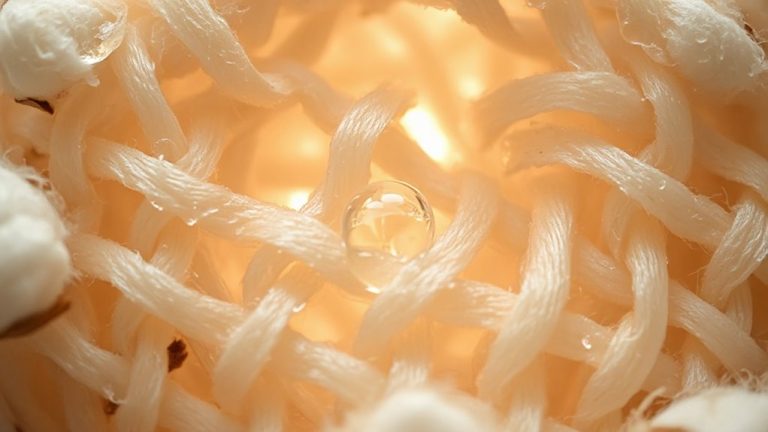
Cotton’s natural fibers are like tiny sponges, soaking up dye quickly because of their porous structure and high absorbency. You benefit from vibrant colors right after dyeing, thanks to cotton porosity allowing dyes to penetrate deep into the fibers. But that same openness can lead to faster fading over time. With repeated washing and exposure to light, dye molecules gradually escape-a process called dye migration-where color shifts or bleeds, especially in hot water or strong detergents. This movement reduces color intensity and may affect fabric appearance, which matters if you value long-lasting sheet color. While cotton feels soft and breathable, ideal for comfortable sleep, its tendency to release dye means you might see changes sooner than with less porous fabrics. To minimize fading, washing in cold water and avoiding harsh chemicals helps extend the look of your bedding. Understanding this balance lets you choose based on durability and comfort needs.
How Reactive Dyes Improve Colorfastness
Colorfastness begins with chemistry, and reactive dyes offer a stronger bond than most alternatives. When you choose bed sheets dyed with reactive dyes, you’re getting deeper dye penetration, which helps color stay put after repeated washing. These dyes form covalent bonds with cotton fibers through molecular bonding, creating a durable connection that resists fading. Unlike surface-level dyes, reactive types integrate into the fiber structure, so the color doesn’t wash out easily. This means your sheets keep their rich tone longer, supporting a consistent sleep environment. Better dye penetration also reduces the need for re-dyeing or early replacement. Over time, this stability can matter if you rely on visual cues for restfulness. Sheets that retain color often indicate overall fabric integrity. You’ll want to check care labels, but many reactive-dyed cotton sheets are machine-washable without significant fading. It’s a practical upgrade worth considering for long-term use. Some sleep accessories, like the best knee wedge pillows, are also designed with durable materials to complement long-lasting bedding. best knee wedge pillows
Why Dyeing Temperature and pH Matter
While dye bonding depends on chemistry, the conditions during dyeing-especially temperature and pH-play a crucial role in how well the color lasts. If the water’s too hot, you risk thermal degradation, which breaks down dye molecules and weakens color. Too cold, and the dye won’t bond properly. The same goes for pH: a slight imbalance can prevent dye fixation, leaving excess dye that washes out over time. You want balanced conditions to guarantee lasting, even color that won’t irritate sensitive skin or disrupt your sleep environment.
| Condition | Too High | Too Low |
|---|---|---|
| Temperature | Faded sheets | Patchy color |
| pH Level | Skin irritation | Dye washout |
Stable dyeing means fewer chemicals released during sleep. Choose sheets dyed under controlled pH and heat to support a calm, restful space.
How Fixatives Lock in Cotton Sheet Color
When you’re choosing bed sheets that stay vibrant after wash after wash, it helps to know how dyes hold on to cotton fibers, and that’s where fixatives come in. These chemicals help secure dye molecules, so they don’t wash out easily. Fixatives work through ionic attraction, drawing dye and fiber together like opposite charges. When the dye carries a negative charge and cotton does too, fixatives act as a bridge by bonding positively, locking color in place. For certain dyes, mordant bonding is used-metal salts bind the dye to the fabric, creating a stable complex that resists fading. This process strengthens colorfastness without making sheets stiff. You’ll find this in high-quality dyed cotton, where long-term appearance matters. Sheets treated this way often come with trial periods, so you can test softness and color retention at home. It’s a smart choice if you value both comfort and lasting color.
Direct vs. Vat Dyes: Which Fades Faster?
You’ve seen how fixatives help keep dye bonded to cotton, but the type of dye used also plays a big role in how well your sheets hold their color over time. For cotton bed sheets, fiber type matters-direct dyes bond more weakly than vat dyes, especially under repeated washing. Vat dyes form insoluble complexes within the fiber, resisting fading even at high dye concentrations. Direct dyes, while easier to apply, depend heavily on dye concentration and are more prone to washout.
| Feature | Direct Dyes | Vat Dyes |
|---|---|---|
| Colorfastness | Moderate | High |
| Dye Concentration Impact | Fading increases if too high | Stable across levels |
| Fiber Type Suitability | Best for cellulose | Ideal for cotton |
| Wash Resistance | Lower | Superior |
Choose vat-dyed cotton for long-term color retention.
Washing and Sunlight: What Causes Fading?
What really makes your cotton bed sheets lose color over time? It’s mostly UV exposure and mechanical agitation. When you leave your sheets in direct sunlight, the UV rays break down dye molecules, leading to fading. This happens gradually, so even if you don’t notice it daily, the damage adds up. Washing contributes too-every cycle subjects sheets to mechanical agitation, where fibers rub against each other and the machine walls. That friction pulls dye loose, especially if you use hot water or harsh detergents. Cold water and gentle cycles help reduce this wear. Turning sheets inside out before washing also shields the dyed surface. Over time, both sunlight and washing weaken colorfastness, no matter the dye used. Protecting sheets from long sun exposure and minimizing aggressive washing routines can slow fading. These small steps help maintain appearance and fabric integrity longer, supporting better upkeep without extra cost or effort.
What to Look for in Long-Lasting Cotton Sheets
Though color may catch your eye first, the true measure of long-lasting cotton sheets lies in their fiber quality, weave, and dye process. You’ll want to check the thread count, but remember that higher isn’t always better-opt for 300 to 500, where durability and breathability balance well. Look for long-staple cotton like Egyptian or Pima, which resists pilling and boosts fabric softness over time. A tight percale or sateen weave adds strength and color retention, especially when paired with fiber-reactive dyes. These dyes bind well, reducing fading after washes. Consider sheets with OEKO-TEX certification for safe, stable coloring. Many quality brands offer trial periods, so you can test comfort and durability in your routine. Read warranty terms-some cover pilling or tears. With proper care, the right blend of thread count, weave, and dye gives you lasting comfort night after night. Best viscose bamboo sheets combine softness and sustainability, making viscose bamboo sheets a strong alternative for eco-conscious buyers.
On a final note
You’ll want cotton sheets dyed with reactive dyes, since they bond well and resist fading. Higher dyeing temperatures and balanced pH help, too. Fixatives lock in color, boosting longevity. Vat dyes last longer than direct dyes, especially when washed in cool water and kept from prolonged sun. Look for sheets with warranties or trial periods, so you can test softness, color retention, and breathability-key for restful, comfortable sleep over time.