How to Use a Bedtime Breathing Exercise for Anxious Children
You can help your child ease anxiety at bedtime with the 4-7-8 breathing technique: inhale quietly through the nose for 4 seconds, hold for 7, then exhale slowly through the mouth for 8. This paced breathing lowers cortisol and calms the nervous system. Make it engaging by using a stuffed animal on their belly or turning it into a bubble-blowing game. Try it sitting upright with pillow support or lying down comfortably. If your child resists, start with just one breath together-consistency builds over time with gentle practice, especially when tailored to their comfort. More helpful strategies follow.
Notable Insights
- Use the 4-7-8 breathing technique to calm anxious children by inhaling for 4 seconds, holding for 7, and exhaling for 8.
- Make breathing playful at bedtime with bubble blowing or a stuffed animal on the belly to track breath movement.
- Practice in a comfortable, supported posture like lying down with pillows to encourage deep, relaxed breathing.
- Offer simple choices and stay patient if the child resists, trying just one breath together to build trust and engagement.
- Use visual aids like timers or diagrams to help children follow breath rhythms without frustration or distraction.
Why Bedtime Breathing Calms Anxious Kids
Why does something as simple as breathing help calm an anxious child at bedtime? When your child practices slow, mindful breaths, it shifts their brain chemistry by lowering cortisol and increasing oxygen flow, which signals the nervous system to relax. This steady rhythm supports emotional regulation, helping them move from a state of alertness to one of calm. Unlike sleep aids or medications, breathing requires no trial period, prescription, or warranty-just consistent practice. It’s non-invasive, always available, and works with the body’s natural design. While it won’t replace treatment for sleep disorders, it’s a practical addition to a bedtime routine. You’re not chasing a quick fix but building a sustainable tool. With time, this method can improve sleep onset and reduce nighttime anxiety. The construction is simple-just attention and repetition-but the performance matters.
How to Teach the 4-7-8 Breathing Technique
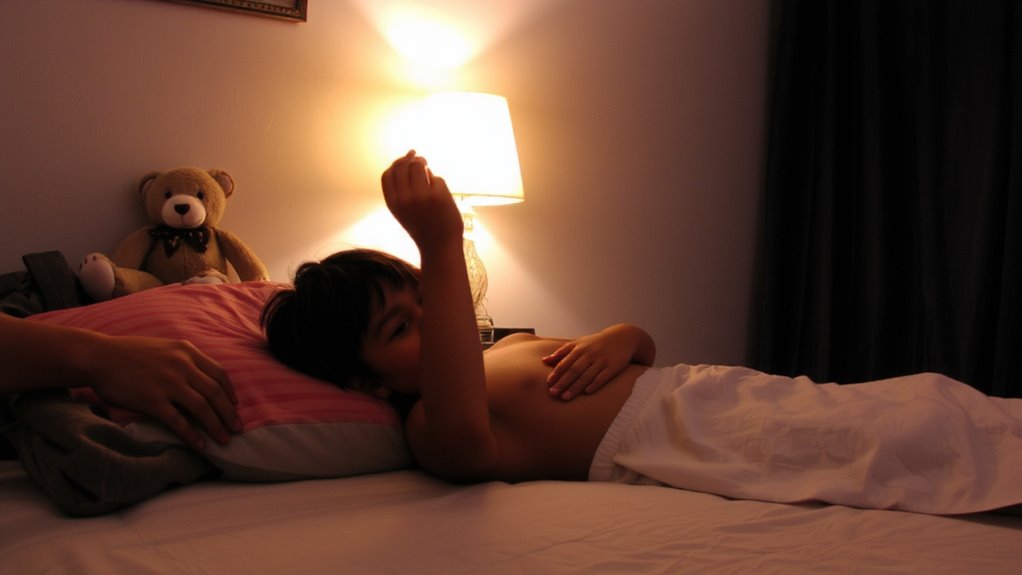
How can you help your child find calm at bedtime in just a few minutes? Try teaching them the 4-7-8 breathing technique, a simple method that uses breath counting to regulate breathing patterns. Have your child inhale quietly through their nose for 4 seconds, hold that breath for 7 seconds, then exhale slowly through their mouth for 8 seconds. This rhythm slows the heart rate and signals the body to relax. Use visual prompts, like a timer or a printed diagram, to help them track each phase. Practice together at first-modeling builds confidence. It may feel awkward initially, but consistent trial over several nights improves comfort and effectiveness. Breath counting gives children control, while visual prompts reduce mental effort. Though it’s not a substitute for medical treatment, many parents find it useful alongside other sleep strategies. This technique requires no equipment, has no warranty or cost, and can be done anywhere.
Turn Breathing Into a Bedtime Game
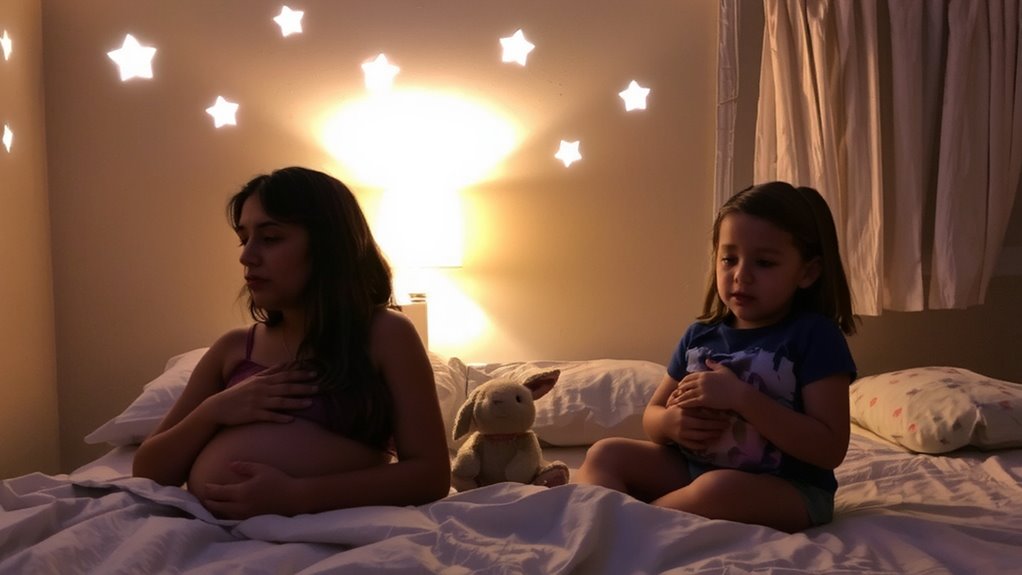
Turning breath work into a bedtime game can make relaxation feel less like a task and more like a shared ritual. You can use bubble blowing to help your child pace their breath-slow inhales followed by long, gentle exhalations to create floating bubbles. This playful method reinforces controlled breathing without pressure. Try placing a favorite stuffed animal on your child’s belly and call it a “stuffed animal ride.” As they breathe in deeply, the toy rises; as they breathe out slowly, it lowers. Watching the movement distracts from anxiety and builds awareness of breath. These games require no tools, have no side effects, and can be tried nightly. If stress disrupts sleep regularly, incorporating such techniques may reduce reliance on other sleep aids. Monitor how well your child settles, then adjust based on what supports rest without disruption.
Best Postures for Kids’ Breathing Practice
Where should your child sit or lie when practicing bedtime breathing exercises? Choose a position that encourages relaxed, deep breathing without strain. A comfortable seating option like a soft chair or floor cushion works well if your child prefers sitting. Make sure their back is supported-use pillows or lean them against a wall so their spine stays aligned. This support helps breath flow smoothly. Lying down is another option, especially in bed, with a small pillow under their head and knees for full-body ease. Both postures promote calm, but a supported back reduces muscle tension that can interfere with breathing. Try each for a few nights to see which helps your child settle faster. The best posture is the one they can maintain comfortably while focusing on their breath, enhancing rest without discomfort or distraction. Test small adjustments to improve effectiveness over time.
What to Do When Your Child Refuses
Some children settle into breathing exercises easily, especially when the posture feels right and the room is calm. But when your child resists, don’t force it-child resistance is common, especially at bedtime when emotions run high. Instead, pause and ask what feels hard. Maybe the steps seem confusing, or maybe they’re not ready. Offer gentle choices, like trying one slow breath together or using a favorite stuffed animal to demonstrate. Parental patience matters here; staying calm helps your child feel safe, not pressured. Avoid framing refusal as failure-it’s feedback. You might need to adjust timing, shorten the exercise, or try on a different night. Consistency builds trust, not daily repetition. If anxiety persists despite efforts, consider whether sleep disruptions go beyond typical worry. Some children benefit from professional guidance before techniques take hold.
Make Breathing Part of the Nightly Routine
You’ll likely find it easier to build consistency if you weave breathing exercises into your child’s existing bedtime routine, treating them as a natural step like brushing teeth or reading a story. Doing so supports routine consistency, which helps signal the body that sleep is near. Start with two minutes of simple breath awareness, guiding your child to notice the rise and fall of their chest or the feeling of air moving through their nose. Keep cues calm and quiet, matching the soothing tone of other nighttime habits. Over time, this practice can improve sleep onset and reduce nighttime anxiety. Think of it as a non-invasive tool-one you can use nightly without reliance on sleep aids. If progress is slow, consider tracking small improvements over weeks. Most families see benefits with regular trial, much like adjusting to any new habit. No warranty’s needed-just patience and repeated use.
On a final note
You can try the 4-7-8 breathing method tonight-it’s easy and needs no tools. Sit or lie comfortably, inhale quietly for four counts, hold for seven, then exhale slowly for eight. If your child resists, turn it into a game, like blowing out invisible candles. With regular practice, it may improve sleep onset and reduce nighttime anxiety. Many families see results in a week or two. This technique is free, safe, and fits easily into most routines.