Ashwagandha + Magnesium for Insomnia: Dosage & Timing
Take ashwagandha in the morning or afternoon (300–500 mg) to help your body manage stress and regulate cortisol, while taking magnesium (200–400 mg) 30–60 minutes before bed to calm your nervous system and support muscle relaxation. Use forms like magnesium glycinate for better absorption. This combo targets both mental and physical drivers of stress-related insomnia without sedation. Consistent use over weeks improves sleep onset and quality, with minimal side effects for most people-important details on safety and timing follow.
Notable Insights
- Combine 300–500 mg ashwagandha in the morning with 200–400 mg magnesium before bed for optimal stress and sleep support.
- Take ashwagandha earlier in the day to regulate cortisol without sedative effects interfering with daytime alertness.
- Use magnesium glycinate or citrate at night to enhance GABA activity and promote nervous system relaxation.
- Allow 2–3 weeks of consistent use to assess improvements in sleep onset and stress resilience.
- Consult a healthcare provider before combining supplements, especially if on medication or managing health conditions.
How Ashwagandha and Magnesium Fight Stress-Related Insomnia

While your body’s stress response can make falling asleep feel nearly impossible, both ashwagandha and magnesium work in different but complementary ways to help calm your nervous system. Ashwagandha supports cortisol regulation, helping lower the hormone’s levels when stress pushes them too high. Magnesium contributes to neurotransmitter balance, especially GABA, which signals your brain that it’s time to wind down. Together, they address two key drivers of stress-related insomnia without sedating you. You’ll likely notice better sleep onset and fewer nighttime disruptions after consistent use for a few weeks. Most supplements offer 300–500 mg of ashwagandha root extract and 200–400 mg of magnesium, often as bisglycinate for better absorption. Check labels for third-party testing and avoid fillers. While results vary, a 60-day trial lets you assess effectiveness. Neither replaces sleep hygiene, but they can be helpful tools when stress interferes.
How Ashwagandha Reduces Stress to Improve Sleep
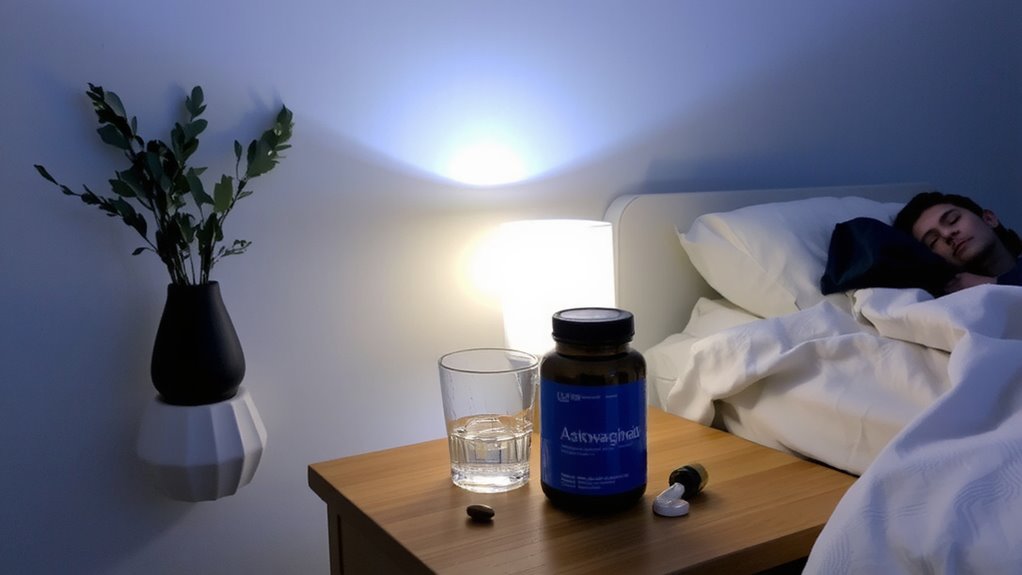
Because your body often struggles to switch off when stress lingers, ashwagandha helps by supporting your adrenal system to maintain balanced cortisol levels, which can make it easier to relax at bedtime. Its role in cortisol regulation and adrenal support helps your body manage daily stressors more effectively. Over time, this may lead to improved sleep onset and quality. Many people find that consistent use supports a calmer nervous system response, especially when stress disrupts sleep. Combining ashwagandha with best sleep aids for anxiety can enhance its effects by targeting both the physiological and psychological aspects of stress-related insomnia.
How Magnesium Helps You Unwind at Night

What if the key to unwinding each night lies in a mineral your body might be missing? Magnesium plays a crucial role in calming your nervous system, supporting nerve relaxation when stress keeps you wired. It helps regulate neurotransmitters that signal your body it’s time to rest, making evening wind-down routines more effective. Proper magnesium absorption-boosted by forms like glycinate or citrate-ensures your muscles relax and nighttime spasms decrease, which can otherwise disrupt sleep. Many people don’t get enough from diet alone, especially under chronic stress. Low levels may contribute to restless legs or frequent awakenings. While food sources help, supplements can fill gaps when taken consistently. Choosing the right form matters for comfort and uptake. You may notice improved sleep quality within weeks, though results vary. There’s no instant fix, but magnesium’s role in nerve relaxation makes it a well-supported option for nightly calm. For those struggling with stress-related sleep disruptions, combining magnesium with best supplements for deep sleep can enhance overall sleep architecture and promote more restorative rest.
Timing and Dosage for Better Results
How much magnesium should you take, and when’s the best time to take it for better sleep? Most adults benefit from 200 to 400 mg of magnesium about 30 to 60 minutes before bed, supporting relaxation and sleep onset. For the ideal pairing, take ashwagandha earlier in the day-typically 300 to 500 mg in the morning or afternoon-to manage stress without sedative buildup. Combining both supplements works best when timing supports your body’s natural rhythms. Consistency tracking helps identify patterns in sleep quality and stress response, letting you adjust doses with purpose. Start low, observe effects over two to three weeks, then fine-tune as needed. This method promotes informed decisions, not guesswork. Always consider individual needs, since metabolism and lifestyle affect results. Over time, this structured approach can support more restful nights and clearer insight into what truly improves your sleep. Choosing a supportive sleep surface, such as a natural mattress, can further enhance sleep quality by reducing exposure to synthetic materials and improving comfort.
Side Effects of Ashwagandha and Magnesium Together
You’ve likely found that timing and dosage play a big role in how well ashwagandha and magnesium support your sleep, but it’s just as important to stay aware of how your body responds when combining them. Some people experience mild digestive discomfort, like bloating or diarrhea, especially at higher doses. Starting with a low amount helps your system adjust. While rare, allergic reactions can occur-watch for symptoms like rash, itching, or swelling, and stop use if they appear. Ashwagandha may affect thyroid or blood sugar levels, and magnesium can interact with certain medications, so checking with your doctor is wise if you have health conditions. Neither supplement is a quick fix, and results often build over time. Pay attention to how you feel each morning and night. Adjusting the dose or trying one supplement at a time can help pinpoint any issues. Monitoring your response secures safer, more effective support for stress-related sleep troubles.
On a final note
You can combine ashwagandha and magnesium to support better sleep if stress keeps you awake. Ashwagandha may ease anxiety over time, while magnesium helps relax muscles and calm your nervous system quickly. Take them 30–60 minutes before bed, starting with low doses to check tolerance. Always talk to your doctor first, especially if you take other meds. Results vary, so give it a few weeks to assess effectiveness.