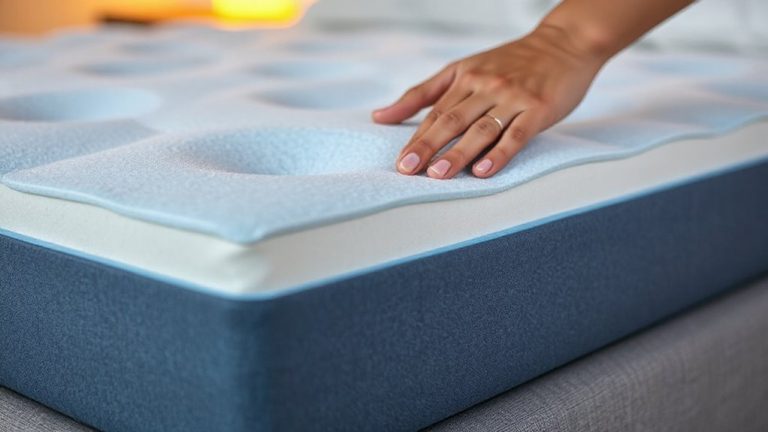
Adapting Mattress Choice to Pregnancy Stage for Progressive Lumbar and Sacral Relief
Your mattress should adapt as pregnancy progresses to support shifting alignment and relieve lumbar and sacral pressure. In the first trimester, hormonal changes may make your current mattress feel too firm, so responsive foam can help cushion new postural curves. By the second trimester, look for zoned support or layered coils that cradle hips and stabilize the lower back. In the third trimester, a medium-firm hybrid or memory foam with cooling gel helps maintain spinal alignment under belly weight and reduces heat buildup. Models with strong edge support and durability warranties guard against sagging. Features like adaptive contouring and targeted pressure relief make a difference as your body changes. Choosing the right support now sets the stage for better rest throughout each phase.
Notable Insights
- Hormonal changes in early pregnancy increase joint sensitivity, requiring mattresses with adaptive cushioning for spinal support.
- First trimester postural shifts benefit from responsive foam that relieves low back strain and supports natural pelvic tilt.
- Second trimester hip and lumbar pressure demands zoned support or layered coils for improved spinal alignment.
- As belly weight grows in the third trimester, medium-firm hybrids with cooling gel reduce sacral stress and overheating.
- Using stage-appropriate pillows with a supportive mattress enhances side-sleeping alignment and sacral relief throughout pregnancy.
Why Pregnancy Changes Your Mattress Needs
While your body changes during pregnancy, your mattress might not be keeping up with your needs. Hormonal softening loosens ligaments, including those in your pelvis, increasing joint sensitivity and altering spinal support needs. At the same time, fluid retention adds subtle pressure to tissues, making pressure relief essential, especially along the lower back and hips. A mattress that once felt comfortable may now feel too firm or uneven, failing to cradle these shifting contours. Look for models with adaptive foam layers or responsive coils that cushion without trapping heat. Features like zoned support help distribute weight more evenly. Check trial periods-many brands offer 100+ nights-to test comfort safely. A solid warranty can protect your investment as your needs evolve. These factors matter more now, not just for sleep quality, but for long-term comfort during a physically transforming time. Consider trying one of the top-rated best mattresses for pregnant women to ensure proper alignment and comfort throughout each trimester.
First Trimester: How Posture Shifts Affect Mattress Comfort
Why does your bed suddenly feel uncomfortable when you’re only a few months into pregnancy? Even in the first trimester, your body begins adjusting to support new demands, and subtle postural changes can lead to postural fatigue. As hormones like relaxin increase, ligaments loosen, often causing a slight anterior pelvic tilt. This shift redistributes pressure, especially when lying down, making once-comfortable mattresses feel too firm or unsupportive. You might start waking with low back stiffness or general soreness, early signs your sleep surface isn’t aligning with your body’s new needs. A mattress with responsive cushioning-like memory foam or a hybrid with zoned support-can cradle shifting curves and ease strain. Look for models with trial periods and clear warranty terms, so you can test pressure relief without risk. Adjusting your sleep setup now helps prevent discomfort from progressing. For long-term spinal alignment, consider investing in one of the best orthopedic mattresses that combine targeted support with pressure-relieving comfort.
Second Trimester: Best Mattress Support for Hips and Lower Back
As your belly grows and your center of gravity shifts further forward in the second trimester, the added strain on your hips and lower back means your mattress needs to balance support and cushioning more precisely. Look for designs offering firm lumbar support and responsive contouring to maintain natural spinal alignment. Mattresses with zoned coils or layered foams enhance hip cradling by conforming gently at the hips while supporting the lower back. This promotes even pressure balancing across your body, especially when side sleeping. Memory foam or hybrid models often perform well here, provided they aren’t too soft. Cooling features can prevent overheating, which might interrupt sleep. Check trial periods and warranties-many brands offer 100-night trials and 10-year coverage, allowing time to assess comfort. Test firmness levels if possible, since too firm or too plush can worsen discomfort.
Third Trimester: Spinal Alignment Under Growing Belly Weight
When your belly reaches its fullest size in the third trimester, proper spinal alignment becomes critical to reduce strain on your lower back and pelvis. Abdominal displacement pulls your center of gravity forward, increasing the risk of pelvic rotation and lower back pain. A mattress that’s too soft won’t support your changing shape, while one that’s too firm may create pressure points. Look for a medium-firm hybrid or memory foam model with zoned support-these adapt to your curves and help keep your spine neutral. Models with cooling gel layers prevent overheating, a common discomfort. Many brands offer 100-night sleep trials and white-glove returns, letting you test firmness risk-free. Check warranties for sagging coverage, since body impressions can develop faster under extra weight. Pairing the right mattress with a supportive pillow under the abdomen may further ease spinal stress. For added comfort during side sleeping, consider a mattress topper for pregnancy.
Best Sleep Positions for Sacral Relief by Trimester
Though your body changes with each stage of pregnancy, adjusting your sleep position can make a real difference in easing sacral pressure over time. In the first trimester, side sleeping isn’t urgent, but starting the habit early helps. Use pillow placement between your knees to keep hips aligned and reduce strain. By the second trimester, side sleeping becomes ideal-especially on your left side-for improving circulation and relieving sacral stress. Place a firm pillow under your belly for extra support. In the third trimester, proper pillow placement is essential; position one under your upper body, another between knees, and a third behind your back to stabilize posture. A body pillow can simplify this setup. Side sleeping reduces pressure on the sacrum while supporting spinal alignment. These adjustments, combined with a supportive mattress, enhance comfort and sleep quality without restricting movement. Trial periods on pillows and mattresses let you test what works before committing.
On a final note
Your mattress should adapt as your pregnancy progresses-offering gentle support early on, then firmer alignment as your belly grows. Look for responsive memory foam or hybrid designs with edge support, and choose models with at least a 100-night trial and a solid warranty. Side sleeping with a pillow between your knees helps relieve sacral pressure. Replace old, sagging mattresses to maintain spinal balance and comfort.